Structural Adhesives: Understanding MMA and Acrylics for Load-Bearing Metal Bonds
What are structural adhesives, and when do I need them over regular glue?
On this page
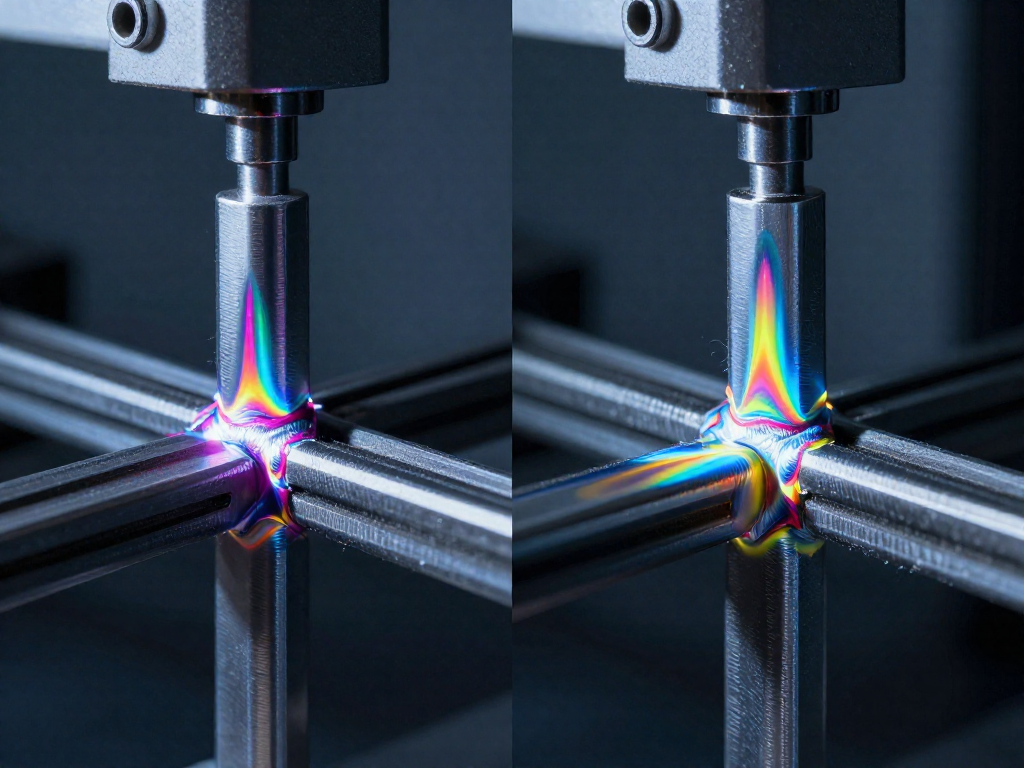
You’re repairing a metal bracket or building a custom part. Welding seems like overkill—or it’s impossible without warping the metal. Regular glue won’t hold. That’s when you need a structural adhesive. This guide focuses on methyl methacrylate (MMA) and two-part acrylics, the go-to for strong, fatigue-resistant metal bonds that cure at room temperature.
What Makes an Adhesive “Structural”?
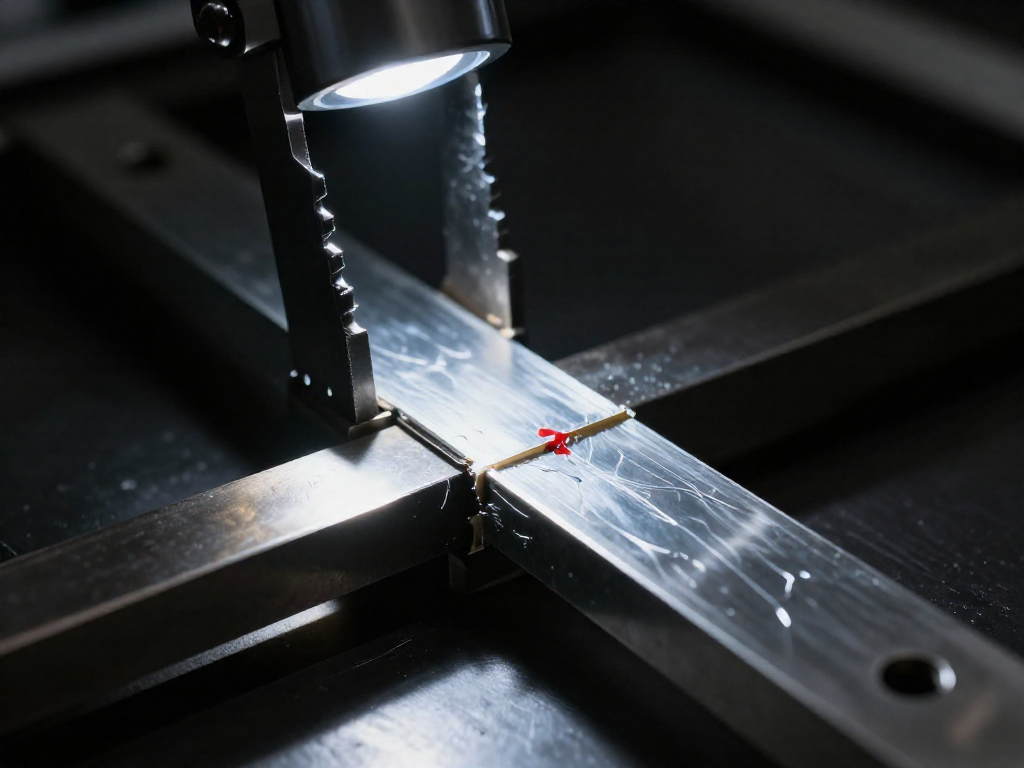
Structural adhesives are bonding agents engineered to carry significant loads in a joint—often replacing or supplementing mechanical fasteners. You reach for them when a repair or assembly will face serious stress: constant vibration, heat, or weight that would make a hardware-store epoxy crack or creep.
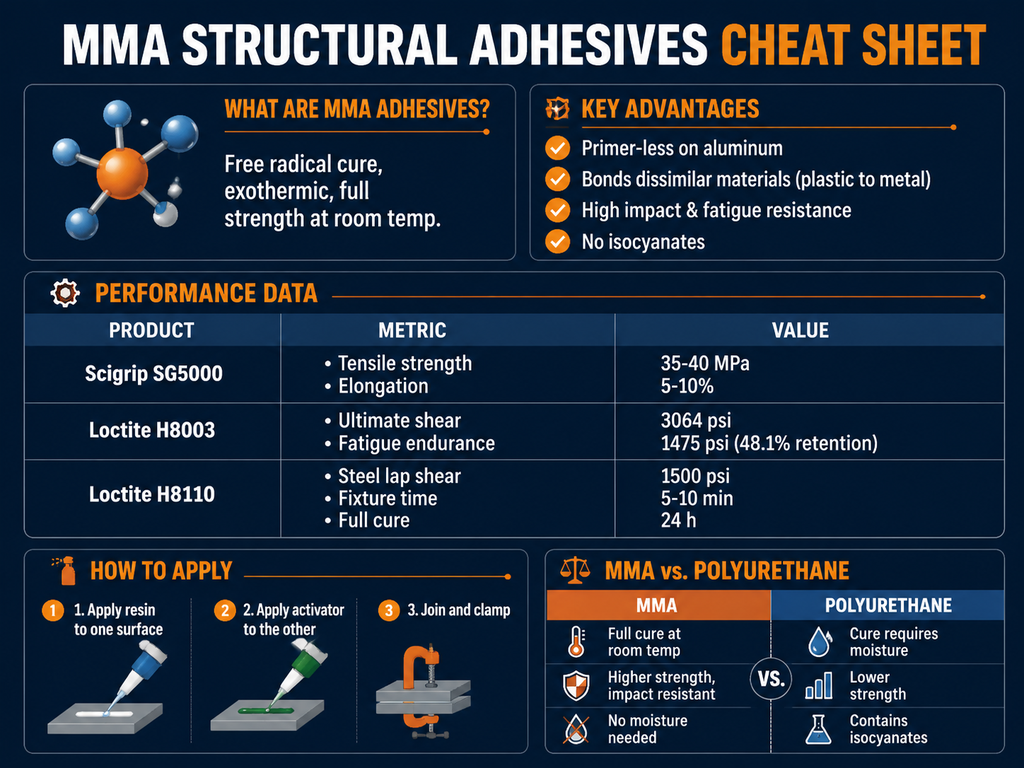
The defining test is ASTM D1002, a lap shear test that bonds a one-inch-wide metal strip with a half-inch overlap and then pulls it apart at a controlled rate (Intertek). Any adhesive that can consistently deliver over 1,000 psi in that test earns the “structural” label. That number isn’t arbitrary; it’s the practical threshold where a bonded joint can start to rival a bolted connection. The best aerospace-grade systems can exceed 4,000 psi, and even a heavy-duty two-part MMA like Loctite H8110 lands around 1,500 psi on steel after a full 24-hour cure.
What sets structural adhesives apart from consumer glues isn’t just the strength number—it’s how the bond handles real-world abuse. They cure into a thermostat plastic that spreads stress across the entire bond area instead of concentrating it at a tiny point. Many MMAs, for example, retain nearly half their ultimate strength under repeated loading, something no cyanoacrylate or five-minute epoxy can claim. When you’re bonding dissimilar materials under load, that toughness is the difference between a repair that holds for years and one that lets go without warning. As always, if a bond failure could cause injury, verify that your chosen adhesive meets the engineering spec for the load—a sticker on the tube won’t guarantee it.
The MMA / Acrylic Advantage: Chemistry That Works for Metal
Methyl methacrylate (MMA) adhesives—often grouped with two-part acrylics—stand apart because their cure chemistry is engineered for metal. Unlike epoxies that need precise mixing or urethanes that depend on ambient moisture, MMAs polymerize through a free-radical reaction that generates its own heat. This exotherm drives crosslinking to completion without any external energy. The result: full structural strength at room temperature, and a bond that’s ready to handle load as soon as it cools. It’s a clean, predictable process that works in shops and on job sites where an oven simply isn’t an option.
That self-heating cure also gives MMAs their signature grip on unprepared metals. A standout example is Scigrip SG300, a primer-less system that keys straight through the oxidized layer on aluminium—no sanding, no etching, no chemical primer. On mild steel, the only prep required is a quick abrasion to remove any surface corrosion that would otherwise act as a weak interface. For anyone who’s spent hours scuffing and solvent-wiping before bonding, this is a genuine time-saver.
The numbers tell the rest of the story. Scigrip’s SG5000 series, a family of 1:1 mix-ratio adhesives, delivers tensile strengths between 35 and 40 MPa, with elongation at break ranging from 5 to 10%. That stretch isn’t about flexibility for its own sake; it’s what lets the adhesive absorb shock and vibration without cracking. For comparison, rigid epoxies might give you comparable static strength, but they’re far more likely to snap under a sudden impact or repeated flexing.
Fatigue resistance is where many adhesives fall apart—literally. Cyclic loads gradually weaken the bond until it fails below the original breaking point. In fatigue testing, Loctite H8003 retained 48.1% of its initial ultimate strength under cyclic loading (Ellsworth white paper). That figure—1475 psi out of an initial 3064 psi—represents a limit of endurance that most polyurethanes can’t match. For a bracket on a vibrating engine or a gate hinge that sees thousands of cycles a day, that retained strength means the difference between a permanent fix and a callback for rework.
Beyond fatigue, MMAs offer practical benefits that simplify assembly. They tolerate light surface oils—not because they clean the metal, but because the curing chemistry can push through a thin contaminant film that would choke an epoxy. They also eliminate the isocyanates found in many polyurethanes, so you’re not having to manage hazardous air contaminants. And because the resin and activator can be applied separately to each substrate, you simply bring the parts together to initiate cure. Working times span from 2 to 45 minutes depending on the formulation, with fast fixtures like Infinity Bond MMA 420 setting in about five minutes on steel. Full strength develops in 24 hours, but the joint is usually strong enough for handling or light loading within minutes.
This chemistry also unlocks mixed-material bonds that defeat other structural adhesives. An MMA can connect a flexible plastic panel to a rigid metal frame—the same joint that would tear apart a brittle epoxy. That versatility, combined with room-temperature full cure, high tensile strength, and class-leading fatigue performance, makes MMA and two-part acrylics the heavy hitters for load-bearing metal assemblies. They aren’t a universal solution—when extreme heat resistance or absolutely oil-free surfaces are required, you’ll look to other chemistries—but for the majority of structural metal bonds where durability and real-world conditions matter, they’re the first choice.
Strength by the Numbers: Reading ASTM D1002 and Product Data Sheets
When you flip over a structural adhesive cartridge, that psi number on the datasheet—usually a lap shear strength—is your first real comparison point. It comes from a standard test, ASTM D1002, which glues two metal coupons together with a 12.7 mm (0.5-inch) overlap and 25.4 mm (1-inch) width, then pulls them apart at 1.3 mm/minute (about 1200–1400 psi/minute loading) until they fail (Intertek). That single number lets you compare products apples to apples.
A general-purpose MMA like Loctite H8110 delivers around 1500 psi on steel after a 24‑hour cure. Move up to aerospace‑grade formulations and you’ll see lap shear values push past 4000 psi. The Infinity Bond MMA 420, a toughened fast-setter, fixtures in just five minutes and reaches full strength in 24 hours—so if you’re seeing numbers in that 1500–4000 psi range, you’re looking at real structural capability.
But here’s the catch: a lap shear test measures pure shear only. In the real world, joints also face peel, cleavage, and vibration—forces that can crack a bond well below its rated shear strength. Never assume a 2000 psi lap shear rating means your bracket will hold 2000 pounds per square inch. Use the number to narrow product choices, then design the joint so the adhesive is loaded in shear, not peel. When comparing datasheets, also check the test substrate: steel gives higher numbers than aluminum, and a 1.6 mm‑thick coupon will read differently than a 3 mm one. Stick to one substrate across comparisons for a fair fight.
Welding vs. Gluing: When Structural Adhesives Come Out on Top
Welding is often the default for joining metal, but it comes with trade-offs that make a structural adhesive the smarter choice in a surprising number of situations. If you're working with thin-gauge sheet metal, the intense heat of a weld can warp panels beyond repair. Heat-treated alloys like 6061-T6 aluminum lose their mechanical properties in the heat-affected zone—you end up with a weaker assembly than you started with. And when the project pairs dissimilar metals, such as aluminum to steel, welding is either extremely difficult or simply impossible because of galvanic corrosion risks and metallurgical incompatibility.
That's where MMA structural adhesives really shine. They bond at room temperature, so there's no thermal distortion and no loss of temper in heat-sensitive alloys. They handle mixed-material joints effortlessly—MMAs are known for their ability to stick flexible plastics to rigid metal just as well as they bond metal to metal. Instead of concentrating stress at a narrow seam, the adhesive spreads load across the entire overlapping area. This dramatically improves fatigue life. In fatigue testing, Loctite H8003 MMA retained 48.1% of its initial ultimate strength of 3064 psi, with a limit of endurance at 1475 psi (Ellsworth Adhesives). That's a more graceful failure mode than a cracked weld, and it can be the difference between a part that fails after a few thousand cycles and one that lasts.
Modern vehicle manufacturing has already figured this out. Adhesive bonding is widely used in automotive body panels and truck trailers because it reduces weight, dampens vibration noise, and distributes crash energy better than welds or rivets alone. Products like Infinity Bond MMA 420, with its five-minute set time and toughened formula, are built for exactly these vibration-prone, high-impact environments. For a DIY repair where you don't have a welder—or don't want to pay for one—a structural acrylic opens up metalwork that was previously out of reach. Take Loctite H8110 Speedbonder: it fixtures on steel in 5–10 minutes and delivers a shear strength of 1500 psi once fully cured. That's more than enough for many structural brackets and mounts, and you avoid the expense and logistics of a welder.
Keep in mind that adhesive joints demand clean surfaces and proper gap filling (MMAs tolerate gaps up to about 0.5 mm without losing strength), but the preparation is far less brutal than grinding and welding. Scigrip's SG300, for example, bonds aluminum without any abrasion—it just needs solvent cleaning. On mild steel, a quick scuff to remove surface rust is sufficient. The payoff is a bond that's strong, quiet, and often more durable than a weld in a dynamic, loaded application.
Choosing and Using MMA Adhesives: A Practical Guide
One of the biggest practical wins with MMA adhesives is how little surface preparation they demand. For aluminium, you can skip abrasion entirely—MMAs chemically key through the oxide layer better than any other adhesive technology. Scigrip’s SG300, for instance, is a primer‑less metal bonder that requires no abrasion on aluminium at all; on mild steel, all you need is a light sanding to remove any surface rust. Just make sure both surfaces are clean and dry, and you’re set.
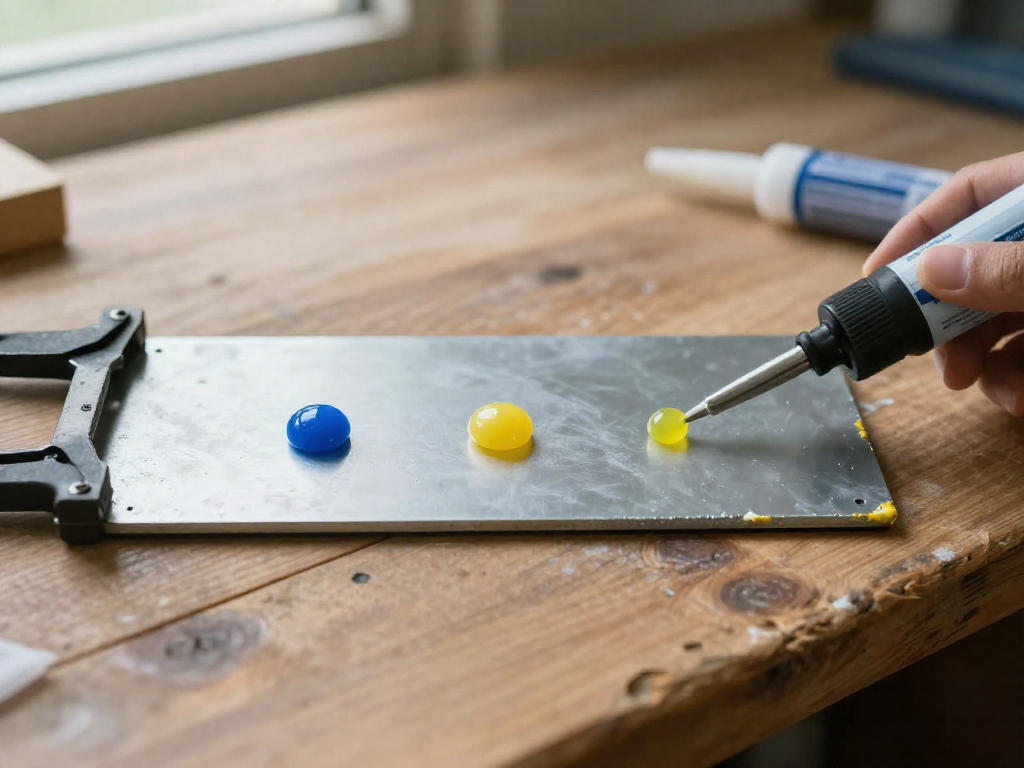
Application follows a different rhythm than most two‑part adhesives. You don’t mix a bead and spread it. Apply the resin to one mating surface and the activator to the other. When you bring them together, curing kicks off at the bond line, so dry‑fitting beforehand is essential—you get one shot at alignment. This separate‑application method eliminates the wasted adhesive and clogged nozzles common with mixing static mixers, and it actually gives you a more generous working time than you might expect.
Working times across the Scigrip range span from 5 minutes up to a generous 120 minutes, with fixture times running from 6 minutes to 4 hours, depending on the formulation. If speed is your priority, Loctite H8110 Speedbonder fixtures in just 5 to 10 minutes on steel and builds to a 1500‑psi shear strength after a 24‑hour cure. For joints that will face impact or vibration, Infinity Bond MMA 420 sets in about 5 minutes and uses a toughened, flexible formula specifically designed to shrug off mechanical shock.
Two things to keep in mind: MMAs produce a strong odour as they cure, so work in a well‑ventilated area. And because the reaction is exothermic and completes at room temperature, you won’t need an oven or heat lamp—just a clean workspace and a confident pair of hands.
Where Structural Adhesives Can Let You Down
Even the strongest structural adhesives have clear limits. Most MMAs and toughened acrylics can't handle sustained high heat—performance drops off well before you reach temperatures that metals shrug off, so keep them out of engine bays and exhaust repairs. They also demand thin, intimate bond lines. If your joint has a gap wider than a couple of millimetres, epoxy putty or mechanical fasteners are the better bet.
In very large bond areas, the cure itself can become a problem. MMAs generate significant heat as they set—a highly exothermic reaction (Scigrip)—and on a big scale that thermal spike can create enough internal stress to weaken the bond right from the start. Finally, some formulations need exact mix ratios to reach full strength. A dual-cartridge dispenser takes the guesswork out and is the only way to be sure. When a bond is truly load‑bearing and failure is dangerous, test under real conditions or fall back to a proven mechanical connection.
Making the Final Call
If your repair involves metal‑to‑metal or metal‑to‑plastic bonds that must endure vibration and you can’t apply heat, an MMA adhesive is almost certainly the right call. Its room‑temperature cure, fast handling, and ability to bridge dissimilar materials make it the workhorse for load‑bearing metal joints.
But don’t just grab the tube with the highest lap‑shear number. “Strongest” isn’t always best—toughness and fatigue resistance separate a bond that survives one pull test from one that holds up under years of cyclic loading. In fatigue testing, for instance, a toughened MMA like Loctite H8003 retained 48% of its ultimate strength (Ellsworth). Always pull the product data sheet; look for ASTM D1002 values and any fatigue data before you commit.
Sources
- AN INTRODUCTION TO MMA STRUCTURAL ADHESIVES — scigripadhesives.com
- Fatigue Resistance of Structural Adhesives — ellsworth.com
- User’s Guide to Methyl Methacrylate Adhesives (MMAs): All You Need to Know — gluegun.com
- Lap Shear Strength of Adhesively Bonded Metal Specimens ASTM D1002 — intertek.com
- How to perform an adhesive lap joint shear strength test: ASTM D1002 - MassDevice — massdevice.com
- ASTM D1002 overview.pdf — universaltestmachine.com
See also
- Best Epoxy for Metal-to-Metal Bonding
- Surface Preparation Guide for Maximum Adhesion
- Plastic-to-Metal Adhesive Selection
- Understanding Shear and Tensile Strength Values
Related articles
UV-Cure Adhesives (Liquid Optical Clear Adhesives): Perfect for Glass and Electronics
What is UV glue, and when should I use it instead of regular super glue?
Jul 22, 2026 · 5 min read
Contact Cement: The Secret to Laminate, Leather, and Shoe Repairs
How do I use contact cement correctly to avoid bubbles and weak bonds?
Jul 22, 2026 · 5 min read
Construction Adhesives Showdown: Liquid Nails, PL Premium, and Loctite PL
Which construction adhesive is strongest for subfloor, paneling, and heavy-duty projects?
Jul 22, 2026 · 8 min read