How to Bond Acrylic to Metal: Achieving a Clear, Strong Joint
What's the best adhesive for bonding acrylic (plexiglass) to metal without clouding?
On this page
You’ve got an acrylic shelf that needs to attach to a metal bracket, and you want the bond to be invisible and strong. But one wrong adhesive choice can turn your clear acrylic cloudy or fail under load. This guide cuts through generic 'best glue' lists to help you pick the right adhesive for a lasting, clear joint.
Why Bonding Acrylic to Metal Is Different
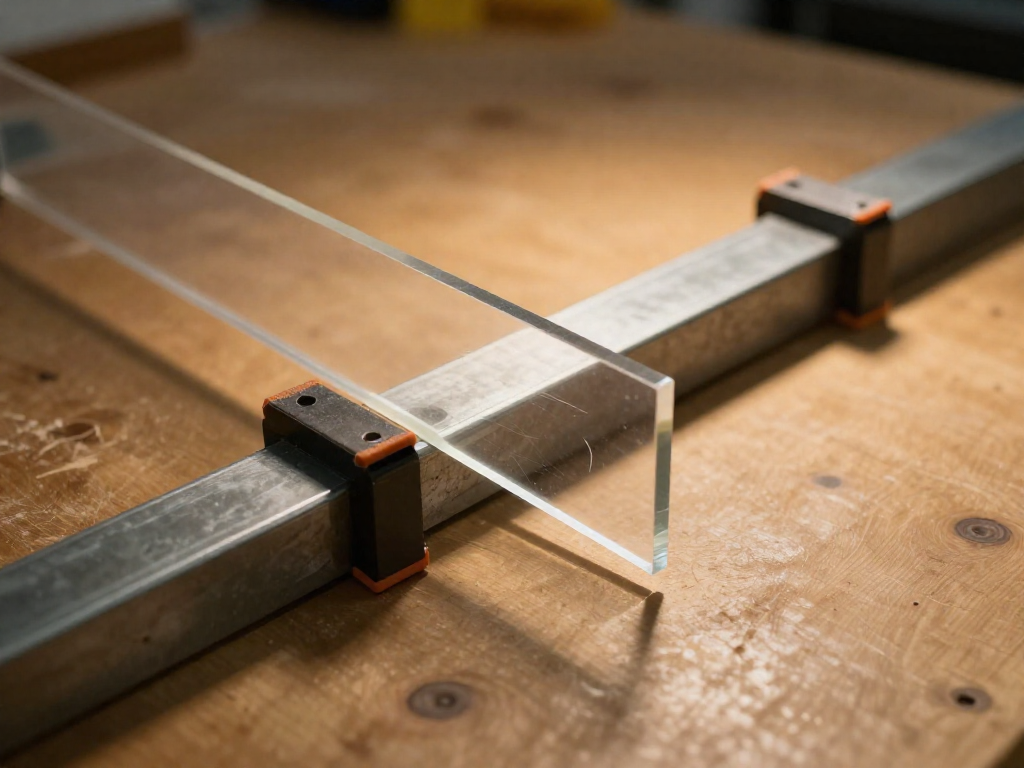
For a clear, strong acrylic-to-metal bond, skip super glue and reach for two-part MMA or UV-curing adhesives. Super glue hazes and turns brittle when materials expand and contract at different rates. In humid, temperature-swinging conditions, fabricators trust MMA to keep signage clear and intact (The Monster Builder).
Adhesive Showdown: Epoxy vs. MMA vs. UV-Cure
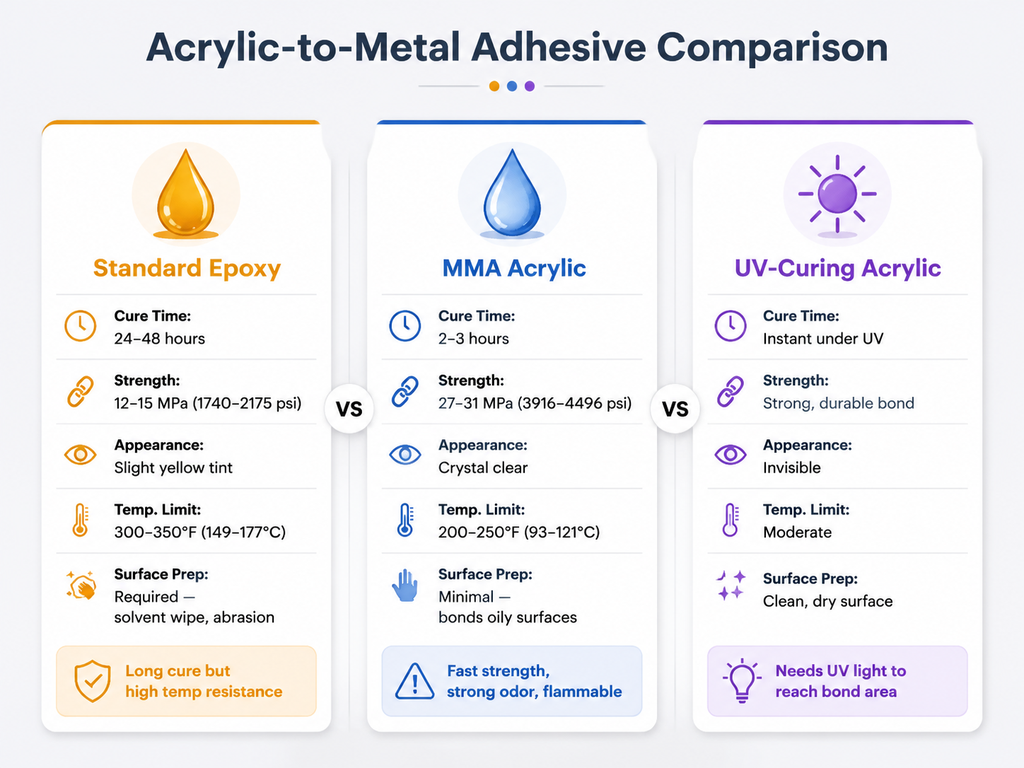
When you’re bonding acrylic to metal, three adhesive families do the heavy lifting: epoxy, MMA acrylic, and UV-cure. Each comes with a distinct set of strengths and trade-offs, and picking the right one depends on your cure time, heat exposure, surface prep tolerance, and whether you need a crystal-clear look.
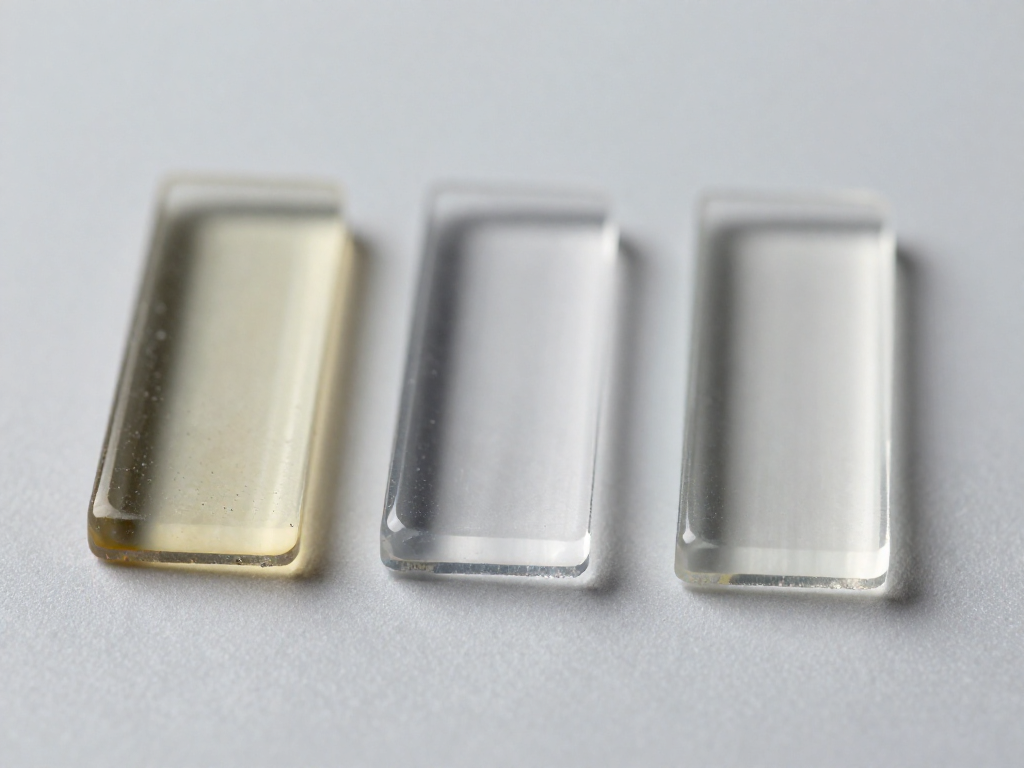
Epoxy is the brute. Toughened formulations deliver a lap shear on steel of 28–34 MPa, the highest in this group, and can shrug off temperatures up to 300–350°F. Standard epoxies need 24 to 48 hours to fully cure, but mercaptan-based systems hit full strength in just 3–4 hours. You’ll need clean, roughened surfaces for a reliable bond, but once it sets, the joint resists moisture, corrosion, and heavy loads. The downside? Most epoxies cure slightly yellow, so they won’t disappear behind clear acrylic.
MMA acrylic sacrifices a tiny bit of ultimate strength (lap shear 27–31 MPa) for speed and convenience. With a 5-minute work life, these adhesives reach structural strength in only 10–15 minutes. Even better, they grip lightly oily metal without surface prep—a godsend for cold-rolled steel right off the shelf. Trade-offs include a maximum service temperature around 200–250°F and a harsh, flammable odor that demands serious ventilation.
UV‑cure adhesives fill a different niche. They cure instantly under a UV lamp, leaving a bond line that’s virtually invisible. That makes them the top pick when you need perfect clarity and at least one material—typically the acrylic—lets light pass through to the bond. They’re fantastic for small, precise assemblies, but if shadows or opaque substrates block the UV light, you’ll have uncured pockets.
In Singapore’s high-humidity, high-heat environment, fabricators have made their preferences clear: MMA is the go-to for outdoor acrylic‑metal signage because it holds strength through daily temperature swings; architects, meanwhile, specify industrial epoxy for acrylic‑to‑stainless‑steel brackets, where the epoxy’s corrosion resistance and long‑term moisture protection are non‑negotiable (The Monster Builder). That real‑world split tells you everything: match the adhesive to your project’s top priority—speed and simplicity, heat and brute force, or pure invisibility.
Surface Preparation: The Make-or-Break Step
Most acrylic-to-metal bond failures happen before you even open the adhesive. Good surface preparation separates a permanent, clear joint from one that will pop apart under load or humidity.
For epoxy, follow a strict three-step sequence: wipe both surfaces with acetone or isopropyl alcohol to strip oils and fingerprints, scuff the metal lightly with sandpaper or a Scotch-Brite pad to create mechanical grip, and then pass another solvent-soaked cloth across the metal to lift every trace of abrasive debris. Skip any of these and expect a weaker bond—epoxies need that clean, activated surface to really bite.
If you’re using an acrylic structural adhesive (MMA), preparation drops dramatically. 3M notes these adhesives can bond right through light mill oil on cold rolled steel, meaning you may not even need to degrease. A quick dust-off is often enough, making MMA the pragmatic choice when you’re working with as-received metal.
UV-cure acrylics are the pickiest of the lot. Because they set only where light reaches, both the acrylic and the metal must be free of dust, oil, and fingerprints. Any contamination blocks UV transmission, leaving uncured wet spots that undermine clarity and strength. A single swipe with a clean cheesecloth and the right grade of alcohol is non-negotiable here—skip it and you’re guaranteeing a cloudy, fragile joint.
Step-by-Step: How to Get a Strong, Clear Joint
Start with thorough cleaning: wipe both surfaces with acetone or isopropyl alcohol, lightly abrade the metal with fine sandpaper or a Scotch-Brite™ pad, then do a final solvent wipe and let dry completely. Apply adhesive sparingly—less is more here, since excess squeeze-out can cloud the acrylic. Clamp the parts together and hold for handling strength: a typical 5-minute epoxy takes about 20 minutes, while a fast MMA reaches structural strength in just 10–15 minutes. For full cure, standard epoxy needs 24–48 hours, though a mercaptan-based epoxy can be ready in as little as 3–4 hours (Permabond). MMA cures fully in 2–3 hours; UV-cure adhesives set instantly under the lamp. Always wear gloves, and if using MMA, work in a well-ventilated area and store it in a flammable-safe cabinet.
Mistakes That Ruin Acrylic-Metal Bonds
Avoid super glue—it's brittle, clouds acrylic, and can't handle load or vibration. Solvent-based adhesives often craze the surface with micro-cracks that ruin clarity. Even with epoxy, skipping a proper clean and scuff, like a solvent wipe and light abrasion recommended by 3M, almost guarantees a weak, peeling joint. Never stress the bond before full cure; early handling invites failure.
Quick Answers to Your Top Questions
Q: What’s the strongest adhesive?
Toughened epoxy — with lap shear values of 28–34 MPa on steel (Permabond) — is the pick for permanent, load‑bearing joints.
Q: Can I bond without sanding?
Yes. MMA acrylic adhesives bond to lightly oily metal without abrasion, often eliminating surface prep.
Q: Will it be waterproof?
Epoxy resists moisture best; MMA and UV‑cure also handle humidity, but verify product specifications.
Q: How do I keep it crystal clear?
Use a UV‑cure or clear epoxy, apply sparingly, and wipe away squeeze‑out immediately.
Sources
- Epoxy vs Acrylic: Which Adhesive Is Right for Your Project? - Permabond — permabond.com
- Acrylic Structural Adhesives - mu ltime dia — multimedia.3m.com
- How to Bond Acrylic to Metal - The Monster Builder — themonsterbuilder.com
- Bonding Metal: Guide for Strong, Lasting Adhesive ... — chemical-concepts.com
FAQ
What is the strongest adhesive for bonding acrylic to metal?
A toughened epoxy provides the highest strength, delivering a lap shear strength on steel of 28–34 MPa (4061–4931 psi) and peel strength on aluminium of 200 N/25mm. Proper surface preparation—such as solvent wiping, light abrasion, and a final clean—is essential to achieve these numbers.
Can I use super glue?
No, standard cyanoacrylate (super glue) is not suitable here. It is too brittle for the mismatch in flexibility between acrylic and metal, and it will likely fail under any real load, vibration, or moisture.
How long does epoxy take to dry?
It depends on the formulation. A standard 2‑part epoxy needs 24–48 hours for full strength at room temperature, while mercaptan‑based epoxies can reach full strength in 3–4 hours. A typical ‘5‑minute’ epoxy provides handling strength in about 20 minutes and structural strength in 2–3 hours.
Does MMA adhesive bond to oily metal?
Yes. MMA acrylic adhesives bond reliably to slightly oily surfaces, such as the mill finish oil on cold rolled steel, with little to no surface preparation.
How do I prevent clouding or crazing?
Choose an adhesive specifically formulated for acrylic, like a two‑part MMA or a UV‑curing product. Avoid cyanoacrylates and solvent‑based glues that can attack the surface, and keep the bond area clean and stress‑free during cure.
Is the bond waterproof and UV-resistant?
Industrial‑grade epoxies are known to resist moisture and are used in humid environments, so the bond is effectively waterproof. UV resistance varies—some epoxies may yellow over time outdoors, so if UV exposure is a concern, select a UV‑stable formulation or protect the joint from direct sunlight.
See also
- How to Bond Polycarbonate to Metal
- Best Epoxy for Plastic Repairs
- Guide to Structural Adhesives for Metal
Related articles
Attaching Foam to Wood: Craft vs Structural Applications
How do I glue foam to wood without melting or weakening the foam?
Jul 22, 2026 · 6 min read
Joining Concrete to Wood: The Right Adhesive for Fence Posts and Decks
Which adhesive is best for attaching wood to concrete in outdoor projects?
Jul 22, 2026 · 11 min read
Gluing Silicone: Is It Even Possible and What Alternatives Work?
Can you glue silicone to something else, and if not, what should you use?
Jul 22, 2026 · 5 min read