Joining Concrete to Wood: The Right Adhesive for Fence Posts and Decks
Which adhesive is best for attaching wood to concrete in outdoor projects?
On this page
When attaching a deck ledger or fence post to concrete, the wrong adhesive choice can lead to catastrophic failure. This guide compares epoxy, polyurethane, and code-required mechanical fasteners to show what actually holds—so your project stays safe and sturdy for decades.
Why Wood-to-Concrete Bonds Fail Outdoors
For outdoor fence posts and decks, a two-part epoxy—ideally one with some flexibility—is the right choice for bonding wood to concrete. Wood absorbs moisture and swells, while concrete stays put; that constant movement shears rigid adhesives apart. Worse, most one-part polyurethane glues lose nearly all their strength when wet. In testing, polyurethane shear strength dropped more than 95% after just 24 hours of water immersion (MDPI). Epoxy, on the other hand, chemically bonds to both materials, shrugs off water, and when formulated with a little give, handles the daily stress of expansion and structural loads.
Understanding Your Adhesive Options: A Quick Overview
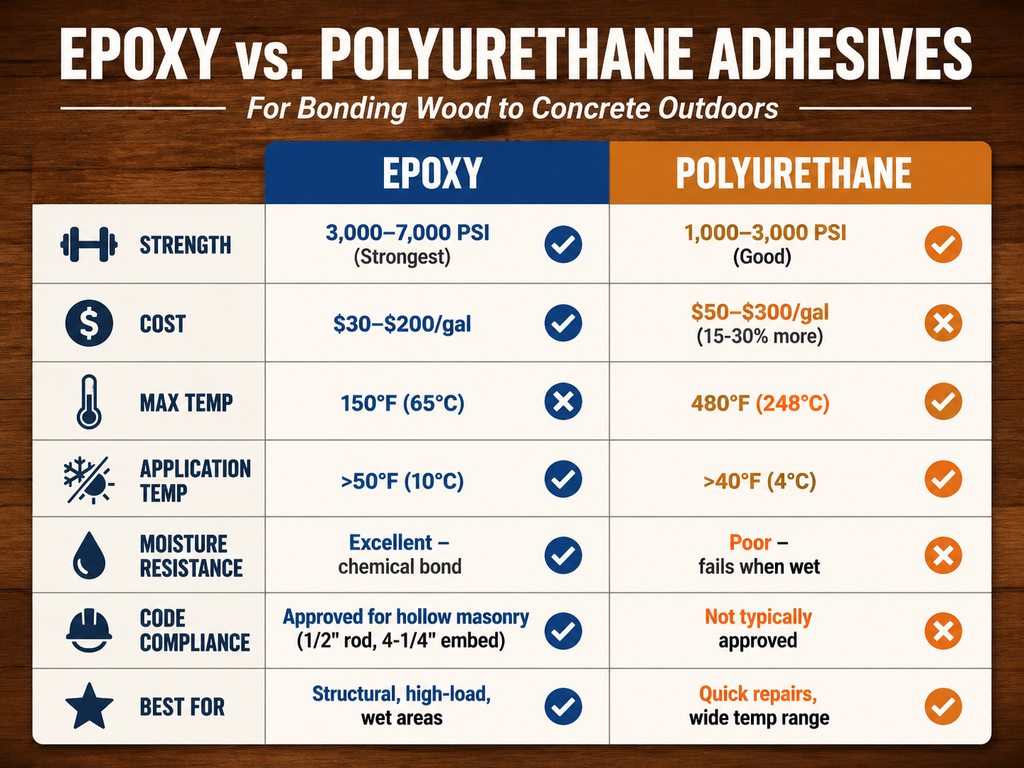
Epoxy adhesives deliver the highest bond strength, with two-part formulations typically reaching 3,000–7,000 PSI tensile strength. They cure chemically, so they work on damp concrete and can fill small gaps. For outdoor deck posts where wood and concrete expand at different rates, a flexible epoxy is often preferred to handle movement without cracking.
Polyurethane construction adhesives are a popular one-part alternative that cure with moisture. They offer more give (1,000–3,000 PSI) but aren’t as strong. They can foam and push joints apart if not clamped, so they’re best for non-structural applications where some movement is expected.
If your project must meet building codes—think ledger boards and deck connections—mechanical anchors are the only game. Code typically requires ½-inch diameter expansion anchors set at least 2½ inches deep in solid concrete, or epoxy-set threaded rods to similar depths in hollow masonry (Decks.com). These anchors create a physical lock that adhesives alone cannot match for load-bearing safety.
Epoxy Adhesives: The High-Strength Workhorse for Wood and Concrete
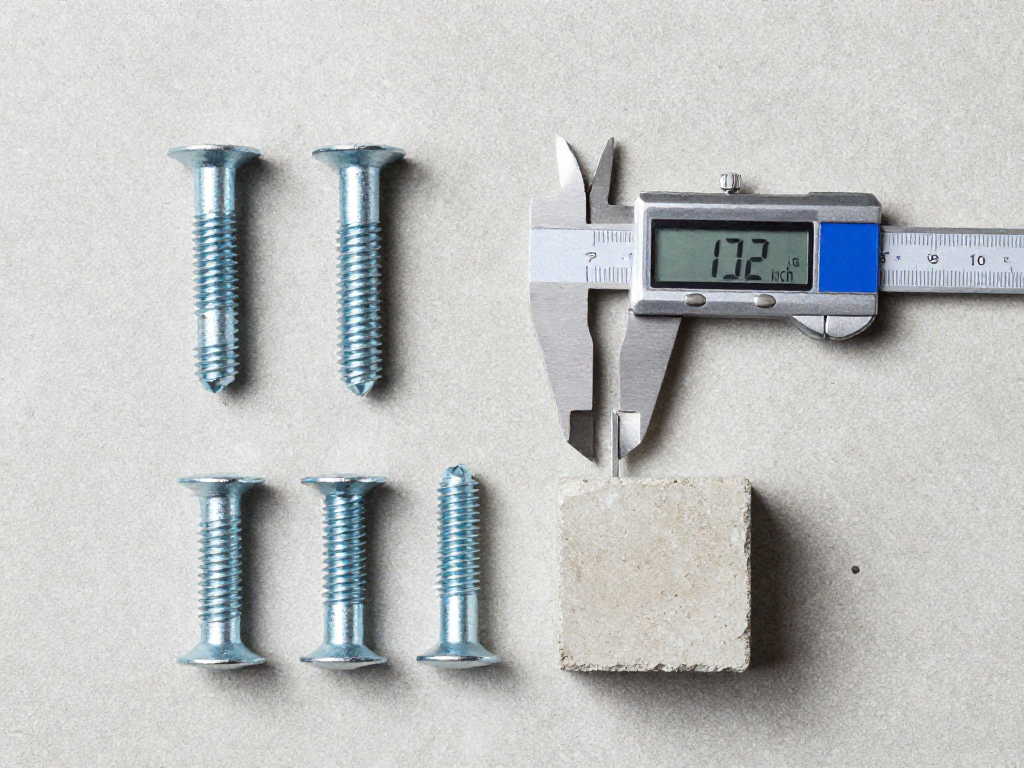
For outdoor wood-to-concrete bonds that need to carry serious loads, epoxy is the heavy hitter. Where polyurethane adhesives typically manage 1,000–3,000 psi tensile strength, epoxy formulations reliably deliver 3,000–7,000 psi. That’s the kind of force resistance that keeps a fence post rigid in a windstorm or a deck frame locked to its foundation year after year.
That strength comes from a chemical reaction that fuses the adhesive into both surfaces. Epoxy seeps into the wood’s grain and the concrete’s microscopic pores, then hardens into a single, continuous polymer matrix. The result isn’t a superficial stick—it’s a molecular grip that stays solid even when the concrete is rough, dusty, or slightly uneven. This ability to bridge gaps is a lifesaver on real job sites where perfect surface prep is rare, and it also forms a durable moisture barrier that helps prevent rot at the wood-concrete interface.
But outdoors, a rigid bond is often a brittle bond. Wood moves. It swells in humidity and shrinks when it dries, while concrete shifts at its own pace. A standard, inflexible epoxy will eventually crack under that back-and-forth stress. That’s why flexible epoxy formulations were developed—they stretch just enough to absorb this thermal expansion and contraction, keeping the joint intact. JBH Chemical specifically recommends flexible epoxy for outdoor deck applications because it can handle exactly this kind of movement without failing.
Costs are more reasonable than many people assume. A good-quality general-purpose epoxy starts around $30–$50 per gallon—right in line with entry-level polyurethane and less expensive than many premium polyurethane systems. Given that epoxy flooring can last 10–30 years, a properly bonded wood-to-concrete connection is a long-term solution, not a quick fix. For fence posts, just pour or trowel the mixed epoxy into the concrete footing hole before setting the post; for deck ledgers, use the epoxy to reinforce the mechanical connection—code often calls for anchor bolts or expansion anchors as the primary hold-down, and the epoxy provides an additional shear bond and a moisture seal.
One caveat: most epoxies need temperatures above 50°F to cure properly, so if you’re working in early spring or late fall, check the forecast or switch to a cold-cure polyurethane. For everything else, two-part epoxy is the undeniable go-to when you need wood and concrete to become one.
Polyurethane Adhesives: Not as Weatherproof as You Think
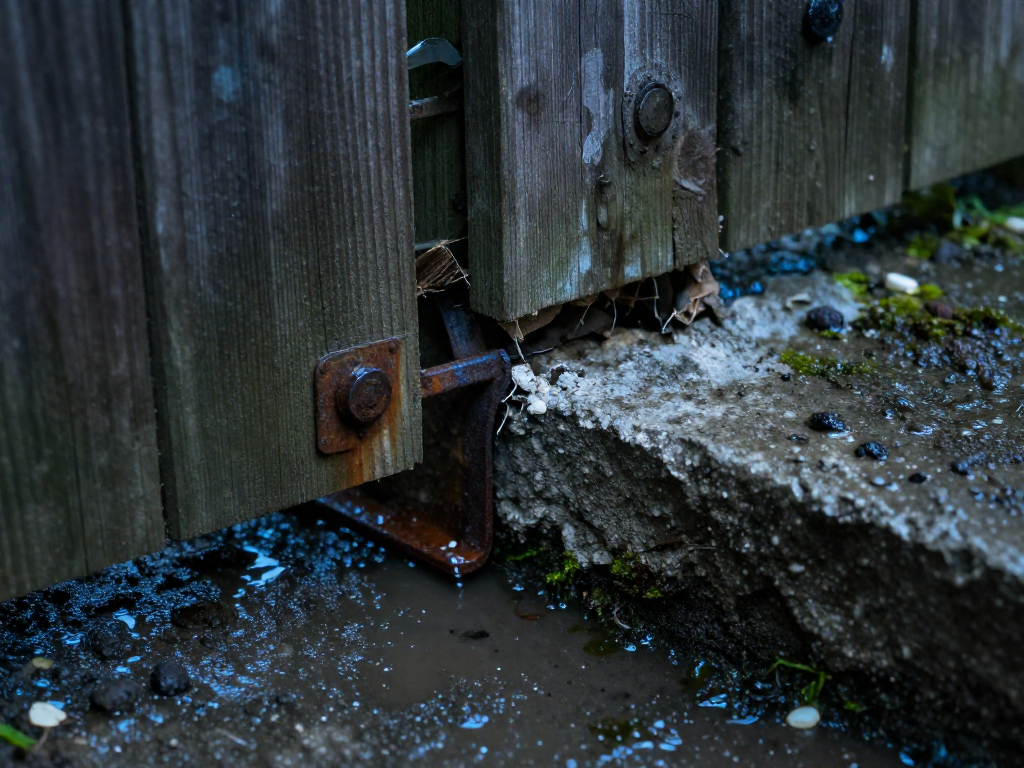
Polyurethane glues are often marketed as all-weather, gap-filling champions for bonding wood to concrete, and in dry conditions they can indeed pull impressive shear numbers—ranging from about 7.1 to 8.1 N/mm² on maritime pine cross-laminated timber, according to a detailed MDPI materials study. But here’s the thing: introduce moisture, and those numbers don’t just dip—they fall off a cliff. After a mere 24 hours of water immersion, that same study recorded a shear strength drop of more than 95%. The failure mode shifted from wood tearing to the adhesive layer simply letting go. For a fence post or deck beam that lives outdoors, where rain, dew, and ground moisture are constants, that’s a catastrophic weakness.
It’s not just one lab test, either. A USDA Forest Service evaluation put one-part polyurethane bonds through a severe cyclic delamination test designed to qualify structural laminated wood for exterior exposure. The polyurethane bonds delaminated badly in both yellow birch and Douglas-fir lumber, essentially washing out of the joints under repeated wet-dry cycling. If a glue can’t hold laminated wood layers together outside, it stands little chance of maintaining a long-term structural connection between a porous, swelling wood post and a rigid concrete footing that wicks moisture.
Now, to be fair, polyurethanes do bring a couple of handy traits to the table. They’re far more forgiving of temperature during application than epoxies. While most structural epoxies demand at least 50°F (10°C) to cure properly, polyurethane can be applied down to around 40°F (4°C)—a real advantage for late-season fence repairs or early-spring deck work (PU Glue vs Epoxy Strength). They also foam slightly as they cure, filling small gaps and irregularities between rough-sawn wood and uneven concrete surfaces, which can reduce the need for perfectly mated surfaces.
But those benefits are marginal when stacked against the moisture-driven durability problem. For any outdoor wood-to-concrete connection that stays wet or cycles between wet and dry, the high early dry strength of polyurethane is a mirage. It’s not a question of if it will weaken, but when. In below-grade applications like post bases set in concrete footings that stay damp year-round, polyurethane is simply a poor choice. Even in above-ground deck ledgers, the cumulative effect of rain and humidity will reliably degrade the bond over a much shorter lifespan than a properly chosen epoxy.
So where does polyurethane fit? Interior furniture bases, a wooden railing post indoors on a concrete floor, or a protected porch post that rarely sees direct rain—these are its safe zones. If you can guarantee the joint will stay dry for its entire service life, you’ll get a strong, slightly flexible bond that’s easy to work with. But for your deck or fence, where water is not a question of if but when, skip the polyurethane. The small application window benefit isn’t worth the near-total loss of strength the first time it rains.
Mechanical Fasteners: What Deck Codes Actually Require
If you’re tempted to grab a tube of construction adhesive and call it a day for that ledger board, stop right there. Deck ledger connections are structural, full-stop. The 2021 International Residential Code (IRC) spells out exactly what fasteners are allowed, and surface-applied glues—no matter how strong—are not on the list. According to IRC Section R507.9.1.3, every fastener securing a deck ledger to the house must be hot-dipped galvanized or stainless steel (Simpson Strong-Tie). This isn’t just a suggestion; it’s what ensures the connection can handle decades of moisture, wood-treatment chemicals, and the kind of loads that keep your deck attached to the house.
When you’re fastening into solid concrete—say, a poured foundation wall—the code points you to expansion anchors. These work by expanding inside the drilled hole to create a tight mechanical lock. You’ll need a minimum bolt diameter of 1/2 inch, and in some cases a 5/8-inch-diameter anchor is required to accommodate that bolt. The anchor must be set at least 2-1/2 inches deep into the concrete to develop full holding strength. Don’t wing it on depth; a shallow set is a recipe for pullout.
Hollow or grout-filled masonry walls are a different animal. Here, expansion anchors can’t grip reliably, so the code calls for adhesive anchors—essentially, a two-part epoxy or acrylic that bonds a threaded rod into the masonry. The rod must be 1/2 inch in diameter and set to a minimum embedment of 4-1/4 inches. Look for products specifically listed for this use: Simpson Strong-Tie Titen HD® in stainless steel is a go-to option, and other approved systems include Hilti HY-20 and Epcon Acrylic 7 by ITW Ramset/Red Head. These aren’t the same as the general-purpose epoxies you’d buy off the shelf; they’re engineered for consistent performance in damp, load-bearing conditions and tested to stay put under the thermal swings and vibration a deck sees.
Finally, don’t neglect spacing and edge distance. The code sets minimums to prevent splitting the concrete or masonry, and each anchor manufacturer’s installation guide will give you the exact numbers for their product. As a rule of thumb, you’re generally looking at a minimum of 4 to 6 inches from any edge, but check the spec sheet for your specific anchor. The bottom line: for any deck ledger—or any structural wood-to-concrete connection outdoors—skip the wishful thinking and reach for a code-listed mechanical anchor every time.
Hybrid Approach: When to Use Both Glue and Bolts
For any structural connection that falls under building code — a deck ledger, a load-bearing post base — adhesive alone won't cut it. Mechanical anchors are mandatory. When you're attaching a deck ledger to solid concrete, the IRC requires expansion anchors with a minimum 1/2-inch diameter set at least 2-1/2 inches deep (Decks.com). That’s non-negotiable. Adhesive’s role here is supportive, not load-bearing.
But before you drill those anchor holes, applying a generous bead of construction adhesive between the wood and concrete does two useful things. It seals the joint against water intrusion, which helps prevent rust on the hardware and rot in the wood. It also dampens vibration, so the connection isn’t just a hard mechanical joint — it’s bedded in a flexible layer that absorbs movement.
For fence posts, a hybrid approach gives you extra uplift resistance. Wedge anchors do the heavy lifting, but a compatible adhesive (like a flexible epoxy) applied to the contact surfaces before setting the post fills micro-gaps and locks the post in place. This isn’t about meeting code; it’s about making the assembly silent and wobble-free long after the concrete has cured. Think of it as belt-and-suspenders for a fence that takes wind.
Step-by-Step: Attaching Wood to Concrete for Decks and Fences
Whether you’re setting a fence post into an existing concrete pad or bolting a deck ledger to a foundation wall, the sequence matters just as much as the adhesive. Here’s how to get both jobs done right.
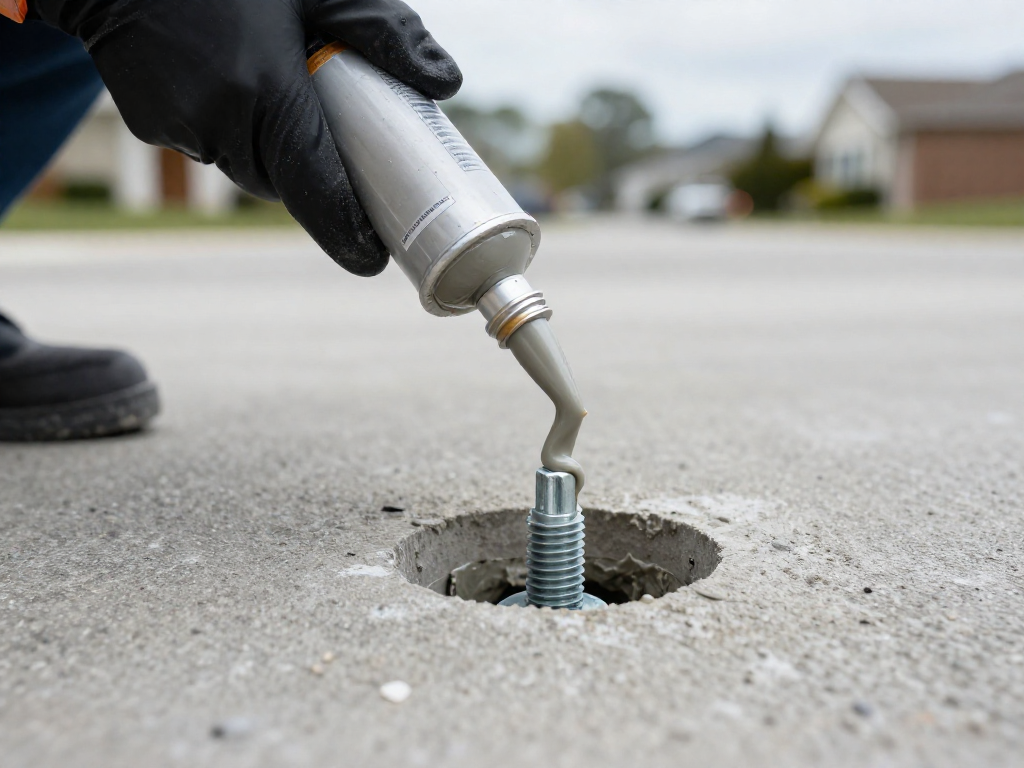
For a fence post, you have two solid approaches. If you’re dropping the post into a concrete slab or footing, drill an oversized hole (leave a gap around the post for the adhesive) and vacuum out every speck of dust—this step isn’t optional. If the concrete has oil, sealer, or old paint, wipe the hole with a degreaser. Then inject a flexible two-part epoxy or a polyurethane adhesive, slowly twist the post down into the hole, and brace it plumb. Let it cure overnight. The flexible epoxy handles seasonal wood movement without cracking, which is why it’s a favorite for outdoor work. The other route is to bolt a galvanized post base to the concrete and screw or nail your post into it. This keeps the wood above any standing water and is often the cleaner, code-preferred solution.
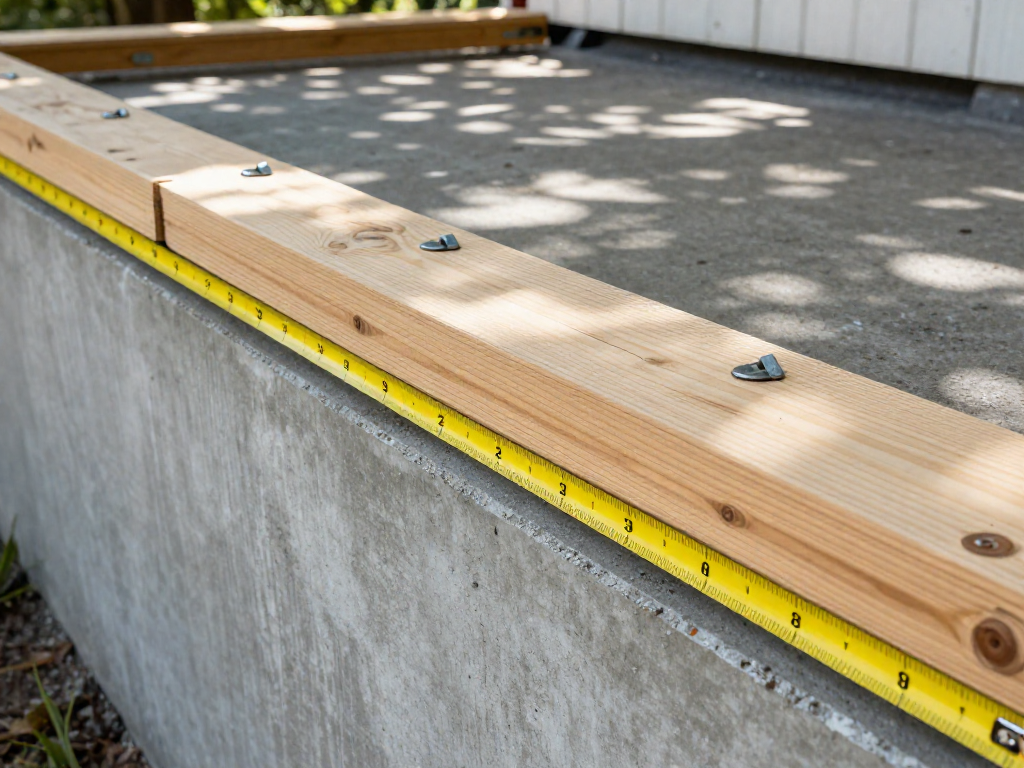
Attaching a deck ledger is a load‑bearing connection, so the rules are less forgiving. Mark your bolt layout early, then drill through the ledger and into the concrete. For solid concrete, expansion anchors or screw‑type anchors like the Simpson Strong‑Tie Titen HD in stainless steel are typical. The hole must be drilled deep enough for the anchor to set at least 2½ inches into sound concrete, and the bolt diameter must be ½ inch (some anchors end up needing a 5/8‑inch hole). Hollow concrete block calls for adhesive anchors: inject an approved epoxy into cleaned holes to a minimum depth of 4¼ inches, then set a ½‑inch threaded rod. As Decks.com points out, cutting corners on embedment depth is a sure way for the ledger to pull loose. Before you tighten the bolts, slip a strip of self‑adhesive flashing behind the ledger—it’s cheap insurance against the moisture that traps between wood and concrete.
Both epoxies and polyurethanes have working windows you can’t ignore. Most epoxies need the air and concrete above 50°F; a polyurethane adhesive will usually still kick at 40°F. Check the open time on the label, and get your anchors or post in place before the adhesive skins over.
Longevity and Inspection: Keep Your Connections Safe
Well-executed epoxy connections can remain structural for decades. Epoxy flooring, which relies on similar resin chemistry, routinely lasts 10 to 30 years (EnvironMolds). Flexible epoxy formulations handle the thermal movement between wood and concrete, so a careful installation pays off for a long, long time.
Polyurethane adhesives are less forgiving. Moisture degrades the bond silently from within. In one study, just 24 hours of water immersion slashed polyurethane shear strength by more than 95% (MDPI). What looks fine on the surface can be failing underneath. Every year, look closely for hairline cracks along the glue line or the faintest separation between wood and concrete. Also check any metal fasteners—galvanized or not—for rust and replace the first ones that show corrosion. Catching a weakening joint early prevents a post from pulling loose when you lean on it.
Final Verdict: Which Should You Choose?
For any structural connection governed by building codes—like a deck ledger—skip the glue aisle entirely. You need approved mechanical anchors: expansion anchors or code-compliant epoxy-set anchors, with bolt diameters and embedment depths meeting local requirements. For non-structural outdoor bonds where some movement is expected, a flexible epoxy is your safest bet. It can handle the thermal expansion and moisture swings that destroy rigid joints. Polyurethane? Only if you can guarantee it stays bone-dry—which is almost impossible outdoors. In one severe cyclic delamination test, polyurethane bonds on exterior wood laminates failed completely (USDA Forest Service).
Sources
- Epoxy vs. Polyurethane Resins: What’s the Real Difference? — EnvironMolds — artmolds.com
- Epoxy Vs. Polyurethane Adhesives for Structural Applications: How to Decide — gluegun.com
- PU Glue vs Epoxy Strength - Polyurethane Adhesive — puglue.com
- How to Use Epoxy Adhesive for Wood and Concrete Bonding Effectively – JBH Chemical Ventures — jbhchemicalventures.com
- 9: Ledger—Board Fasteners | UpCodes — up.codes
- Decks Done Right Series — Real Solutions for Safer, Stronger Decks - — seblog.strongtie.com
- Ledger Board Attachment to a Solid Concrete Foundation Wall | Decks.com — decks.com
- Influence of Polyurethane Adhesive Formulation on Shear Performance of Maritime Pine Cross-Laminated Timber Under Dry and Moist Exposure Conditions — mdpi.com
- Strength and Durability of One-Part Polyurethane Adhesive Bonds to ... — research.fs.usda.gov
See also
- Best Adhesive for Metal to Wood
- How to Glue Stone to Concrete
- Silicone vs. Polyurethane Sealants for Outdoor Use
- Deck Building: Flashing and Ledger Board Installation
- Choosing the Right Anchor for Concrete
Related articles
Attaching Foam to Wood: Craft vs Structural Applications
How do I glue foam to wood without melting or weakening the foam?
Jul 22, 2026 · 6 min read
How to Bond Acrylic to Metal: Achieving a Clear, Strong Joint
What's the best adhesive for bonding acrylic (plexiglass) to metal without clouding?
Jul 22, 2026 · 6 min read

Gluing Silicone: Is It Even Possible and What Alternatives Work?
Can you glue silicone to something else, and if not, what should you use?
Jul 22, 2026 · 5 min read