Gluing Silicone: Is It Even Possible and What Alternatives Work?
Can you glue silicone to something else, and if not, what should you use?
On this page
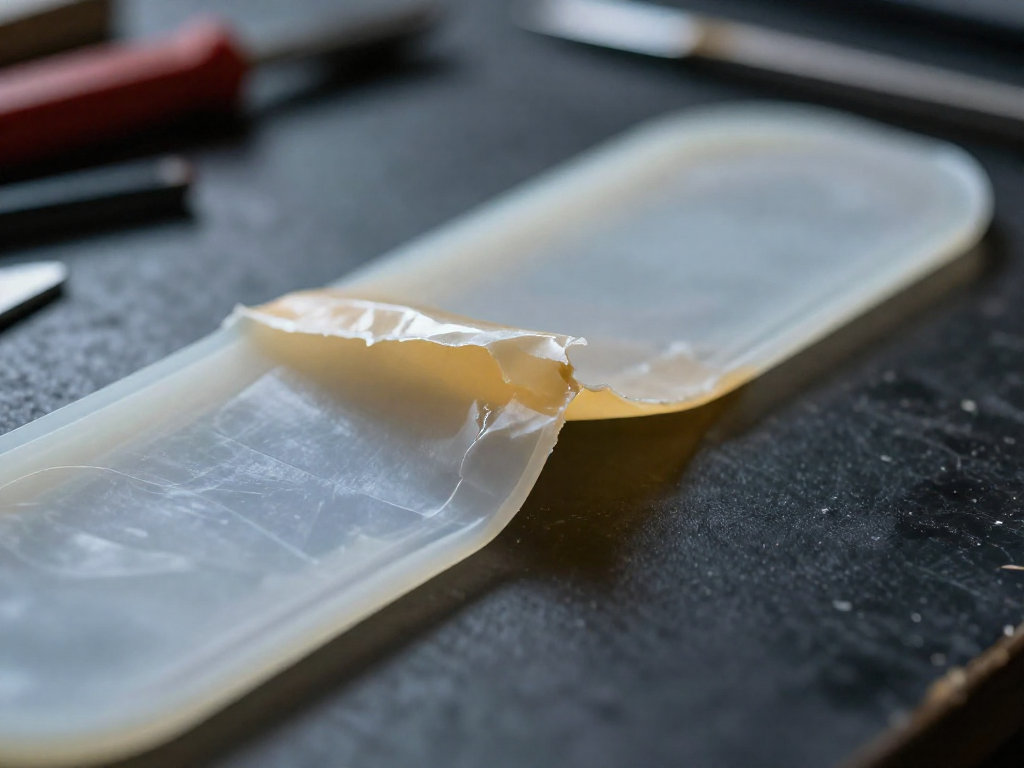
You’ve tried super glue, epoxy, maybe even duct tape—nothing bonds to that silicone phone case, kitchen spatula, or gasket. Here’s why, and what actually works.
The Sticky Problem with Silicone
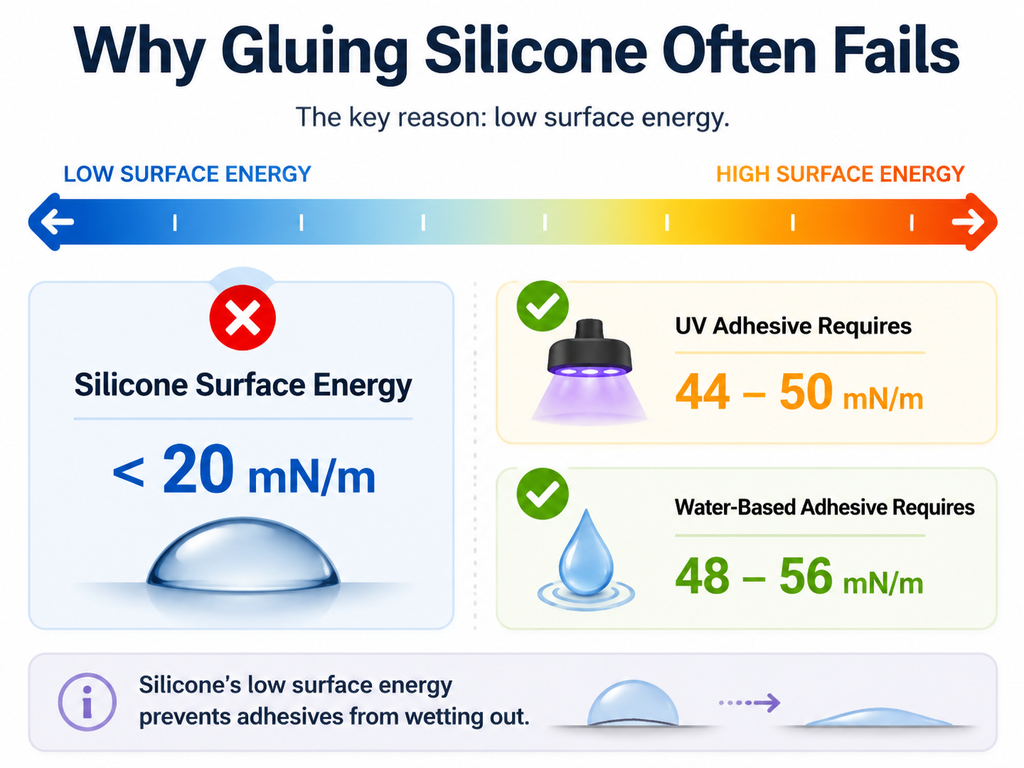
Yes, you can bond silicone—but it’s not simple, and everyday glues won’t work. The core issue is surface energy. Silicone sits below 20 mN/m, while most adhesives need at least 44 mN/m to grab hold (Dyne Testing). That mismatch makes silicone notorious for peeling away. The good news: specialty primers, dedicated silicones, and certain cyanoacrylates can bridge this gap when applied properly.
Why Most Glues Fail on Silicone
Silicone is one of the lowest-surface-energy materials you’ll ever try to glue — its surface energy sits under 20 mN/m (about 20 dynes/cm), and often in the high teens (Dyne Testing). Most adhesives won’t even spread on a surface that slick. For a liquid to wet out and form a bond, it needs the solid to have a higher energy than its own surface tension. UV-curing adhesives typically demand at least 44–50 mN/m; water-based ones need 48–56 mN/m. That gap means standard glues bead up on silicone just like water on a freshly waxed car — no molecular contact, no mechanical grip.
Even when you try to bond silicone to itself, the numbers are brutal. The adhesion energy between two fully cured silicone elastomers is only about 0.1 J/m² — barely enough to call it stuck. Compare that to a carefully controlled process where you join a partially cured silicone layer to a second layer: the adhesion energy can jump to roughly 1000 J/m², rivaling some tough hydrogels. That thousand-fold difference shows how curing state, not surface preparation alone, controls whether you get a real bond or a false promise.
So when a tube of cyanoacrylate or epoxy just rolls off your silicone gasket, it’s not the glue’s fault — it’s physics. Without a way to bridge that huge surface-energy mismatch, you’re fighting a battle most glues were never designed to win.
The Few Adhesives That Can Bond Silicone
Because silicone’s surface energy sits below 20 mN/m (Dyne Testing), it repels water-based and UV-cure glues that need a surface at least 40–50 mN/m to wet out properly. That rules out most general-purpose adhesives right away. The ones that do work fall into two camps: silicone-based adhesives that cure in place, and pressure-sensitive tapes.
One-part RTV (room-temperature-vulcanizing) silicone sealants are the most predictable option. They cure by reacting with moisture, forming a flexible network that chemically matches the existing silicone. This shared chemistry lets the fresh layer fuse to fully cured silicone — something that simply can’t happen with acrylics, epoxies, or super glues. The catch is that the bond still won’t be structural; the adhesion energy between two fully cured pieces is only around 0.1 J/m², so joint design matters. For best results, clean with a solvent that doesn’t leave residue and lightly scuff the surface, but know that the chemistry, not abrasion, does the real work.
Where a sealant won’t suit, high-performance pressure-sensitive tapes are the other practical answer. They don’t need to chemically react with the silicone — they rely on aggressive, soft adhesives that flow into the surface on contact. Silicone-specific transfer tapes and double-coated films exist, often used in medical device assembly and industrial gasketing. They handle light loads and vibration well, provided the silicone is clean and dry.
When You Can't Glue: Clever Alternatives
When adhesives are a dead end, you have several workable substitutes.
Since silicone’s surface energy sits below 20 mN/m — far lower than the 44–50 mN/m most adhesives require (Dyne Testing) — switching to a mechanical approach often saves the project. Screws, bolts, or snap-fit clips physically lock the parts together; for softer substrates, zip ties or rivets provide a reliable grip without relying on surface chemistry.
If you’re joining silicone to silicone, use fresh, uncured silicone as your “glue.” It cross-links with the cured surfaces as it sets, creating a strong, flexible bond that no off-the-shelf adhesive can match.
Sometimes you can redesign the joint itself: add an interlocking tab, a compression fit, or a dovetail slot so the pieces stay together under tension. And when the job is purely about sealing — not structural adhesion — skip fumbling with glue altogether. A ready-made silicone gasket, O-ring, or even a bead of uncured sealant compressed between flanges does the work without ever needing to stick.
Avoid These Common Silicone Bonding Mistakes
Steer clear of super glue, epoxy, and hot melt—they can’t wet silicone’s non-stick surface. Silicone’s surface energy sits below 20 mN/m (Dyne Test Pens), far below the 44–50 mN/m that even UV adhesives require. Sanding won’t change that low surface energy. Primer without the right adhesive is wasted effort. And a quick wipe with isopropyl alcohol only helps pressure-sensitive tapes stick—it doesn’t enable a true chemical bond.
Sources
- USING DYNE TEST MARKER PENS TO MEASURE ... — dynetesting.com
- Dyne test | Measuring Surface Energy | DyneTEC - Tantec — tantec.com
- Questions and Answers – Accu Dyne Test — blog.accudynetest.com
- Understanding silicone elastomer curing and adhesion for stronger soft devices — pmc.ncbi.nlm.nih.gov
FAQ
Can I use hot glue on silicone?
No, hot glue will not bond to silicone in any meaningful way. Hot melt adhesives require a surface energy much higher than silicone's typical <20 mN/m; they will simply peel off without chemical or mechanical bite.
Is there a primer that makes silicone stick?
Yes, there are primers designed to treat low-energy surfaces like silicone, but they are adhesive-specific and not a universal fix. These primers often modify the surface with reactive silanes, temporarily raising the surface energy enough for a designated glue to grip—check with the adhesive manufacturer for a compatible primer.
What about silicone caulk – can that be used as an adhesive?
Silicone caulk can serve as a light-duty adhesive when applied wet and allowed to cure between surfaces, but it is very weak at bonding already cured silicone pieces. The adhesion energy between two fully cured silicone elastomers is only about 0.1 J/m²—so expecting silicone caulk to act like a structural glue will lead to bond failure under even modest load.
How can I test if a glue will stick to my silicone?
The most reliable way is to check the surface energy with dyne test pens. Apply a pen of a known dyne level (e.g., 30 mN/m) to the silicone; if the liquid remains a continuous film for at least 3 seconds, the surface energy is at least that value. For comparison, most water-based adhesives need 48–56 mN/m, and UV adhesives need 44–50 mN/m, while pure silicone measures in the 20s. If the silicone fails such a test, any glue that requires wetting will struggle to adhere.
See also
- Gluing Rubber to Metal: A Comprehensive Guide
- Best Adhesive for Plastic to Metal: What Actually Works
- How to Choose the Right Adhesive for Low-Energy Plastics
Related articles
Attaching Foam to Wood: Craft vs Structural Applications
How do I glue foam to wood without melting or weakening the foam?
Jul 22, 2026 · 6 min read
Joining Concrete to Wood: The Right Adhesive for Fence Posts and Decks
Which adhesive is best for attaching wood to concrete in outdoor projects?
Jul 22, 2026 · 11 min read
How to Bond Acrylic to Metal: Achieving a Clear, Strong Joint
What's the best adhesive for bonding acrylic (plexiglass) to metal without clouding?
Jul 22, 2026 · 6 min read