Toggle Bolts: The Strongest Drywall Anchor? When to Use Them and How to Install
How do I install toggle bolts for heavy wall-mounted items?
On this page
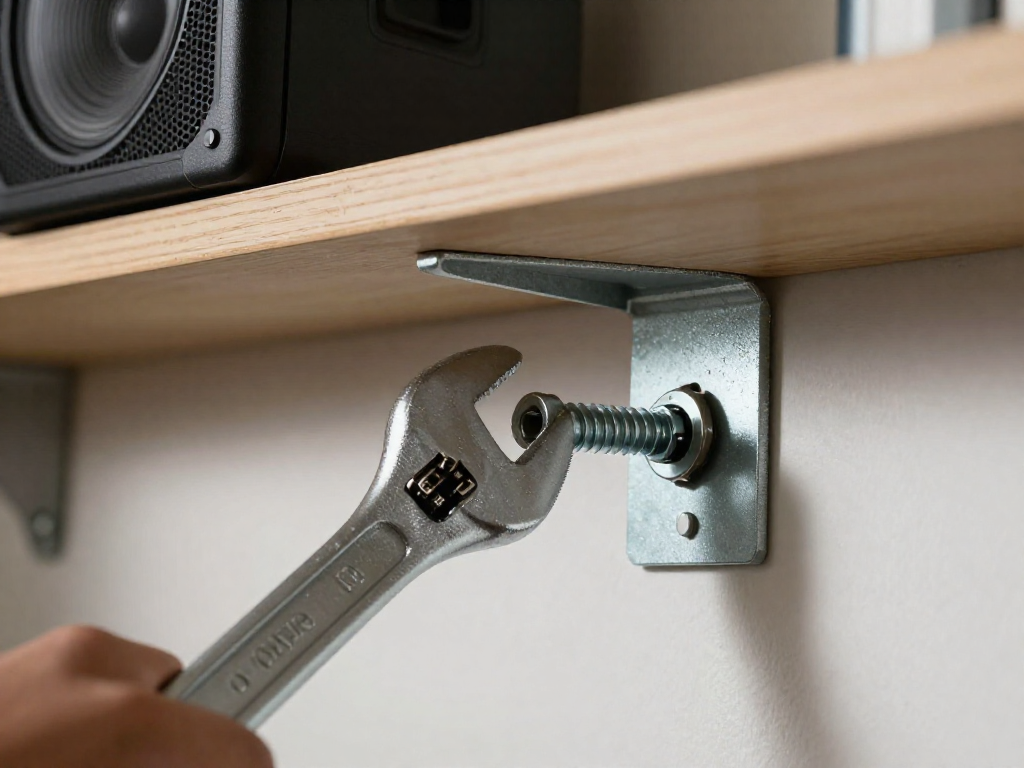
When you need to mount a heavy mirror or shelf on drywall and can't find a stud, toggle bolts are the go-to anchor. But missteps in installation can lead to failure. Here's exactly how to install them safely, with real weight limits and a crucial safety rule most forget.
How Much Weight Can Toggle Bolts Really Hold? (Hint: Not as Much as You Think)
Before you drill into drywall for that heavy shelf or TV mount, ignore the big numbers you see on the package. Toggle bolts are incredibly strong—but only when you apply a real-world safety factor. The raw load ratings you see online are ultimate failure points, not what you should actually hang.
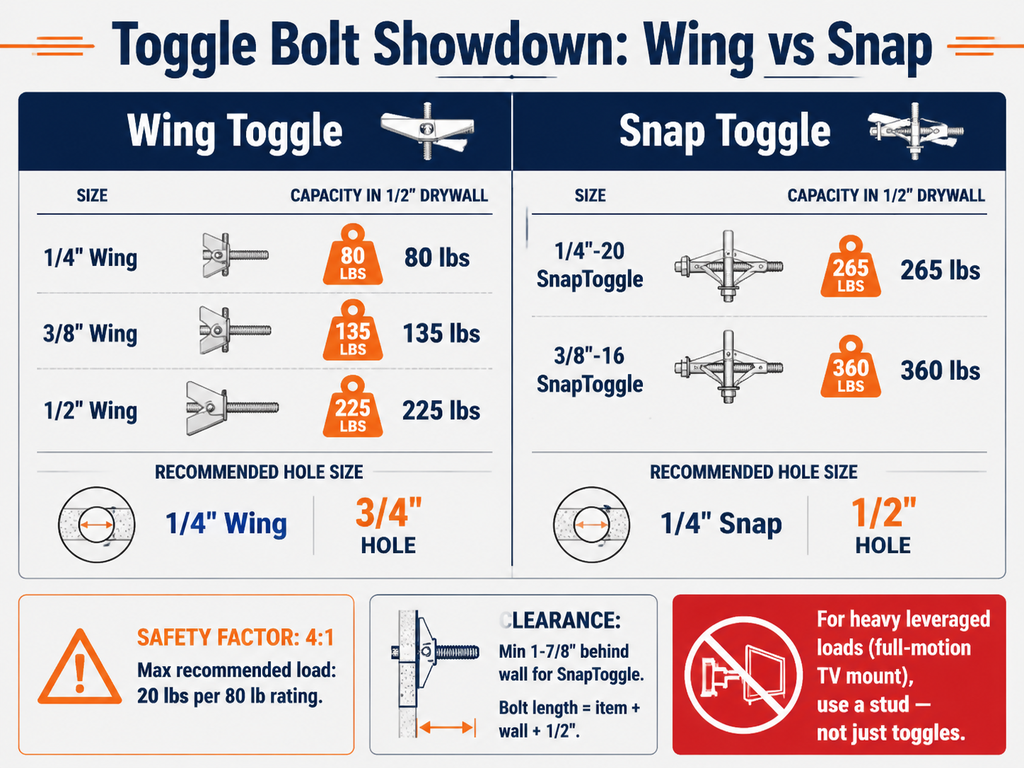
Here are the static load limits for standard wing toggles in 1/2" drywall: a 1/4" bolt holds about 80 lbs, a 3/8" holds about 135 lbs, and a 1/2" holds about 225 lbs. The Toggler SNAPTOGGLE is even stronger—the 1/4-20 version supports 265 lbs, and the 3/8-16 supports 360 lbs. But these numbers mislead if you don’t apply the safety factor. Eugene Fastener recommends a 4:1 safety ratio for any load-bearing application. That means that 80-lb toggle is really only good for a 20-lb shelf. A 265-lb SNAPTOGGLE drops to about 66 lbs for safe hanging. Suddenly that "holds 100 lbs" label doesn’t seem so generous—and in informal testing, a traditional toggle did hold 100 lbs before the tester stopped, but long-term reliability demands the safety margin.
And if the weight moves or exerts leverage—like a full-motion TV mount—toggle bolts alone aren’t enough. For those, you need to hit a stud or install solid backing. Static, pull-straight-down loads are toggle territory; anything that pivots or vibrates is a completely different animal.
Wing Toggle vs. Snap Toggle: Which One Should You Use?
The two main styles of toggle bolt each have distinct trade-offs. Wing toggles are the classic, lower-cost option — but they need a fairly large clearance hole. For a 1/4-inch bolt, you'll typically drill 5/8-inch to 3/4-inch, because the folded wings must pass through. That oversized hole means the bolt head alone is smaller than the opening. Wirecutter notes that without a washer or mounting bracket, the bolt will simply fall into the wall.
Snap toggles, like the TOGGLER SNAPTOGGLE, use a metal channel that inserts through a much smaller hole — just 1/2-inch for a 1/4-inch bolt. They’re reusable and often hold higher loads, but you pay more and need at least 1-7/8 inches of clear space behind the drywall. For bolt length, add your item thickness, wall thickness, and an extra 1/2 inch (13 mm). If you’re mounting something that moves or leverages hard, like a full-motion TV arm, skip toggles entirely and find a stud.
Step-by-Step Toggle Bolt Installation (With Pro Tips to Avoid Disaster)
Start by marking your exact spot and checking behind the wall with a stud finder that has wire detection—nobody wants to drill into plumbing. Then drill the hole. For drywall, Eugene Fastener says a standard high-speed twist bit gets it done cleanly; switch to a masonry bit for hollow block. Hole size matters: a typical 1/4" wing toggle needs 5/8", while a Toggler SNAPTOGGLE takes just 1/2". Going even a hair too large can let the toggle spin or the bolt pull through.
Once the hole is drilled, for wing toggles fold the wings flat against the bolt and push the whole assembly through until the wings snap open inside the cavity. Snap toggles are easier: attach the metal channel to the plastic straps, pinch to narrow the profile, push through, and tug the straps so the channel flips vertical and seats firmly against the back of the drywall.
Now the most critical step: always, always use a bracket, mounting plate, or at least a fender washer under the bolt head. The hole is bigger than the head—skip this and your bolt disappears into the wall, as Wirecutter points out. Slide the bolt through your hardware, thread it into the toggle, and tighten until you feel solid resistance and no more. Overtightening is a classic mistake: crank it down and those wings start digging into the back of the drywall, chewing out the anchor’s grip and potentially cracking the wall. Snug is plenty; wiggle the mounted item to confirm it doesn’t budge.
When NOT to Use Toggle Bolts (Even Though They're Strong)
Toggle bolts grip only static loads; they’re a bad choice for anything that moves or creates prying force. As the Wirecutter notes, a full‑motion TV mount demands a stud or solid backing, not toggles alone. For any heavy item under leverage, always attach to a stud or solid blocking. Never hang ceiling fixtures from toggles in drywall—they aren’t rated for overhead tension. When removing a toggle bolt, unscrew it halfway, push it in to drop the wing into the cavity, then pull the bolt free (the wing is lost). Snap toggles let you unscrew the bolt, but the plastic straps stay behind.
Sources
- How to Install Toggle Bolts | Sizes, Weight Capacity & Removal | Eugene Fastener — eugenefast.com
- SNAPTOGGLE® Heavy-Duty Toggle Bolt — Carbon Steel – TOGGLER — toggler.com
- Toggler Snap Toggle Bolts Installation Instructions — grabbarspecialists.com
- Toggle Bolts: The $1 Fix to Hanging on a Hollow Wall | Reviews by Wirecutter — nytimes.com
- Strength Testing The Best Drywall Anchors — youtube.com
FAQ
What's the weight limit for a 1/4" toggle bolt in drywall?
A standard 1/4" wing toggle holds about 80 lbs of static load in 1/2" drywall, but a 1/4-20 SnapToggle (Toggler) holds about 265 lbs in the same wall. For any load-bearing application, apply a safety factor of 4:1—so plan for only 20 lbs from the wing toggle or about 66 lbs from the SnapToggle.
Can I use toggle bolts for a TV mount?
No, toggle bolts alone are not recommended for TV mounts, especially full-motion mounts. The leverage and movement require anchoring into a stud or solid backing. A static flush-mount may hold, but it's safer to always use a stud.
What size drill bit do I need for a 1/4" snap toggle?
You need a 1/2" diameter drill bit. Toggler specifies this hole size for their 1/4" SnapToggle anchor. Use a standard twist bit for drywall; switch to a masonry bit for hollow block.
How do I remove a toggle bolt?
For wing toggles, unscrew the bolt until the spring-loaded wings fall inside the wall cavity, then patch the hole. Snap toggles let you remove the bolt while the channel stays in place, so you can reinstall later without losing the anchor.
Are snap toggles stronger than wing toggles?
Yes, snap toggles are significantly stronger. In 1/2" drywall, a 1/4-20 SnapToggle holds about 265 lbs versus only 80 lbs for a 1/4" wing toggle. Even larger snap toggles hold up to 360 lbs, while a 3/8" wing toggle stops at about 135 lbs.
See also
- molly bolts vs toggle bolts: which anchor is right for your project
- how to install drywall anchors for heavy items
- choosing the right fastener for different wall materials
Related articles
Machine Screws, Bolts, and Nuts: A DIYer’s Guide to Size and Grade
How do I know what size bolt and grade to use for a mechanical repair?
Jul 22, 2026 · 3 min read
Deck Screws vs. Nails: Fastening Deck Boards for Longevity
Should I use screws or nails for my deck, and what type?
Jul 22, 2026 · 6 min read

How to Choose Screws for Outdoor Use: Galvanized, Stainless, or Coated?
Which screw finish prevents rust best for outdoor projects?
Jul 22, 2026 · 3 min read