Machine Screws, Bolts, and Nuts: A DIYer’s Guide to Size and Grade
How do I know what size bolt and grade to use for a mechanical repair?
On this page
Start with the frustration of needing a replacement bolt and not knowing what you're looking at, then promise that by the end of this quick guide you'll confidently size any bolt.
Introduction: The DIYer's Bolt Frustration
The bolt is snapped. You’re standing in the hardware aisle, and the clerk asks, “What size?” Without knowing the diameter, thread count, and grade, you’re guessing. This guide ends that moment. You’ll learn to read the markings and measure with confidence so your next repair gets the right fastener the first time.
How to Read Bolt Sizes: Metric vs. SAE (The Thread Pitch Decoder)
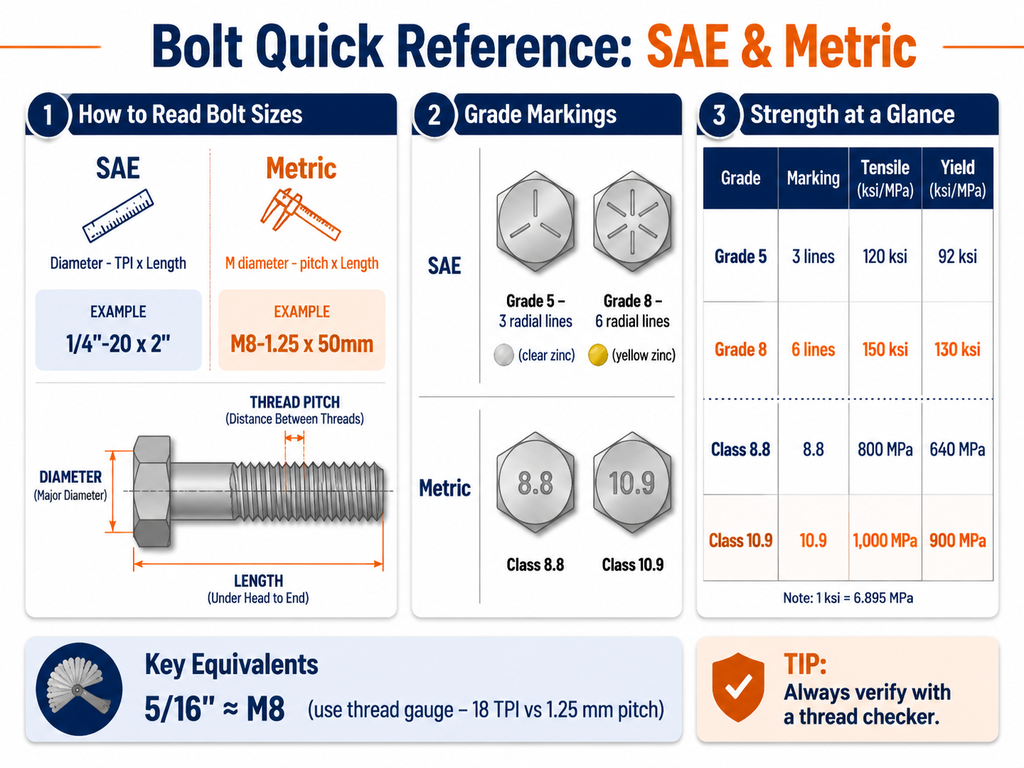
First, get the naming codes straight. SAE bolts follow diameter - threads per inch x length — so a 1/4"-20 x 2" bolt has a 1/4 inch diameter, 20 threads per inch (coarse), and is 2 inches long. Higher TPI means finer threads, like the 1/4"-28 fine-thread variant. Metric bolts use M diameter - pitch x length, as in M8-1.25 x 50mm: 8 mm diameter, 1.25 mm between threads, 50 mm length.
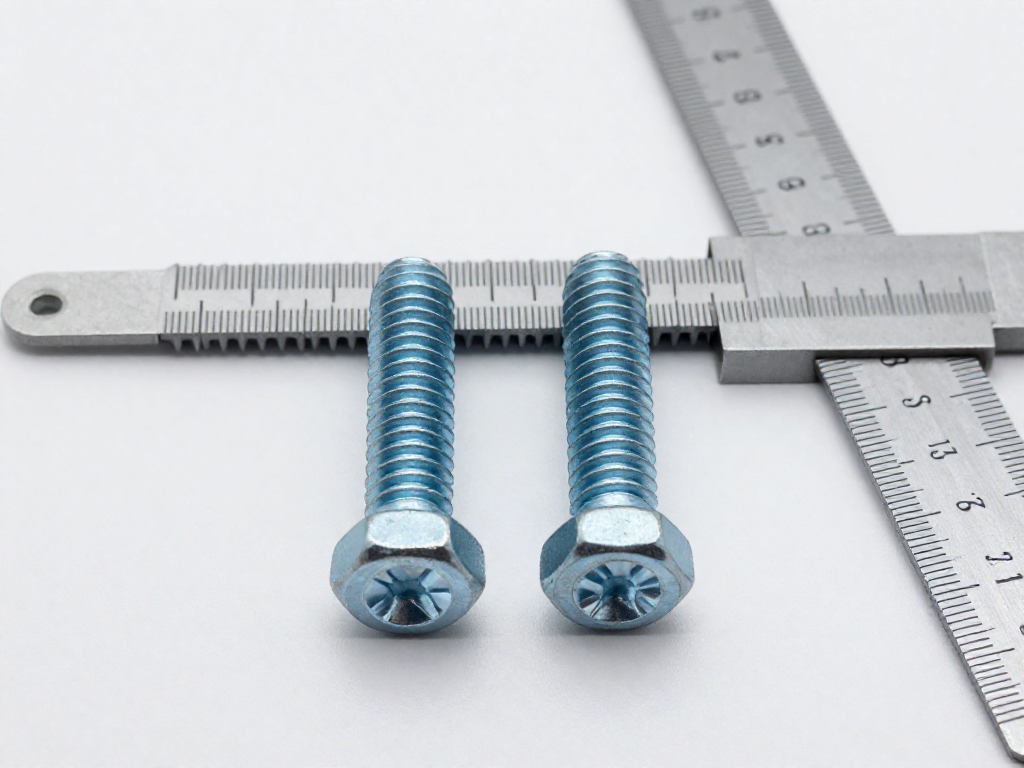
Now for the trap everyone falls into. Hold an M8 next to a 5/16" bolt and you'll swear they're the same. They differ by only 0.06 mm (8.0 mm vs. 7.94 mm) — visually identical under shop grime. Try cranking one into the other's nut, though, and you'll strip threads in a second. The giveaway is pitch: M8 coarse is 1.25 mm, while 5/16"-18 has 18 TPI, which works out to about 1.41 mm. Even a quick cross-check will show the misalignment. This is where an inexpensive thread checker saves your project. A plate like the AltitudeCraft Thread Checker sorts 28 sizes from M3 through M12 and 4-40 through 1/2"-13 in seconds, leaving no room for doubt (AltitudeCraft). If you're stuck without a gauge, rough conversion charts say 5/16" ≈ M8, but treat that as a starting point — always verify by mating the mystery bolt with a known nut of each type.
Bolt Grade Decoded: The Slashes and Numbers on the Head
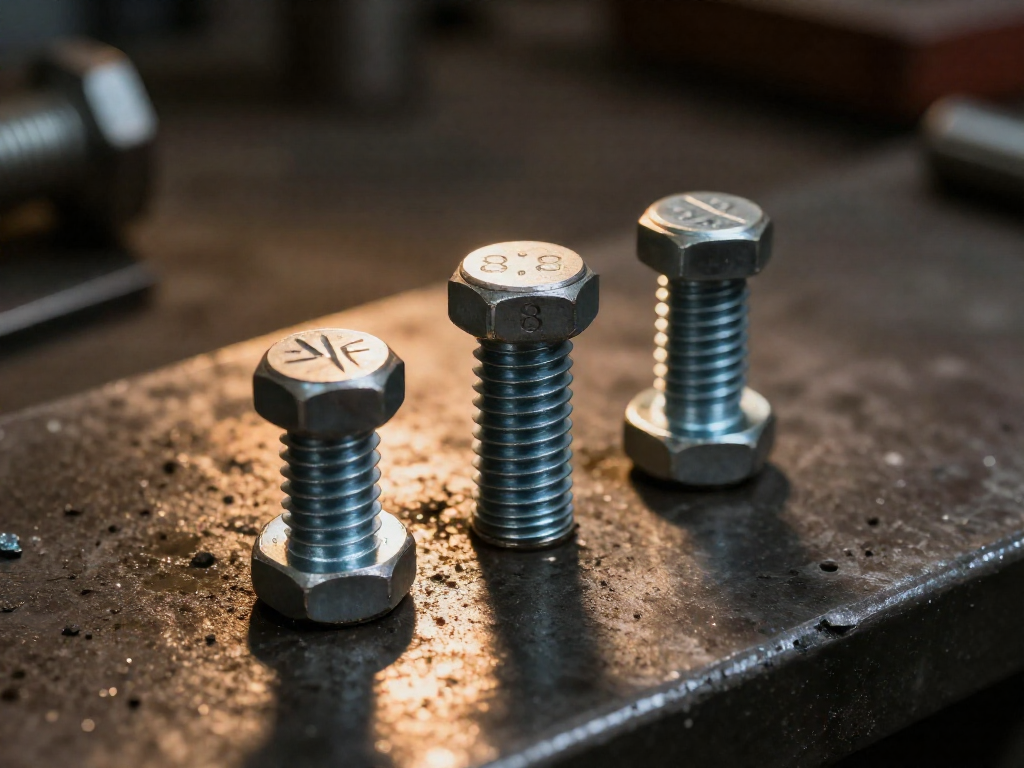
Look at the head. SAE bolts use radial lines: three lines for Grade 5, six lines for Grade 8. It’s that simple. Metric bolts ditch the lines and stamp two numbers separated by a dot — Class 8.8, 10.9, or 12.9.
The markings map to strength. A Grade 5 bolt guarantees a minimum tensile strength of 120 ksi (kilo-pounds per square inch) and yields at 92 ksi. Grade 8 jumps to 150 ksi minimum tensile and 130 ksi yield — stronger, but that extra hardness comes with less ductility, so it snaps rather than bends if overloaded. On the metric side, Class 8.8 is the rough equivalent of Grade 5, with a minimum tensile of 800 MPa (about 116,000 psi). Class 10.9 sits near Grade 8, delivering at least 1,000 MPa (around 150,000 psi). And a quick visual tell: the zinc plating on Grade 5 bolts is almost always clear, while Grade 8 gets a yellow plating (KGLilly).
For most auto and DIY jobs — suspension brackets, engine accessories, general clamping — Grade 5 or Class 8.8 is the safe, economical choice. Reserve Grade 8 or Class 10.9 for joints where engineers call them out, like shear-loaded steering or drivetrain components. Don’t automatically upgrade; the higher cost isn’t always worth it, and the brittleness can hurt in vibration-heavy spots.
Common Head Types (And Where You'll See Them)
The hexagonal head—or hex head—is the most common bolt type you'll run into (Huyett). It takes a wrench or socket, plain and simple. When you're working in a tight, recessed spot, reach for a socket cap screw: that's the one with a cylindrical head you drive with an Allen key. For a completely flush surface, a flathead or countersunk head sinks down into the material to sit smooth.
Nuts & Washers: Quick Match Tips
A nut must match the bolt's thread exactly — a 1/4"-20 bolt takes a 1/4"-20 nut (1/4" diameter, 20 threads per inch) (Echo Supply). Match the nut grade to the bolt grade; a Grade 5 bolt needs a Grade 5 nut. Use a flat washer to spread the load, and a split lock washer to resist loosening from vibration.
Sources
- Bolt Size Chart (SAE & Metric) – Complete Guide – BoltsandNuts.com — boltsandnuts.com
- How to Identify Bolt Thread Size: Metric & SAE Guide (2026) | AltitudeCraft — altitudecraft.com
- Thread Pitch vs TPI (Threads Per Inch): Metric vs SAE Fastener Guide — monsterbolts.com
- Thread Chart (Metric) | Major and Minor Diameters — echosupply.com
- Understanding Bolt Grades: Grade 5 vs. Grade 8 and Class 8.8 vs. 10.9 (A Complete Guide) - Sunhy — sunhyings.com
- Grades of Bolts - Bolt Grade Marking Chart | AFT Fasteners — aftfasteners.com
- Fastener Grades 5 vs 8 vs 8.8 vs 10.9 — kglilly.com
- Grade 5 vs Grade 8 vs Grade 9 Bolts: Complete Guide — scfastening.com
- Strongest Bolt? Grades Explained & Dyno Tested For Science — youtube.com
- A Complete Guide to Bolt Head Types — huyett.com
See also
- Choosing the Right Adhesive for Metal-to-Plastic Bonds
- Screw vs. Bolt: When to Use Each Fastener
- How to Remove a Stripped or Rusted Bolt
Related articles
Deck Screws vs. Nails: Fastening Deck Boards for Longevity
Should I use screws or nails for my deck, and what type?
Jul 22, 2026 · 6 min read
Toggle Bolts: The Strongest Drywall Anchor? When to Use Them and How to Install
How do I install toggle bolts for heavy wall-mounted items?
Jul 22, 2026 · 5 min read
How to Choose Screws for Outdoor Use: Galvanized, Stainless, or Coated?
Which screw finish prevents rust best for outdoor projects?
Jul 22, 2026 · 3 min read