Hot Glue Guns: More Than a Craft Tool – Industrial and DIY Applications
Can hot glue be used for serious repairs, and which glue types are best?
On this page
Challenge the perception that hot glue is just for crafts and show when it can tackle serious repairs—by understanding temperature, formulation, and limits.
Beyond Arts and Crafts: The Serious Side of Hot Glue
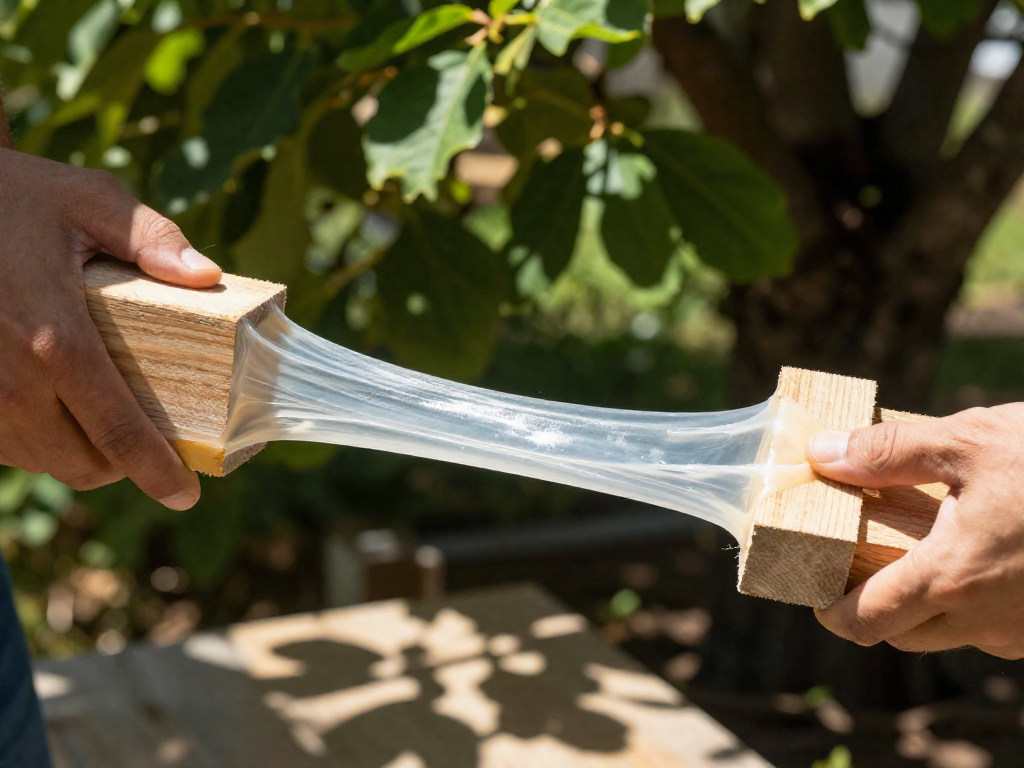
Hot glue can handle real repairs—just not with the wimpy sticks from a craft kit. High-temperature glue bonds wood, metal, and rigid plastics, while low-temp protects delicate foam or fabric. Its 200–400 psi shear strength is a fraction of epoxy’s 2,000+ psi, but that’s plenty for many non-structural fixes. We’ll show you which sticks pull their weight and when to grab a different adhesive.
Low-Temp vs High-Temp: The Heat That Makes or Breaks Your Bond
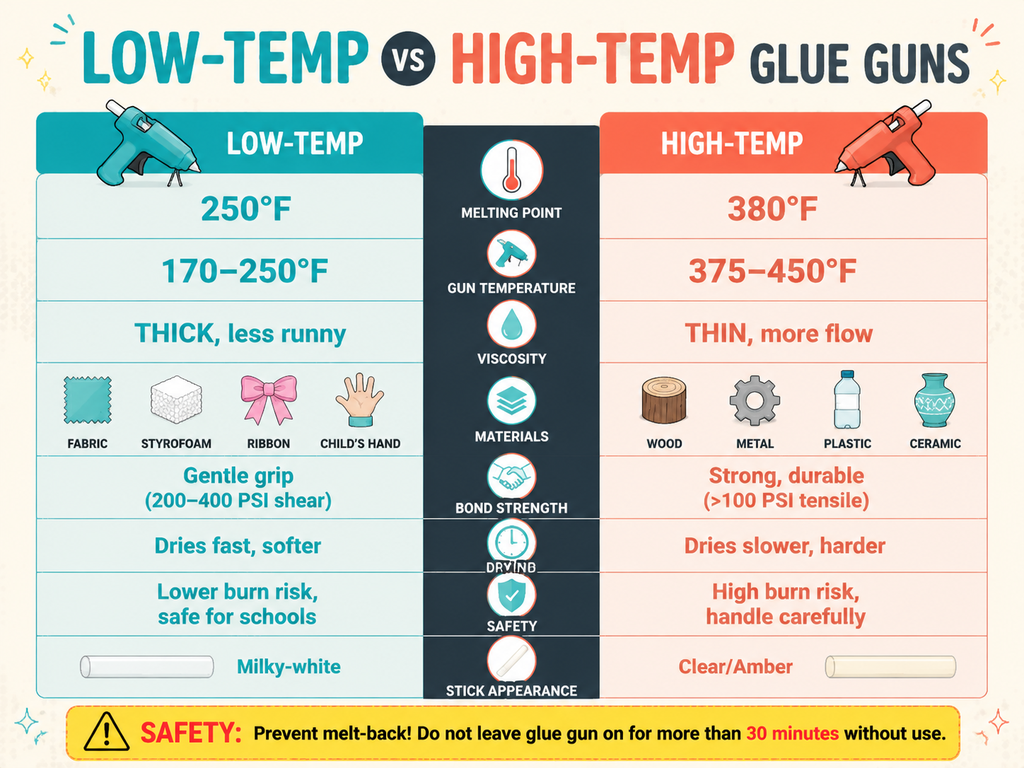
The difference between low‑temp and high‑temp hot glue isn't just a number on the gun — it changes how the glue flows, how well it grabs, and which materials you can safely join. Low‑temp glue guns run around 130 °C (250 °F), while high‑temp models stick to a fixed 195 °C (380 °F) (Glue Guns Direct). That 65 °C gap determines everything. Lower heat gives you a thicker, higher‑viscosity melt that stays put on delicate surfaces rather than seeping through. It dries faster, so you get a quick grab without scorching foam, fabric, or thin plastics. Because the glue itself is less runny, it fills small gaps nicely and is far less likely to burn your fingers — which is why low‑temp guns are the standard choice for schools and floral crafts.
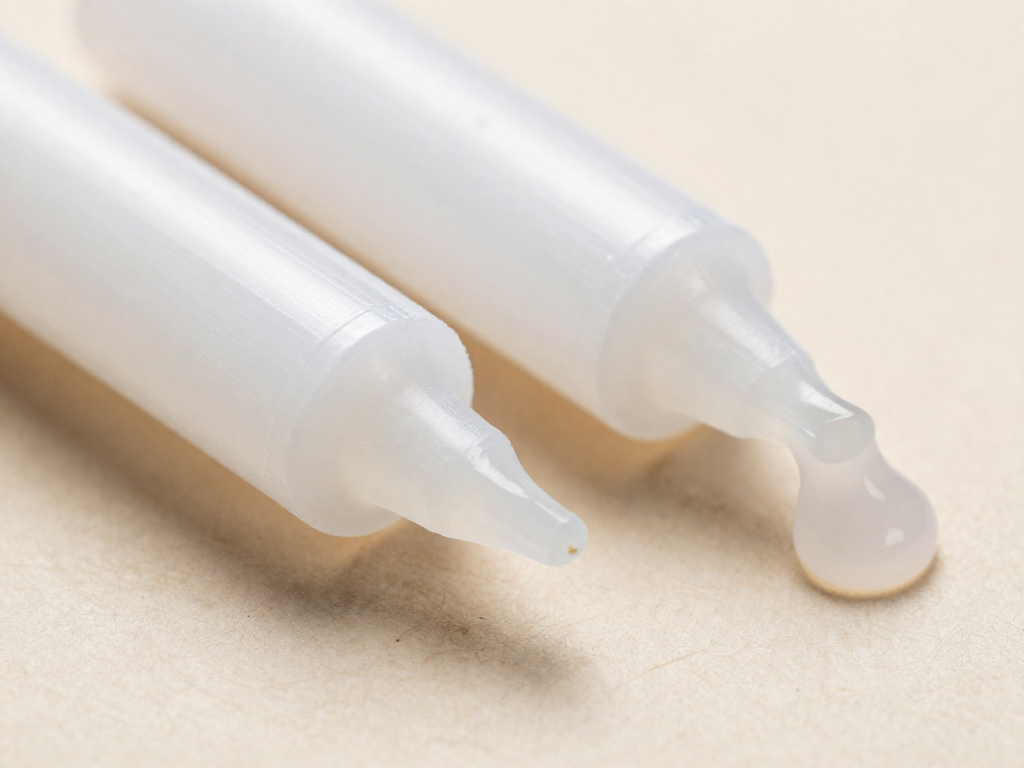
High‑temp glue, on the other hand, thins out as it heats: its lower viscosity means it can wet out and bite into dense, non‑porous surfaces that low‑temp would just sit on top of. That makes it the go‑to for wood, metal, ceramics, and heavy cardboard. You’ll also get a longer open time to reposition parts before the bond sets, and the cooled glue cures harder, so the joint resists peel forces better. If you look close, high‑temp sticks usually appear clearer, while low‑temp sticks tend to be milky — a handy clue when your sticks get mixed up.
What if you work with both kinds of materials? Don’t buy two guns. A dual‑temperature glue gun lets you switch between low and high heat with a toggle, and paired with multi‑temperature sticks like those based on the Tecbond 240 formulation, you can bond everything from rigid PVC and polystyrene to ABS and acrylic without changing sticks. For a repair that has to hold up to daily use — say a ceramic planter or a loose chair leg — go high‑temp. For anything that would warp, melt, or suck glue through it, low‑temp is the safe bet.
Specialty Hot Melts: When Standard Glue Sticks Aren't Enough
Standard hot glue sticks—the kind sold in blister packs at the craft store—rely on basic EVA (ethylene vinyl acetate) and do fine for paper, fabric, and light wood. The moment you need to bond slick plastics, metal, or anything that sees stress, moisture, or temperature swings, they fall short. That’s where multi-temperature sticks and stronger chemistries come in.
A standout example is the Tecbond 240 formulation. These multi-temperature sticks flow at either 130°C or 195°C—meaning they work in both low-temp and high-temp guns—and grip a remarkably wide list: wood, ceramics, light gauge metals, rigid PVC, polystyrene, ABS, and acrylic. As Glue Guns Direct notes, that versatility comes from the adhesive itself, not the gun. One stick, one gun, no swapping between projects. For a DIYer fixing a cracked ABS trim piece or reattaching a ceramic handle, this is the closest thing to a universal hot melt.
But when you’re up against flexible PVC—think wire insulation, plumbing gaskets, or synthetic leather—plasticizer migration slowly poisons ordinary hot glues. The bond turns gummy, then fails. Here, you need a moisture-curing polyurethane (PUR) hot melt. PUR chemically bonds to PVC because its polar groups interact strongly with the plastic, unlike EVA and APAO which rely mainly on mechanical grip. Once cured, PUR resists plasticizer attack and stays tough yet flexible. The tradeoff: PUR cures over hours as it reacts with ambient moisture, so you clamp or fixture the joint while it sets. It’s the right call for permanent repairs on PVC that would otherwise fall apart in a few months.
APAO (amorphous poly-alpha-olefin) adhesives are a different beast—formulated for high-speed production lines because of low viscosity and instant grab. For rapid assembly of polypropylene packaging or automotive trim, they’re unbeatable. But their final bond strength can’t touch PUR, so for a long-term fix under load, skip APAO and reach for PUR or a specialty high-temp EVA stick.
The bottom line: throwing a standard stick at a difficult material is a waste of time. Match the chemistry to the substrate—multi-temperature for broad-plastic versatility, PUR for flexible PVC and plasticizer resistance, APAO only when speed is paramount—and your hot glue gun turns into a serious repair tool.
Strength and Heat Limits: What Hot Glue Can’t Do (and Why)
Hot glue might feel rock-solid after it cools, but the numbers tell a humbler story. In tensile tests, the best hot melts deliver around 100–150 PSI, while a decent wood glue surpasses 3,000 PSI. Shear strength hovers between 200 and 400 PSI—respectable for crafts, but a structural epoxy routinely exceeds 2,000 PSI. As Hengning points out, that gap means hot glue simply isn't in the same league when you're counting on a joint to stay put under serious stress.
Heat is the other deal-breaker. Thermoplastic adhesives soften as they re-heat, and standard hot glue loses its grip long before things get hot enough to burn your fingers. Leave a bonded part in a sun-baked car or near a radiator, and the joint can creep or let go entirely. For anything that lives outdoors or near machinery, assume the bond will fail in warm conditions.
Under constant load, hot glue’s weakness becomes a creep problem. Over hours or days, the adhesive slowly deforms, and the bond eventually slips. That rules out shelves, brackets, tool handles, or anything that relies on a stiff, lasting connection. For these jobs, two-part epoxies or methyl methacrylate adhesives offer the strength, heat tolerance, and fatigue resistance hot glue lacks.
That doesn’t relegate hot glue to the craft bin. It still shines for non-structural repairs, temporary fixturing, and situations where you might need to peel it off later. Just treat it as a fast, convenient clamp—not a permanent structural bond. For any repair where failure could cause injury or property damage, skip the glue gun entirely and reach for an adhesive rated to handle the load.
Application Tips for a Lasting Bond
A lasting bond starts before the glue ever touches the surface. Wipe the parts clean, make sure they’re dry, and roughen smooth areas with sandpaper to give the adhesive something to bite into.
Next, let the gun heat up fully. High-temp guns settle at about 195°C, while low-temp models run around 130°C. A 3M hot-melt applicator gets you to working temperature in 6 minutes; other guns may need a full 5–10 minutes before the glue flows freely.
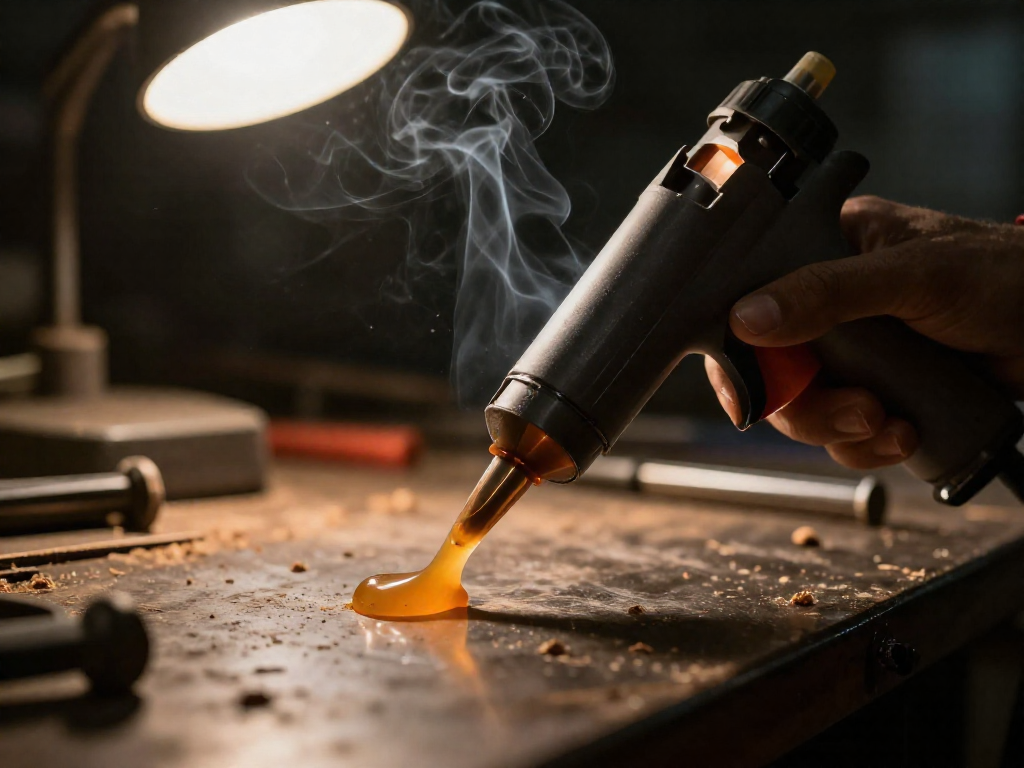
Hot melt solidifies fast—in seconds to a minute—so you have to join the pieces and hold them steady right away. If you pause the job for more than 30 minutes without dispensing any adhesive, the glue inside can suffer “melt-back,” where molten material creeps rearward along the barrel. That’s not just messy—it can cause serious burns. (Glue Guns Direct) Either switch the gun off or pump out a small bead to clear the path before resuming.
Low-temp guns lower the burn risk and are the safer choice for classrooms or delicate materials, but even 130°C glue will scar skin. Keep a scrap board handy, work with intention, and never touch the nozzle.
Quick Guide: Matching Glue to Material (and Common Pitfalls)
Low-temp glue (130°C) is for heat-sensitive materials like foam, fabric, ribbon, burlap, and styrofoam. High-temp (195°C) bonds metal, wood, ceramics, rocks, and most plastics. If sticks are unlabeled, milky ones are low-temp, clear high-temp—Glue Guns Direct notes low-temp guns are safe enough for schools. But don't assume all sticks are equal: polypropylene and PVC need specialty formulations. Big pitfalls: using low-temp on heavy stuff that needs structural hold, expecting hot glue to replace epoxy in load-bearing joints, and leaving the gun on so the adhesive degrades.
The Verdict: Hot Glue for Repairs – A Smart Tool, Not a Miracle
Hot glue handles non-structural, low-stress repairs on compatible materials well, but for load-bearing, outdoor, or high-heat fixes, epoxies, polyurethanes, or mechanical fasteners are a better bet. Specialty sticks, like multi-temperature Tecbond 240 formulations that bond plastics, wood, and light metals (Glue Guns Direct), make it a versatile addition to any DIY kit.
Sources
- What Glue Gun Do I Use? Low-temp versus Hi-temp — theruffleddaisy.org
- What's the difference between Hot Melt and Low Melt Glue Guns - Glue Sticks, Guns, Dots & Hot Melt Adhesives UK | Glue Guns Direct — gluegunsdirect.com
- High vs low temperature glue guns: what's the difference? — facebook.com
- Low Temperature Glue Gun & Glue Stick Guide — gluegun.com
- High Temp Hot Melt vs. Low Temp Hot Melt — hotmelt.com
- How to Choose the Best Hot Melt Adhesive for PVC Applications? - www.kaisun-adhesives.com — kaisun-adhesives.com
- Hot-melt adhesive - Wikipedia — en.wikipedia.org
- Hot Melt Adhesives | 3M — 3m.com
- Hot Melt Glue Sticks & Adhesives at Hotmelt.com - Shop Today — hotmelt.com
- Do Hot Glue Guns Work on Wood? The Myths of Effective Bonding Explained - Hengning — hengningfilm.com
- Choosing the right adhesive to bond ABS plastic: What you need to know - Forgeway Ltd — forgeway.com
See also
- Epoxy vs. Polyurethane: Choosing the Right Structural Adhesive
- How to Bond Metal to Plastic: Adhesive Selection Guide
- Understanding PSI and Adhesive Strength: What Numbers You Need to Know
- Bonding Wood Without Wood Glue: When Hot Melt Works
Related articles
UV-Cure Adhesives (Liquid Optical Clear Adhesives): Perfect for Glass and Electronics
What is UV glue, and when should I use it instead of regular super glue?
Jul 22, 2026 · 5 min read
Contact Cement: The Secret to Laminate, Leather, and Shoe Repairs
How do I use contact cement correctly to avoid bubbles and weak bonds?
Jul 22, 2026 · 5 min read
Structural Adhesives: Understanding MMA and Acrylics for Load-Bearing Metal Bonds
What are structural adhesives, and when do I need them over regular glue?
Jul 22, 2026 · 10 min read