Silicone Sealants vs. Adhesives: Choosing the Right Silicone for Every Job
How do I know whether I need silicone sealant or silicone adhesive?
On this page
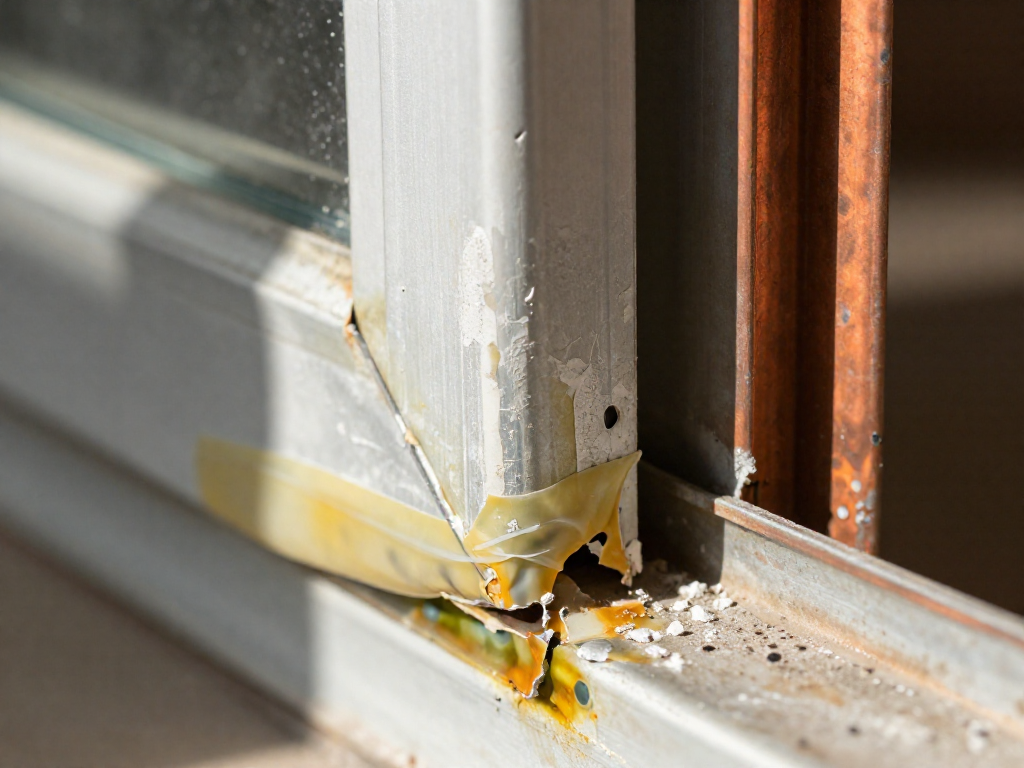
Hook with a real-world failure: a DIYer used cheap acetoxy silicone on an aluminum window frame, causing corrosion and leaks. Pose the central dilemma—most people grab whatever tube says 'silicone,' but the difference between sealant and adhesive, and between acetoxy and neutral cure, can make or break a project. This article cuts through the confusion with concrete data and decision rules.
Sealant or Adhesive? The Fundamental Difference
If the joint needs to stay watertight while flexing with building movement, you need a sealant. If it must bear weight or lock two parts together, you need an adhesive. This one question—movement or load—decides the category faster than any label on the tube.
Silicone sealants are formulated to fill gaps and stay elastic. Their standout trait is movement accommodation: standard formulations handle ±50% joint movement, and some stretch to ±100%—far beyond polyurethanes (±25%) or acrylics (±10%), according to BOPIN. That low-modulus, rubbery cure is perfect for expansion joints, window perimeters, and anything that shifts with temperature or vibration. Adhesion is moderate by design—grip enough to stay put, but not so much that it fights the flex.
Silicone adhesives flip the priorities. They’re engineered for higher cohesive strength and often a higher modulus (stiffer cure) to transfer loads across a bonded joint. You'll see them labeled as "structural" or "high-strength" silicone, and they typically use silane adhesion promoters to bite into glass, metal, or plastic. Use them when the parts must remain fixed—think mirror mounting, appliance trim, or sealing a flange that also carries some load.
A common mistake: grabbing any silicone tube for a "glue" job. If the parts aren’t meant to move relative to each other and you’re counting on strength, a low-modulus sealant will peel or creep. Choose sealant for weatherproofing and flexibility; choose adhesive when the bond itself is structural.
Acetoxy vs. Neutral Cure: The Chemistry That Dictates Your Project's Success
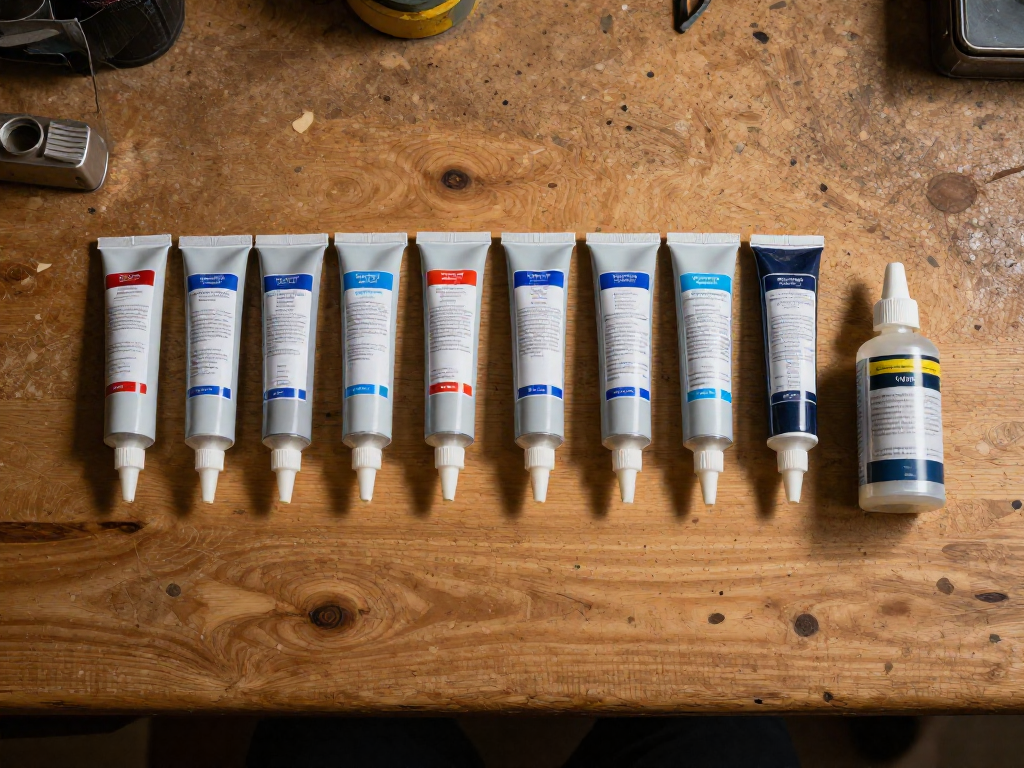
The moment you pick up a tube of silicone, you’re making a choice that goes way beyond color or price—you’re choosing between two completely different curing chemistries. Acetoxy cure and neutral cure silicones might look identical in the cartridge, but the way they set, what they stick to, and how long they last are worlds apart. Get this wrong, and you’ll be scraping out a failed bead in six months. Get it right, and you won’t think about that joint for decades.
What’s Actually Happening as It Cures
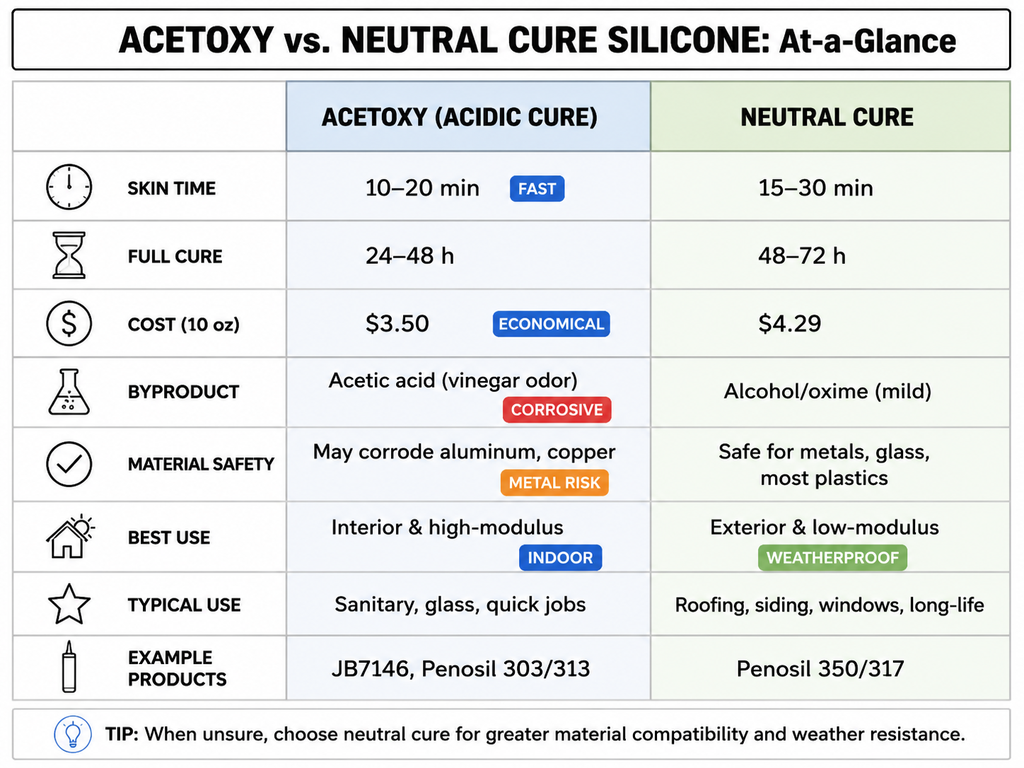
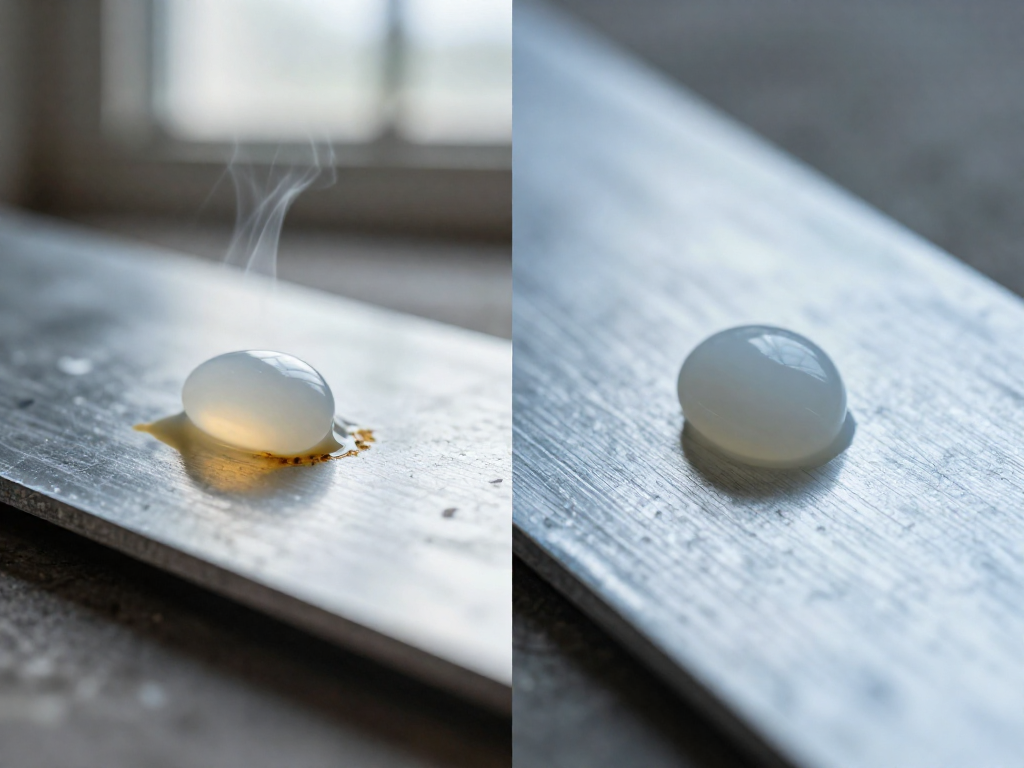
Acetoxy cure silicone releases acetic acid as it cures. That’s the sharp, vinegary smell you notice when you open a fresh tube. It’s aggressive—that acid is what etches into surfaces to create adhesion, but it’s also what eats away at the wrong materials. Neutral cure formulas, on the other hand, release either alcohol or oxime. No vinegar whiff, no corrosive byproducts. This means neutral cure is inherently safer for a huge range of substrates, from natural stone to most metals.
Speed and Cost: Where Acetoxy Wins (On Paper)
If you’re racing the clock, acetoxy cure feels like the winner. It skins over in 10–20 minutes and hits full cure in 24–48 hours. According to BOPIN, acetoxy silicones typically cure 20–30% faster than neutral-cure equivalents. Neutral cure takes longer: a tack-free surface might need 15–30 minutes, and full cure ranges from 48–72 hours for thin beads, stretching out to 7 days for thicker applications. That slower cure isn’t a defect—it’s the trade-off for a more forgiving chemistry.
Then there’s cost. Acetoxy is the budget option, and the price difference is real. Expect to pay 30–50% more for a neutral cure silicone. For a small bathroom reseal, that might mean a couple of dollars. For a whole-house exterior joint sealing, it adds up. But calling neutral cure “expensive” misses the point. That premium is cheap insurance against substrate damage and premature failure.
The Failure You Don’t See Until It’s Too Late
Here’s where acetoxy cure turns from convenient to catastrophic. Put it on aluminum window frames, galvanized steel, or copper pipes, and the acetic acid will start corroding the metal almost immediately. The seal might look fine for a while, but underneath, pitting and weakening are quietly underway. Marble, limestone, and even some grouts get etched and permanently dulled by that acid. You won’t notice the damage on day one, but a year later the stone is ruined.
Professionals have learned this the hard way. For any job involving both glass and metal—think shower enclosures with aluminum frames—they reach for neutral cure specifically to prevent corrosion and ensure long-term durability, as Junbond plainly states. That peace of mind is why neutral cure now dominates the professional sealant market, holding an estimated 60–70% share. It’s modern best practice for everything except the simplest interior jobs.
Weather, UV, and the 20-Year Test
Step outside, and the difference becomes even starker. Neutral cure silicone is dramatically more weather-resistant. It shrugs off UV radiation, temperature swings, and moisture in ways acetoxy simply can’t match. A neutral cure exterior joint—around windows, doors, gutters, or brick expansion joints—will routinely last 20–30 years. Acetoxy exterior beads harden, lose flexibility, and start cracking or peeling far sooner. If the silicone will see rain, sun, or freeze-thaw cycles, the choice isn’t really a choice.
The Surprisingly Simple Decision Tree
So how do you decide? It boils down to three questions:
- What are you sealing? Ceramic tile, porcelain, bare glass away from metal, painted wood (non-oil-based paints): acetoxy is usually fine. Any natural stone (marble, granite, limestone), any metal (aluminum, galvanized steel, copper, brass), or any coated glass that might touch a metal frame: neutral cure only.
- Where is it? Interior, climate-controlled, no water exposure? Acetoxy can work. Bathrooms with high humidity already push it, but exterior, wet areas, or anywhere with direct UV: neutral cure is mandatory.
- How long do you want it to last? A temporary fix or a rental touch-up might justify the speed and savings of acetoxy. But if you’re sealing something you don’t want to revisit, the longer service life of neutral pays for itself many times over.
Many pros take an even simpler approach: if you aren’t 100% sure about material compatibility, just use a neutral cure silicone. Penosil, for instance, recommends defaulting to their neutral formulas like Neutral Sanitary Silicone 350 or Neutral Silicone 317 whenever compatibility is questionable. That one rule eliminates virtually all the catastrophic failures DIYers fear.
The Bottom Line
Acetoxy cure silicone is fast, cheap, and perfectly adequate for basic indoor ceramic tile and glass—provided those surfaces never touch metal and nobody expects a museum-quality finish on marble. For everything else—every metal, every natural stone, every outdoor joint, every job you don’t want to redo in a few years—neutral cure isn’t an upgrade; it’s the minimum required. Spend the extra few dollars now, and you won’t be cursing a corroded window frame or a stained marble sill later.
Beyond Cure Type: Movement, Temperature, and Substrate Compatibility
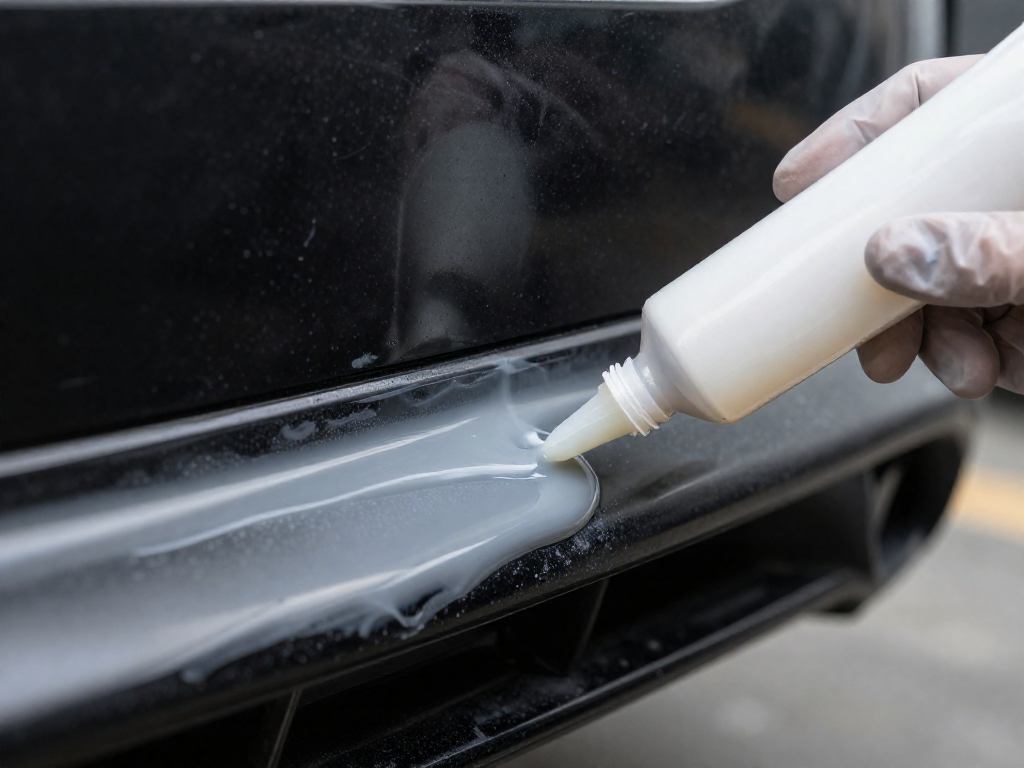
Movement capability is the single biggest separator between silicone sealants and adhesives—and between silicone and every other sealant chemistry. Standard silicone sealants routinely handle ±50% joint movement, with some high‑performance formulations stretching that to ±100%. By comparison, polyurethane sealants top out around ±25%, and acrylics manage a bare ±10% (Bopinchem). That means on a building joint that opens and closes with thermal cycling, wind sway, or vibration, silicone is the only class that won’t tear itself apart within a season. If the assembly is designed to move—think expansion joints, curtain wall perimeters, or bellows—you need a sealant, not an adhesive, and it needs to be silicone.
Temperature extremes tell a similar story. Silicone’s typical service range spans -40°C to +150°C, leaving organic sealants in the dust (they start degrading above 80°C). In a car engine bay, an outdoor electrical cabinet, or an unshaded metal roof, that headroom is the difference between a flexible seal and a brittle, cracked mess. Many silicone adhesives push the upper end even further—specialty formulations for gasketing or bonding around turbochargers and exhaust components will live at 200°C and beyond without losing grip. Low‑temperature flexibility is just as critical: silicone stays rubbery when polyurethane goes board‑stiff, so parts that flex in winter don't pop their bond line.
Where it gets trickier is substrate compatibility—because silicone doesn’t stick to everything equally. Polar plastics like PVC and ABS generally form a decent bond without help, but non‑polar materials like polyethylene and polypropylene are notorious for shrugging off silicone. Metals usually need a primer to develop a reliable grip, and even glass—which seems ideal—benefits from a silane adhesion promoter to push bond strength past “good enough in a shower” to “structural glazing” levels. The common thread is surface chemistry: silicone’s adhesion mechanism relies on chemical coupling to reactive groups on the substrate. No hydroxyl groups, no reliable bond.
That’s where adhesion promoters earn their keep. Organosilanes—amino, epoxy, and methacryloxy types—are the workhorses for glass and metal. They can be applied as a primer before the silicone goes down, or they can be blended directly into the adhesive or sealant so the chemistry happens at the interface during cure. For really difficult plastics and certain metals, titanate and zirconate promoters step in, bridging the gap where organosilanes struggle. The catch is that organosilanes are ineffective on polymer surfaces that lack active hydroxyl functionality—which is exactly why polyethylene and polypropylene resist even the best silicone adhesives. In those cases, mechanical abrasion, flame treatment, or a dedicated polyolefin primer is often the only way to get a lasting bond.
Practically, this means your selection goes well beyond “sealant or adhesive.” For a building expansion joint, you need the movement capacity; pick a low‑modulus neutral‑cure sealant and make sure the substrates are clean and primed if they’re metal or tricky plastic. For bonding a mirror to a bathroom wall, you want an adhesive‑grade silicone with a silane primer on the glass, not a general‑purpose sealant that will eventually delaminate. And if someone tells you to just silicone that polyethylene kayak patch, walk away—the chemistry doesn’t lie.
Application Throwdown: Bathroom, Automotive, and Electrical
Now that the chemistry and mechanics are clear, let’s put them to work in the three places most DIYers reach for a tube of silicone.
Bathroom: keep water out, and sometimes hold things up. For tub and shower joints that move, you want a sealant — flexible, mold-resistant, and if you’re sealing ceramic tile to fiberglass or glass, a standard acetoxy-cure sealant is perfectly fine and gets tacky in minutes for quick work. But the moment metal fixtures or natural stone are involved, switch to a neutral-cure sealant. Acetoxy silicones release acetic acid and will etch stone and corrode aluminum or chrome over time — professionals consistently pick neutral for glass-and-aluminum assemblies for exactly that reason. For mounting a towel bar or soap dish where the silicone is the only thing holding it on, grab a silicone adhesive instead; it delivers the bond strength you need. On interior bathroom jobs with no metal contact and where speed matters, a high-modulus acetoxy adhesive or sealant works. For anything exposed to constant water, movement, and mixed materials, a low-modulus neutral-cure sealant is the safer, longer-lasting bet.
Automotive: heat, oil, and weather are non-negotiable. Engine gasket work demands a high-temperature, oil-resistant silicone, and here neutral-cure (often oxime) sealants dominate. They handle the vibration, thermal cycling, and petroleum exposure without breaking down. Acetoxy has no place under the hood — its acidity can accelerate corrosion on aluminum engine parts. For exterior jobs like resealing a headlamp, choose a clear, UV-stable neutral-cure silicone that stays flexible and doesn’t yellow. Modern best practice strongly favors neutral-cure for most professional applications, unless cost is absolutely critical and the limitations are thoroughly understood (BOPIN). In practice, that means skip the bargain acetoxy for anything that lives outside or near fuel.
Electrical: no corrosion allowed. Sealing outdoor junction boxes or insulating connectors requires a non-corrosive, neutral-cure (alcohol type) silicone. Acetoxy releases acetic acid that will eat copper wire, solder joints, and PCB traces over time — exactly the failure you’re trying to prevent. Check the temperature rating on the tube: it must cover the extremes your equipment will see, from freezing winter mornings to hot summer attics.
Quick rule of thumb: if water and movement are present and you’re working with metal, stone, or electronics, reach for a neutral-cure sealant. If you need to carry a mechanical load without a fastener, use an adhesive. For everything else, a cost-effective acetoxy does the job — just keep it away from the sensitive stuff.
The Adhesion Promoter Advantage: When Silicone Alone Isn’t Enough
Silicone adhesion promoters are chemical agents that form a bridge between the silicone and a surface that would otherwise repel it. The most common types are silane coupling agents—amino, epoxy, and methacryloxy silanes—used widely in sealants and automotive adhesives. For metals and difficult plastics, titanate and zirconate compounds step in where silanes can’t, altering the surface on a molecular level so silicone can grab hold.
You’ll want a promoter anytime you’re bonding to aluminum, stainless steel, powder-coated surfaces, or many plastics. Even after a thorough cleaning with isopropyl alcohol, these low-energy substrates can reject pure silicone. An epoxy silane adhesion promoter, in particular, dramatically improves the bond to glass and metal (CF Silicones). But know your plastic: organosilane promoters rely on surface hydroxyl groups to work, so they can be useless on polymers without that functionality. In those cases, surface roughening or an alternative primer chemistry is a must.
Application is straightforward. You brush on a clear liquid primer, let it flash off for a few minutes, then apply your silicone over it. Some products are sold as “primerless,” with the promoter baked into the formula, but for critical home repairs a separate bottle of primer is cheap insurance. The cost is minimal compared to tearing out a failed shower seal or a leaking window that won’t stay shut.
When you pair a neutral-cure silicone with the right primer, you’re building a bond that will outlast the fixture it’s holding together. That little bottle turns a job that would fail in months into one that stays watertight and tough for decades, even in harsh weather.
Quick Decision Matrix: Sealant vs. Adhesive & Cure Type at a Glance
Start with one question: does the joint need to flex? A dynamic joint demands a sealant; a static one that needs holding power calls for an adhesive. Next, if your work touches metal, stone, or lives outdoors, stick with a neutral cure. For simple indoor glass or ceramic, an acetoxy may be fine.
| Project | Recommended Type | Why |
|---|---|---|
| Shower glass enclosure | Neutral cure sealant | Won’t corrode aluminum frames; handles constant moisture and movement. |
| Aluminum gutter joint | Neutral cure sealant | UV and weather resistant; no acetic acid to attack metal. |
| Plastic interior trim | Adhesive + adhesion promoter | Low-energy plastic needs the primer for real grab; choose a neutral adhesive if near electronics. |
| Car oil pan gasket | High-temp neutral adhesive | Withstands oil, heat, and vibration; doesn’t emit corrosive acid as it cures. |
When in doubt, spend the modest premium—neutral cure typically costs 30–50% more than acetoxy (BOPIN)—for a can't-fail insurance policy against corrosion and bond failure.
Sources
- News - Comparing Acidic and Neutral Cure Silicone Sealants for Glass and Aluminum — junbond.com
- Understanding Silicone Types: RTV, Acetoxy, Neutral-Cure, And More – BOPIN — bopinchem.com
- The Ultimate Guide to Understanding Silicone — youtube.com
- Neutral vs. acetoxy silicone: understanding the differences - Penosil Global — penosil.com
- Do You Need Acetoxy Silicone Or Neutral Cure Silicone? - Silicone Depot — siliconedepot.com
- How Do Silicone Adhesion Promoter Works — cfsilicones.com
- Silicone Adhesive: Can It Bond Metal and Plastic? - Shandong Lingtai Rubber Industry Co.,Ltd — cn.cnlingtaigroup.com
- Adhesion Promoters: Adhesion Basics & Material Selection Tips for Adhesives — specialchem.com
See also
- Complete Guide to Polyurethane Adhesives
- When to Use Epoxy vs. Silicone
- Best Adhesive for Plastic to Metal
Related articles
UV-Cure Adhesives (Liquid Optical Clear Adhesives): Perfect for Glass and Electronics
What is UV glue, and when should I use it instead of regular super glue?
Jul 22, 2026 · 5 min read

Contact Cement: The Secret to Laminate, Leather, and Shoe Repairs
How do I use contact cement correctly to avoid bubbles and weak bonds?
Jul 22, 2026 · 5 min read
Structural Adhesives: Understanding MMA and Acrylics for Load-Bearing Metal Bonds
What are structural adhesives, and when do I need them over regular glue?
Jul 22, 2026 · 10 min read