Best Outdoor Adhesives: Waterproof, UV-Resistant, and Weatherproof Options
What adhesives can withstand outdoor sun, rain, and temperature swings?
On this page
Many DIY repairs fail outdoors because people grab whatever glue is in the toolbox, not realizing that sun, rain, and temperature swings demand a specific kind of bond. This guide cuts through the confusion by ranking the three adhesive types that actually withstand real weather—polyurethane, MS polymer, and silicone—so you can choose based on your project’s exact demands.
Why Outdoor Adhesives Fail (and What Most People Get Wrong)
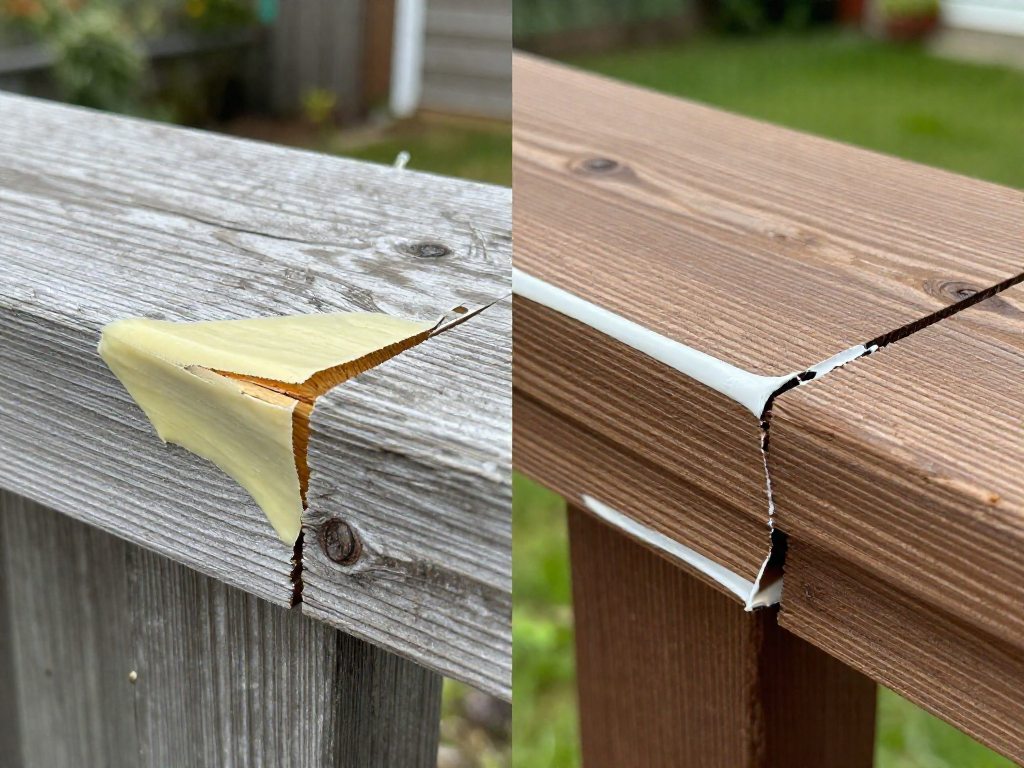
Most outdoor adhesive failures start with one simple mistake: using a glue that was never designed to leave the house. Indoor glues might handle a splash of water, but they crumble against the one-two punch of ultraviolet light and daily temperature swings that cause materials to shrink and swell.
The label "waterproof" tricks a lot of people. It sounds like the job is done, but water is only one piece of the puzzle. UV radiation breaks down uncured adhesives at the molecular level, and repeated thermal expansion can crack a rigid bond within a single season. The result isn't just a loose bracket or a wobbly chair—it's the same repair you'll be doing again next month, sometimes with safety at stake.
Three chemistries actually survive outside for the long haul: polyurethane, MS polymer, and silicone. For example, in one tough test, a bowl bonded with polyurethane glue survived 30 commercial dishwasher cycles at 180°F without a single joint failure (Woodweb). That's the kind of resilience you need under sun, rain, and ice. Choosing the right one for your specific materials and conditions is what the rest of this guide is all about.
What to Look for in a Weatherproof Adhesive
A waterproof label isn’t enough—the spec to watch for is D4 durability under EN204. This classification (explained clearly by Ureka) means the adhesive can take frequent, long-term exposure to running water and outdoor weather, provided the joint gets a protective coating. For UV resistance, check if the manufacturer cites ASTM G154 testing; that’s the standard method for blasting adhesives with fluorescent UV to simulate years of sun.
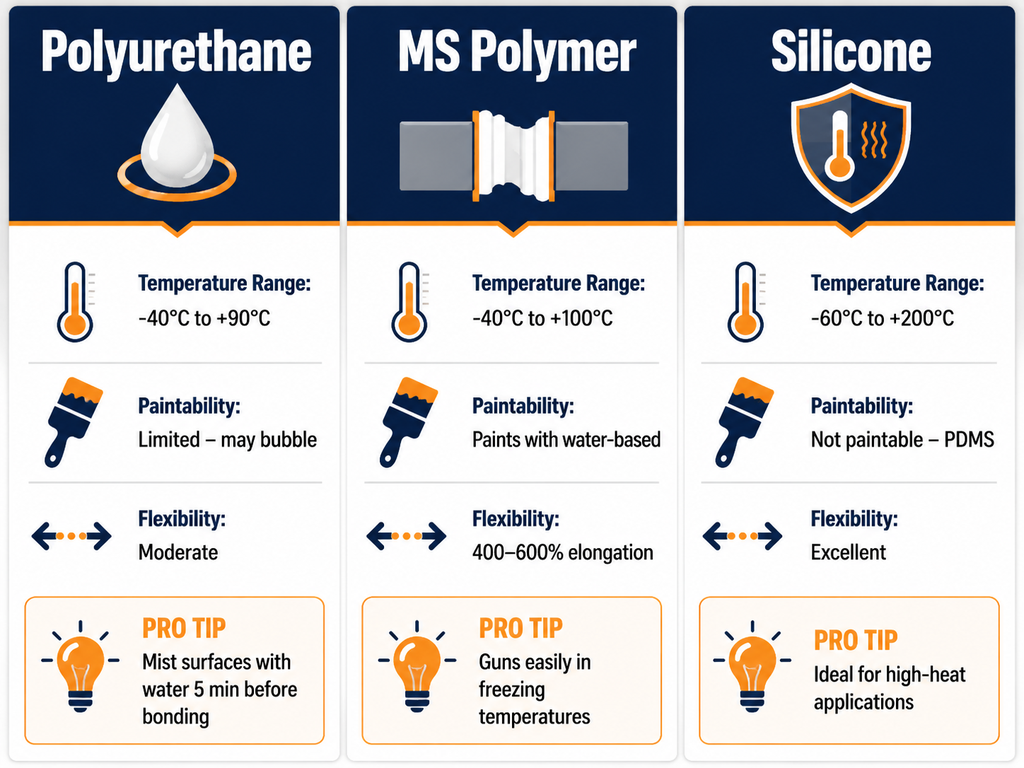
Beyond water and sun, outdoor joints heave with temperature swings. You want a bond that stays flexible from at least −40°C to +90°C—a range MS polymer sealants comfortably meet, thanks to an elongation at break of 400–600%. That stretch lets the joint move without cracking, unlike brittle glues.
Paintability matters more than people think. Most silicone sealants refuse paint outright; polyurethanes can blister. MS polymer sealants take water-based paint cleanly after curing, so the repair can blend in. For cold-weather repairs, MS polymer also stays easy to gun, while polyurethane stiffens. Finally, plan for cure time: polyurethane glues often need 24–48 hours to fully set, though some rapid formulas grab in a few hours if you mist the surfaces with water first. In short, look for D4, ASTM G154, a wide temperature range, high elongation, and honest paintability—then match the cure schedule to your patience and the weather.
Polyurethane Adhesives: The Workhorse for Outdoor Wood & Mixed Materials
Polyurethane glue earns its reputation as an outdoor workhorse for good reason. It’s genuinely waterproof, bonds aggressively to porous materials like wood, and its foaming action fills gaps in rough-sawn lumber or uneven joints—something PVA glues simply can’t do. If you’re joining wood to metal, stone, or foam, polyurethane handles the mix without complaint.
In one of the toughest real-world tests, a drinking bowl bonded with Gorilla Glue had to survive 30 cycles in a commercial dishwasher at 180°F with no joint failure. Polyurethane was the only adhesive that passed that torture test (Woodweb). For exterior projects, certain formulations are certified to the D4 class of EN204—meaning they’re rated for weather exposure with a protective coating (Ureka). So even if your project faces splashing water or humidity, polyurethane stands up. It stays flexible and tough through wild temperature swings too, from freezing winter nights to scorching summer heat, without embrittlement or softening.
Cure times vary, but most polyurethanes fully set in 24 to 48 hours. A notable exception is Titebond’s polyurethane glue, which is twice as thick as traditional versions so it stays put without drips, and cures much faster: you can unclamp in just 2–4 hours, and it’s fully cured in about 4 hours. That speed is a real time-saver on a weekend project.
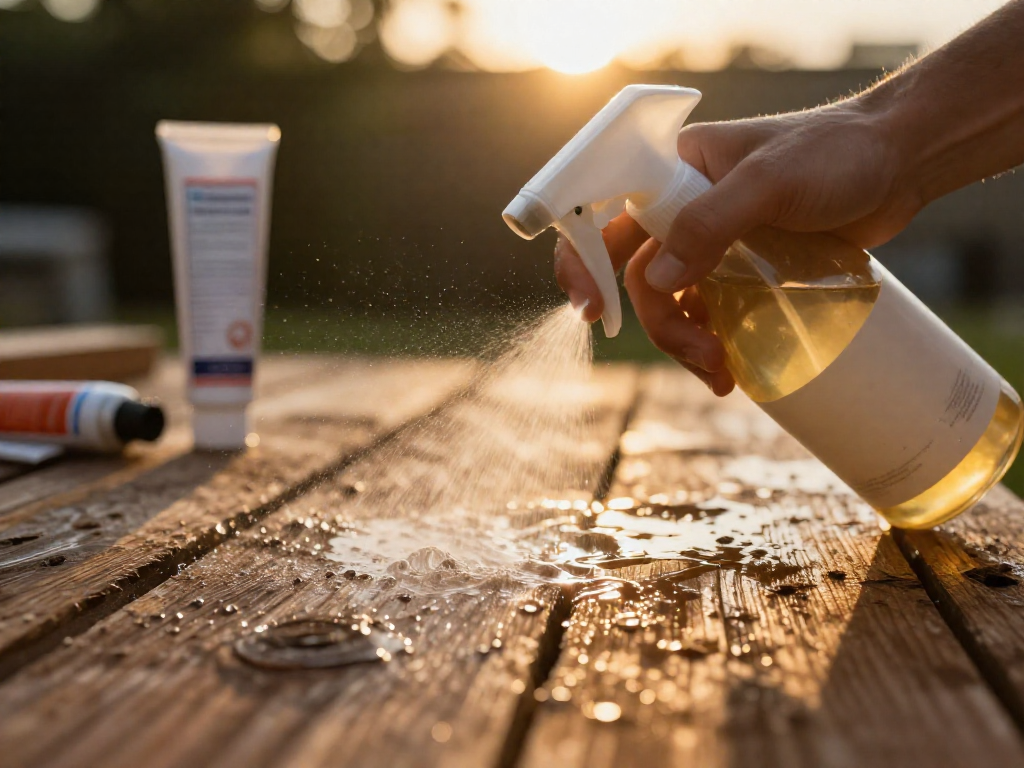
One non-obvious trick to get the best bond: lightly mist the glue surfaces with water about five minutes before applying adhesive. It sounds counterintuitive, but it opens the wood pores and kick-starts the moisture-curing reaction. The foaming action does create messy squeeze-out, so keep a damp rag handy—wipe it before it cures, because hardened foam is a beast to sand. After you’re done, store the bottle upside down to keep the nozzle from clogging with prematurely cured glue.
For all its strengths, polyurethane isn’t perfect. Continuous water immersion, like a submerged boat part or a fountain pump, will eventually degrade the bond unless you topcoat with a protective finish. Paintability is another weak point: polyurethane can bubble under water-based paints, so if you need a paintable outdoor sealant, consider an MS polymer instead. Direct sunlight also takes a toll—the glue itself isn’t UV-resistant and will yellow and weaken if left bare. That’s why the D4 certification assumes a surface coating; always paint or varnish over the glue line, or design the joint so it’s hidden. If you’re building a load-bearing outdoor structure, verify the adhesive’s structural rating. Many polyurethanes are tough but not engineered for critical loads. Still, for the vast majority of outdoor wood repairs, furniture, and mixed-material assemblies, polyurethane is the adhesive you reach for first.
MS Polymer Adhesives & Sealants: The Flexible, Paintable Choice for Sealing & Movement
When an outdoor joint has to flex with temperature swings, building movement, or vibration, MS polymer sealants and adhesives step ahead of rigid alternatives. They stretch without tearing—typically 400–600% elongation at break—and recover their shape, so seams around windows, RV corners, and metal siding stay sealed, season after season (Global Formulation). That’s not just a lab number: it’s the difference between a joint that cracks in the first freeze-thaw cycle and one that still holds years later.
MS polymers work across an unusually wide temperature band, from −40°C to +100°C. In a pH 6 environment—think acid rain or mildly acidic substrates—they stay flexible from −40°C all the way up to +90°C, where a typical polyurethane would have hardened up around −30°C and softened past usefulness by +55°C. If you’ve ever tried gunning a cartridge of polyurethane sealant on a cold morning, you know the frustration: the material stiffens and fights you. MS polymer stays extrudable even in freezing weather, so you get a smooth, consistent bead without warming the tube.
Paintability is where these sealants solve a headache that plagues silicones and polyurethanes. Once fully cured, an MS polymer joint accepts water-based paints without bubbling, peeling, or fisheye contamination. That means you can color-match a sealant line to a door frame, trim piece, or exterior cladding and forget it was ever a separate material. Silicone, by contrast, leaches low-molecular-weight siloxane oils that create a permanent anti-adhesion layer; polyurethanes often bubble or lift under paint. For architectural exterior detailing where appearance matters, MS polymer is the clear choice.
There’s a safety perk too. Standard one-component polyurethane sealants contain 0.5–1.5% free isocyanate (NCO) in the uncured state—enough to require careful handling and ventilation. A 1K MS polymer has no free isocyanates, making it a friendlier option for the DIY user sealing windows or patching an RV roof without heavy protective gear.
Cure time runs roughly parallel to polyurethane: skin forms in 30–60 minutes, and full strength comes in 24–48 hours depending on bead thickness and humidity. But MS polymers are less finicky about moisture during application—they don’t foam or get porosity bubbles if the substrate is slightly damp. This wider processing window pays off outdoors, where perfect bone-dry conditions are rare.
Reserve MS polymers for non-structural sealing and bonding jobs where movement, paintability, and wide temperature tolerance drive the decision. For load-bearing structural repairs, a dedicated structural acrylic or epoxy is still the right call. But for the window frame that needs to flex, the painted siding joint, or the RV seam that faces road vibration and direct sun, MS polymer is the adhesive that moves with the building—not a rigid line waiting to fail.
Silicone Sealants: Extreme Heat Resistance When You Don’t Need Paint
Silicone sealants own the extreme-temperature niche. They shrug off anything from −60°C to over +200°C, which means a bead around your outdoor light fixture or chimney flashing won’t crack when the metal swelters in direct sun or freezes overnight. That extraordinary thermal stability makes silicone the first choice for sealing gaps on surfaces that get genuinely hot—think engine bays, barbecue frames, and stove pipes—where most other adhesives would soften or decompose. Just keep in mind that silicone is a sealant, not a structural adhesive; it fills and waterproofs, but don’t count on it to hold a heavy bracket.
One hard rule with silicone: you can never paint it. According to Global Formulation, once cured, PDMS molecules migrate to the surface and create a low-energy layer that paint simply cannot grip—no primer, no sanding, no special coating will change that. If you need a color-matched, paintable joint, stop right here and use an MS polymer sealant instead. This isn’t a cosmetic preference; it’s a chemical limitation that will lead to peeling paint within weeks.
For waterproofing around outdoor fixtures, chimneys, and any hot surface that will never see a brush, silicone is hard to beat. It offers excellent water resistance and, in UV-stabilized formulations, holds up under years of full sun. Not every silicone is created equal, though—unformulated silicones can degrade with sustained UV exposure, so look for products specifically labeled “UV-resistant” or “outdoor.” When you need a flexible, heat-proof, and permanently waterproof seal that you’ll leave unpainted, silicone is the clear winner.
Head-to-Head Comparison: Which One for Your Outdoor Project?
Choosing between polyurethane, MS polymer, and silicone comes down to the exact demands of your outdoor project—what you’re joining, how much it moves, whether it’ll see standing water, and whether you need to paint over the bond. Here’s a quick-reference table, followed by the bottom-line recommendation.
| Attribute | Polyurethane | MS Polymer | Silicone |
|---|---|---|---|
| Waterproof longevity | Best for submerged or frequently wet joints; top-tier formulas meet D4 standards for wood. | Excellent water resistance; ideal for sealing where movement occurs. | Good for intermittent exposure; not recommended for constant submersion. |
| UV resistance | Good (ASTM G154 compliant when outdoor formulated) | Excellent (ASTM G154 compliant, often used in exterior sealants) | Excellent (inherent UV stability) |
| Temperature range | -40°C to +90°C | -40°C to +100°C | Widest extremes (handles intense heat and cold) |
| Flexibility (elongation) | Moderate (typical 200–300%) | High (400–600%) | Very high (up to 700%+) |
| Paintability | Limited (may bubble with some paints) | Excellent (water-based paints adhere well) | Impossible (paint will not stick) |
| Ease of use in cold | Stiffens; may require warming | Stays gunnable | Remains pliable |
One real-world stress test underscores polyurethane’s grip: a bowl bonded with a polyurethane glue withstood 30 cycles in a commercial dishwasher at 180°F without a single joint failure—the only adhesive to survive the trial (WoodWeb).
So what’s the call? For load-bearing wood joints, mixed-material assemblies, or anything that must survive repeated wet-dry cycles, pick a waterproof polyurethane. When you’re sealing a flexible joint, bridging a crack, or bonding trim where you’ll paint later, MS polymer is the undisputed champion. Save silicone for sealing glass, metal, or tile where extreme heat is a factor and paintability doesn’t matter. No one glue does it all—but matching the adhesive to the job gets you a bond that lasts season after season.
Application Hacks & Long-Term Maintenance for Outdoor Bonding
The difference between a bond that lasts one season and one that holds for years often comes down to how you apply and maintain the glue line. For polyurethane adhesives, a simple trick pays off: mist the bonding surfaces with a light spray of water about 5 minutes before applying the glue. It opens the substrate pores and kick-starts the moisture-cure reaction. (This is the secret to a strong bond, Woodweb notes.) If you’re using a faster-curing polyurethane like Titebond, you can pull clamps after 2–4 hours, but let the joint reach full strength—4 hours for that product, or a more typical 24–48 hours for others—before loading it.
Bottle storage matters too. Keep polyurethane glue containers upside down so any premature curing settles at the top (now the bottom of the bottle), leaving the nozzle clear. Once cured, outdoor joints need a regular check-up: scan flexible sealant lines every 6–12 months for cracks or peeling, and clean away dirt that traps moisture against the bond. When you plan to paint over a sealant, stick with water-based paints over fully cured MS polymer; polyurethane sealants tend to bubble and resist paint adhesion.
FAQs: Outdoor Adhesive Selection and Usage
Polyurethane adhesives are waterproof enough for outdoor use—many meet the D4 standard for weather exposure when protected by a coating. If paintability matters, skip silicone entirely. According to Global Formulation, cured silicone releases PDMS that creates a low-energy layer paint can't stick to; choose an MS polymer for a paintable seal. For metal-to-wood repairs, polyurethane is typically the best all-rounder. A quick mist of water on the surfaces five minutes before applying polyurethane dramatically improves adhesion. With proper prep, outdoor bonds often hold for 5–10 years or more before needing attention.
Conclusion: Stop Guessing—Match the Adhesive to the Weather
For outdoor wood and mixed-material bonds, reach for polyurethane—it’s the only type that survived a commercial dishwasher torture test without joint failure. When your project needs a flexible, paintable seal, choose an MS polymer; it stays gunnable in cold weather and takes water-based paint cleanly. Silicone is the answer only if extreme heat resistance trumps paintability, because cured silicone rejects paint due to migrating PDMS. Get the chemistry right, and you’ll finish the job once.
Sources
- Is PU (Polyurethane) Adhesive Waterproof? - Ureka — thenamethatsticks.com
- Comprehensive Guide to Polyurethane Glue - Wolfchester Australia — wolfchestershop.com.au
- Polyurethane Sealant Waterproof: The Perfect Sealing Solution for Construction and Much More - Joobond — joobond.com
- Titebond Polyurethane Glue — youtube.com
- All about polyurethane glues — woodweb.com
- Silicone, Polyurethane & MS Polymer Sealants Compared — globalformulation.com
- Polyurethane vs MS Polymer: What’s the Difference? – Rite Adhesives — riteadhesives.com.au
- [PDF] The differences between MS polymer and polyurethane-based ... — saba-adhesives.com
- MS Polymer vs. Silicone vs. Polyurethane: Why Experts Choose MS Sealant for Windows [Comparison Table] — kingdelisealant.com
- ASTM G154 Testing - Applied Technical Services — atslab.com
See also
- How to Bond Concrete to Wood Outdoors
- Best Adhesive for Plastic Outdoor Furniture
- Polyurethane vs. Epoxy for Outdoor Repairs
- Waterproofing Adhesives for Marine Use
- How to Bond Metal to Metal Permanently Outside
Related articles
Humidity-Tolerant Adhesives: Bonding in Moist Climates Without Blushing
Which adhesives cure properly in very humid environments?
Jul 22, 2026 · 5 min read
DIY Car Repair Adhesives: Fixing Trim, Lights, and Panels That Last
Compare double-sided tape, epoxy, and polyurethane for car trim, panel, and headlight repairs. Data-backed guide with real adhesion strengths and weather durability.
Jul 22, 2026 · 8 min read
Outdoor Fastener Alternatives: When Adhesives Beat Screws for Exterior Projects
In outdoor projects, when should I use adhesive instead of mechanical fasteners?
Jul 22, 2026 · 10 min read