Bonding Polypropylene: Why It's Tricky and How to Master It
What adhesive can bond polypropylene and similar low-surface-energy plastics?
On this page
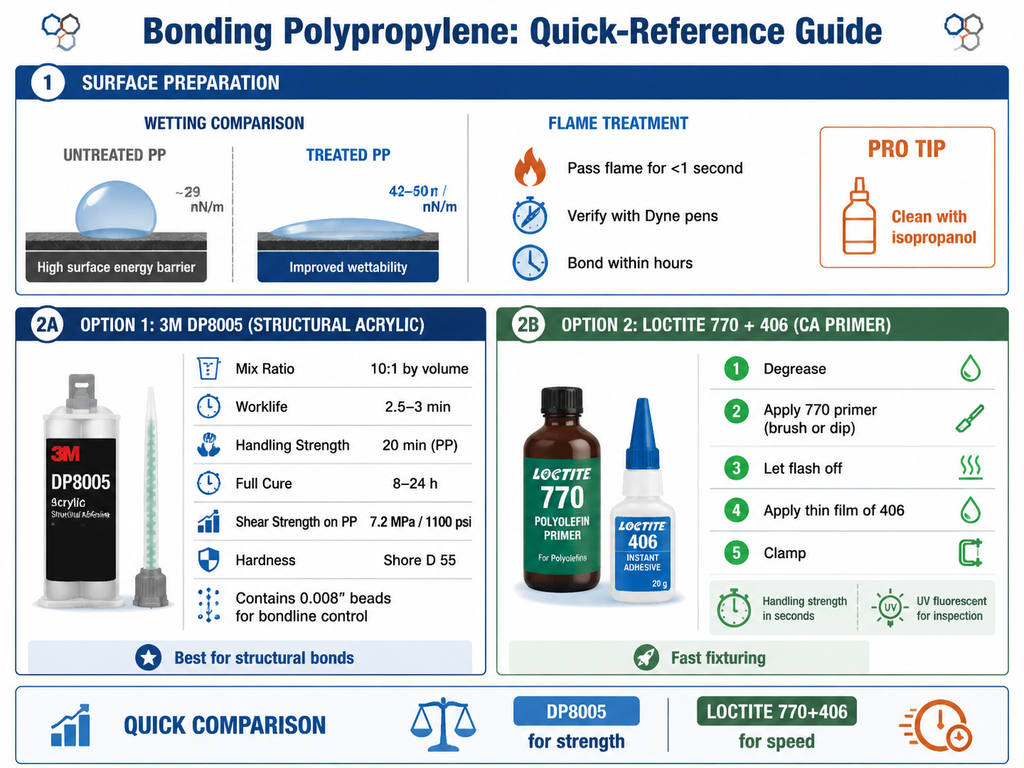
Most DIYers grab the wrong adhesive and watch their polypropylene project fall apart. The problem isn't the glue—it's the plastic's surface. This guide cuts through the confusion, explaining why PP resists bonding, the science behind surface activation, and exactly how to get a permanent hold with flame treatment, primers, and the few adhesives that actually work.
Meet the Unbondable Plastic
You aren’t misapplying the glue—polypropylene really does resist bonding. Untreated PP has a surface energy of just ~29 mN/m, so most adhesives bead up and peel right off. The answer is a two‑step fix: first raise that energy (flame treatment can lift it to 42–50 mN/m, as RapidFlame documents), then use a specialty adhesive built for low‑energy plastics. Products like LOCTITE® SF 770 primer with a cyanoacrylate, or 3M™ Scotch‑Weld DP8005, turn a famously “unbondable” plastic into a strong, lasting joint.
Why Polypropylene Fights Back: Surface Energy Explained
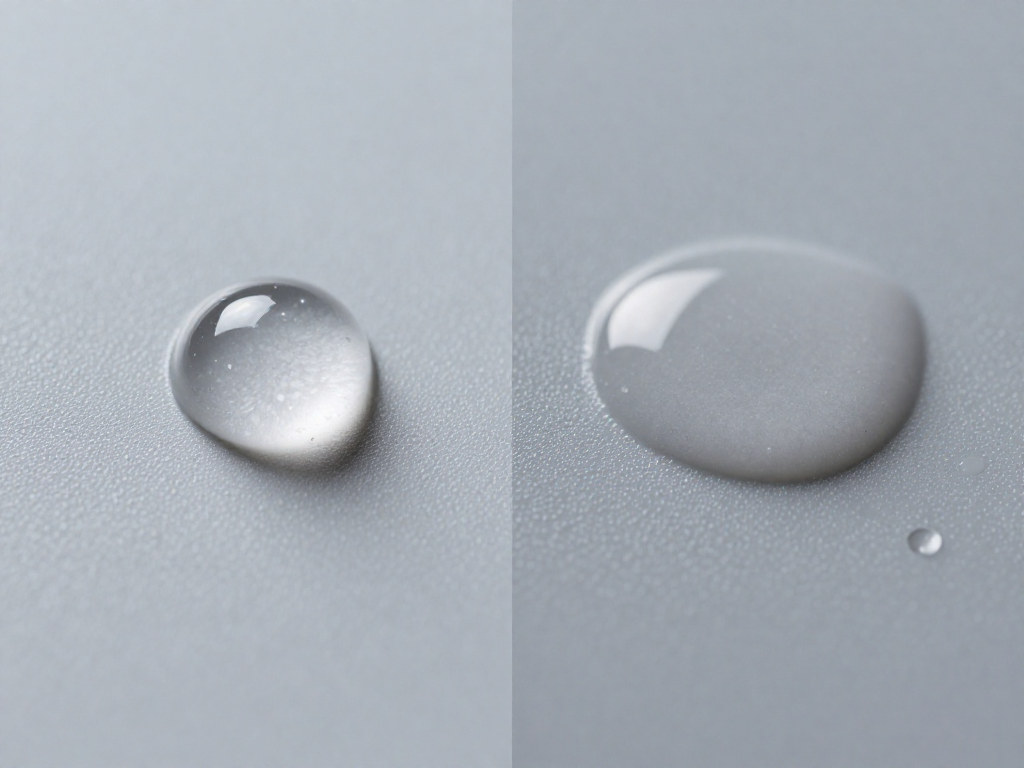
Untreated polypropylene sits at a surface energy of roughly 29 millinewtons per meter (mN/m) (RapidFlame). For an adhesive to wet out and form a reliable bond, it typically needs a surface energy north of 38 mN/m. That gap is everything.
Think of it like water on a freshly waxed car hood—it beads up and rolls off. That’s low surface energy. On clean glass, water sheets out and clings. Adhesives behave the same way. On polypropylene, the glue never really spreads; it sits on top in disconnected droplets that can’t grab hold.
This is why standard cyanoacrylate (super glue), two-part epoxies, and construction adhesives fail so predictably on untreated polypropylene. The plastic may feel clean, but to a liquid adhesive it’s as slick as Teflon. The bond line will be weak, brittle, and easy to peel—no matter how much pressure you apply during cure. Until you change that surface, you’re just waiting for the joint to pop.
Common Mistakes That Lead to Instant Bond Failure
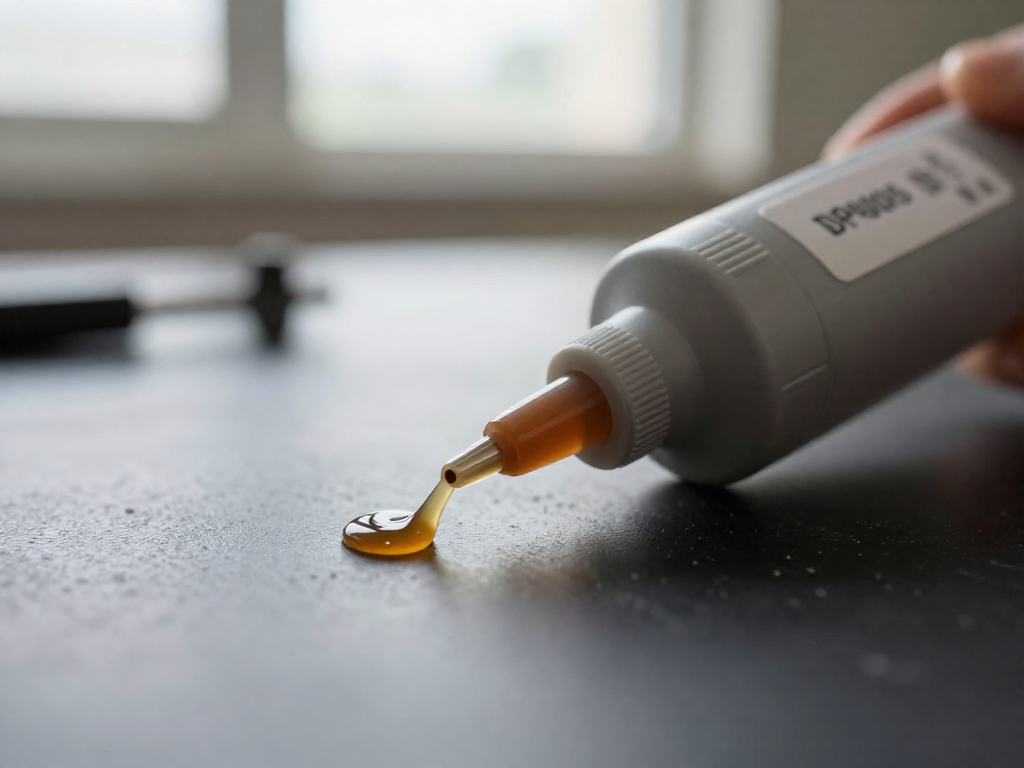
Assuming polypropylene glues like ABS or PVC is the first and most expensive error. Untreated PP sits around 29 mN/m—far too low for most adhesives to wet out, let alone grip. So that hardware-store “plastic” epoxy or all-purpose CA glue in your junk drawer will fail, predictably, unless you first use a dedicated primer like LOCTITE SF 770.
Another classic slip: cleaning the surface with soap and water alone. Polypropylene demands activation—degreasing isn't enough. Even after a proper flame treatment raises surface energy to 42–50 mN/m, the clock starts ticking. Bonding needs to happen within hours, not days, before the effect fades. And never trust sight alone to gauge readiness—grab a dyne pen to confirm the surface actually reached the right activation level (RapidFlame).
Surface Treatments: Your Secret Weapon Against Low Surface Energy
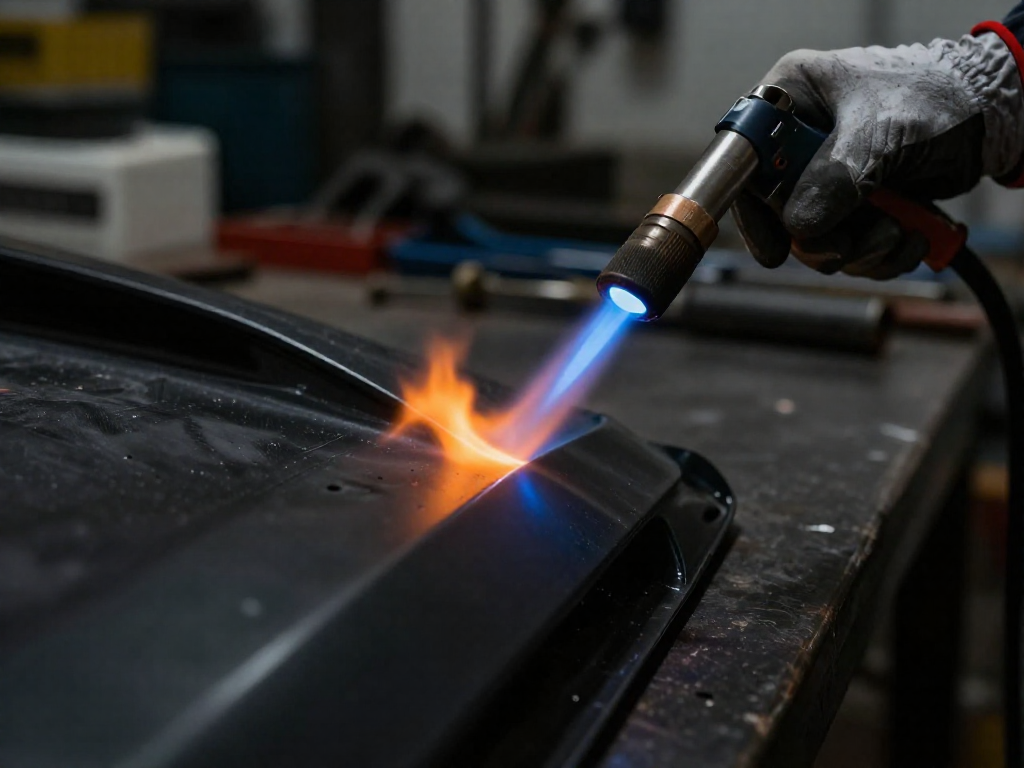
Polypropylene’s miserably low surface energy — roughly 29 mN/m — means most adhesives just bead up and peel right off. But that number isn’t fixed. With the right surface treatment, you can push it into a range where adhesives actually grip, and the most accessible way to do it yourself is with a simple propane torch.
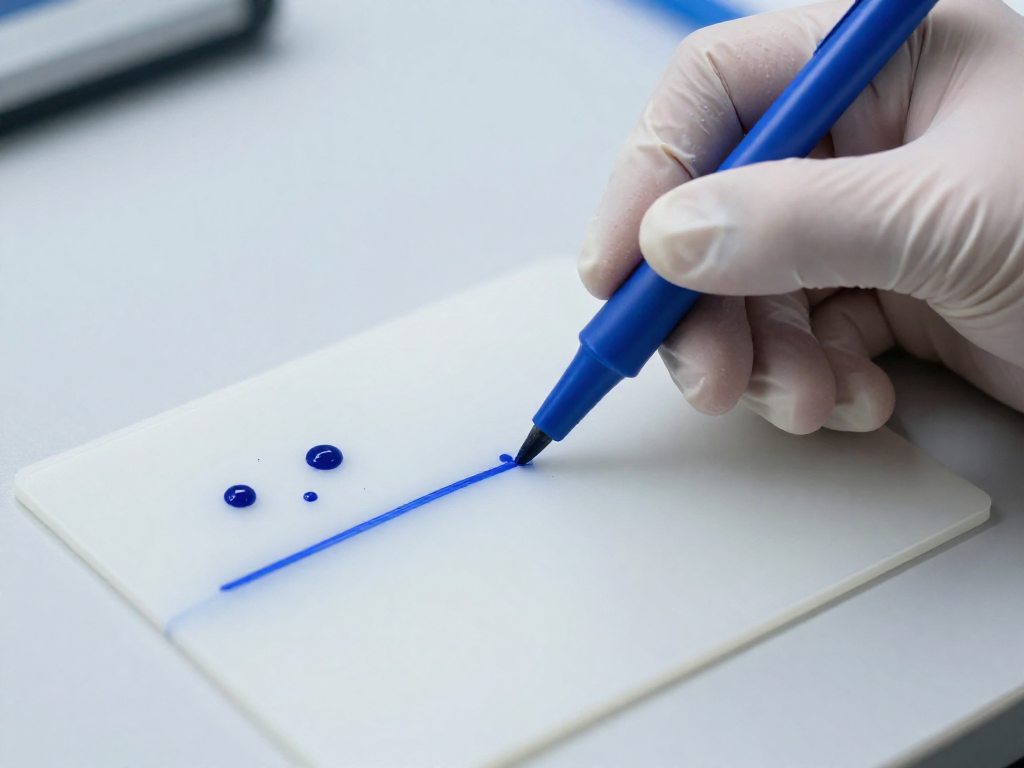
Flame treatment works because the oxidizing part of the flame bombards the surface with reactive species that knock hydrogen atoms off the polymer chains and replace them with oxygen-containing groups. The plastic doesn’t melt; the contact time is less than a second (Rapidflame). The result: surface energy leaps to 42–50 mN/m, which is more than enough for cyanoacrylates, epoxies, and acrylics to wet out and bond. To do it, set your torch to a clean blue flame — no yellow feather — and pass the flame quickly and evenly across the surface. You want a swift sweeping motion, like spraying a mist, not lingering heat. A dyne pen is the cheap, foolproof way to know you got it right. Run a pen calibrated for 32+ dynes/cm across the treated area afterward; if the ink holds a solid line instead of breaking into beads, you’re activated. Without that check, you’re just guessing.
Timing matters. The treatment effect decays as mobile polymer chains slowly turn the top layer back to its low-energy state. Best adhesion comes if you bond within a few hours, so have your adhesive ready and clamp up the same day.
If you’d rather not play with fire, a chemical primer like LOCTITE SF 770 is the straightforward alternative. Brush it on, let it flash off, and it leaves behind a reactive film that grabs onto polypropylene while offering a high-energy surface for the adhesive. It’s practically made for pairing with a thin cyanoacrylate like LOCTITE 406: degrease the part with isopropanol, brush on a light coat of 770, wait several dozen seconds for it to dry, then apply a very thin film of CA on one side and clamp. The primer even fluoresces under UV light, so you can check coverage if you’re fixing something critical.
Sanding alone won’t cut it. Roughing up the surface gives adhesive more mechanical grip, but it doesn’t fundamentally change the chemistry — the plastic remains non-polar and the glue still won’t spread. Think of sanding as an extra insurance step, not the main event. Plasma treatment can work similarly to flame, creating hydroxyl groups at the surface, but it’s essentially industrial kit — nothing most DIY benches will ever see.
If all this sounds like too much trouble, note that some adhesives like 3M Scotch-Weld DP8005 are specifically formulated to bond low-surface-energy plastics with just a solvent wipe. But for the strongest possible bond with standard adhesives you already own, flame treatment or a dedicated primer remains your sharpest tool.
Adhesives That Defy the Odds: Products Engineered for Polypropylene
When you’ve finally accepted that conventional cyanoacrylates and two-part epoxies won’t work on polypropylene, you graduate to the specialist systems that actually grab hold. Two options rise above the rest for real-world repair and assembly: 3M’s structural acrylic DP8005, and the fast-fix combo of LOCTITE SF 770 primer with LOCTITE 406 cyanoacrylate. Each takes a different path through the low-surface-energy barrier, so your choice depends on whether you need structural brawn or speed.
3M Scotch-Weld DP8005 is a two-part acrylic (10:1 mix ratio by volume) purpose-built for low-surface-energy plastics. It even includes 0.008-inch glass beads to maintain a consistent bondline — a thoughtful trick that prevents you from squeezing out all the adhesive under clamping pressure. In 3M’s own testing, DP8005 off-white delivered an overlap shear strength of 1,100 psi on polypropylene at room temperature, failing the substrate rather than the glue line. The same formulation managed a T-peel of 17 pli on HDPE, again destroying the plastic itself. That’s unheard-of for a plastic that normally repels everything. Importantly, the off-white version outperforms the black variant: the black DP8005 only hits 9 pli peel and loses more strength at elevated temperatures. Unless you need a dark cosmetic, stick with off-white.
Watch the clock and the heat, though. DP8005 gives you a worklife of only 2.5 to 3 minutes, hits handling strength in 2–3 hours, and reaches full cure after 8–24 hours at room temperature. It’s not a rapid bonding solution. The heat tolerance is real but has limits — at 180°F (82°C), the same HDPE shear drops to just 300 psi. That’s still tenacious, but it means DP8005 should stay out of engine bays and high-temperature exhaust areas. For most indoor or moderate-temperature load-bearing assemblies, it’s the structural option you’ve been hunting.
For repair spots where you need a bond that sets in seconds and can be done in the field with minimal gear, lean on the LOCTITE 406 / 770 combination. The magic is in the primer: LOCTITE SF 770 is an activator that transforms the polypropylene surface so a standard CA can bite. The process is straightforward — degrease with isopropanol, brush on a thin film of 770, let the carrier flash off for several dozen seconds, then apply a very thin layer of LOCTITE 406 to one side and clamp. Handling strength comes in seconds, and you’ve got a reliable, non-structural joint. It won’t match DP8005’s brute numbers, but for brackets, trim, lightweight housings, or on-the-go fixes, it’s the fastest and most accessible option.
So, pick your tool for the job: need to bear a load or hold under constant stress? Reach for DP8005 off-white and respect its cure schedule and temperature ceiling. Faced with a small, awkward part that just needs to stay put right now? The LOCTITE duo is your quick-draw solution.
Step‑by‑Step: Two Proven Methods for Rock‑Solid Bonds
You now have two clear paths to a structural bond on polypropylene, and both are far easier than they sound. Choose the one that fits your timeline and project demands.
Method A: The Gold Standard — 3M™ Scotch-Weld™ DP8005. Start by wiping both surfaces with isopropanol to remove mold release agents and grease. For the strongest possible bond, flame treat the polypropylene until surface energy reaches 42–50 mN/m (verify with a dyne pen if you have one). DP8005 mixes at a 10:1 ratio; its 2.5–3 minute worklife gives you just enough time to apply an even film to one side before you clamp with contact pressure — no heavy squeezing. You’ll get handling strength in 2–3 hours and full cure in 8–24 hours at room temperature. That’s it. The result is a bond that laughs at moisture and heat: after 14 days at 71 °C and 100% humidity, HDPE bonds with DP8005 still failed in the substrate, not the adhesive.
Method B: Fast Fix — LOCTITE 770 + 406 Cyanoacrylate. When you need a hold right now, this one-two punch delivers. After degreasing, brush a thin coat of LOCTITE SF 770 primer onto both surfaces and let it flash off — several dozen seconds is all it takes. Apply a very thin film of LOCTITE 406 to one part only, join the pieces, and clamp with just enough pressure to keep them in contact. You’ll get handling strength in seconds (Melkib). The primer fluoresces under UV light, so you can check coverage before committing. This method is ideal for quick assembly or field repairs where clamping time is a luxury.
In both workflows, a dyne pen gives you instant feedback: if the ink beads up, your surface still needs more activation. Whichever route you take, stick to these steps and you’ll never look at polypropylene the same way again.
Testing Your Work: How to Verify Surface Activation and Bond Integrity
Before committing to your project, verify that your surface treatment actually stuck. Grab a dyne test pen and draw a line across the treated polypropylene. If the ink beads into droplets within a couple of seconds, the surface energy is still hovering near its untreated 29 mN/m—not the 42–50 mN/m you need for adhesion. Re-treat and test again (Rapidflame).
For cyanoacrylate bonds, check the joint visually: a powdery white haze around the edges often signals too much accelerator or trapped moisture—both killers for long-term strength. The real proof, however, is a pull test. Bond a scrap piece at the same time, then try to tear it apart after full cure. You want substrate failure, not adhesive failure—meaning the plastic itself tears before the glue lets go. Record your results; next time you'll know exactly what works.
FAQs: Your Polypropylene Bonding Questions Answered
Hot glue on polypropylene? Not unless you flame-treat the surface and use a high-temp polyamide stick—and even then, expect a weak, temporary hold. If you’ve gone to the trouble of a flame treatment, you’re better off using a proper adhesive within hours; the activated surface energy (rising from ~29 mN/m to 42–50 mN/m) starts fading quickly. Always flame-treat outdoors or in a well-ventilated space away from flammables, with a clean-burning propane torch. For structural loads, 3M DP8005 is the gold standard (3M). It cuts through low surface energy without primer, though you must still degrease with isopropanol. For lightning-fast repairs, LOCTITE SF 770 primer paired with LOCTITE 406 cyanoacrylate gives handling strength in seconds. Both can handle heat and moisture—DP8005 tolerates up to 71°C and 100% relative humidity—but long-term UV exposure will degrade them, so paint or coat outdoor bonds.
Conclusion: Mastering the Trickiest Bond of All
Polypropylene isn’t a lost cause—it’s a two-step problem with well-defined solutions. First, activate the surface: a quick flame treatment can lift surface energy from ~29 to 42–50 mN/m (RapidFlame), and primers like LOCTITE SF 770 do the same chemically. Then pair it with the right adhesive—LOCTITE 406 cyanoacrylate or 3M Scotch-Weld DP8005—and you get a permanent bond that handles loads and moisture. Next time you face this “unbondable” plastic, you’ll know exactly where to start.
Sources
- How Do I Prepare Plastic Surfaces for Strong Adhesive Bonding? — rapidflame.com
- Technical Data Sheet — farnell.com
- Scotch Weld datasheet DP8005 — van-asperen.nl
- Scotch-Weld Structural Plastic Adhesive DP8005 Off-White • DP8005 Black Technical Data February, 2016 — multimedia.3m.com
- 3M Scotch-Weld DP8005 Structural Plastic Adhesive - Polyestershoppen.com — polyestershoppen.com
- 3M™ Scotch-Weld™ Structural Plastic Adhesive DP8005 | 3M United States — 3m.com
- LOCTITE® SF 770 | Henkel Adhesives — next.henkel-adhesives.com
- Blog - How to Glue Polypropylene (PP): LOCTITE 406 + 770 — Step-by-Step Guide - Melkib — melkib.com
See also
- Bonding HDPE: The Next Hardest Plastic (Material Pair Adhesive Guides)
- How to Prepare Plastic for Adhesive: The Surface Energy Quick‑Start (Surface Preparation Guides)
- 3M DP8005 Full Review: Is It Worth the Price? (Product Reviews)
- Loctite CA Glues vs. Epoxies for Plastics: Which One Wins? (Adhesive Comparison)
Related articles
Attaching Foam to Wood: Craft vs Structural Applications
How do I glue foam to wood without melting or weakening the foam?
Jul 22, 2026 · 6 min read
Joining Concrete to Wood: The Right Adhesive for Fence Posts and Decks
Which adhesive is best for attaching wood to concrete in outdoor projects?
Jul 22, 2026 · 11 min read
How to Bond Acrylic to Metal: Achieving a Clear, Strong Joint
What's the best adhesive for bonding acrylic (plexiglass) to metal without clouding?
Jul 22, 2026 · 6 min read