Brick and Mortar Anchors: Sleeve Anchors vs. Wedge Anchors vs. Plastic Anchors
What's the best way to anchor something into brick or mortar joints?
On this page
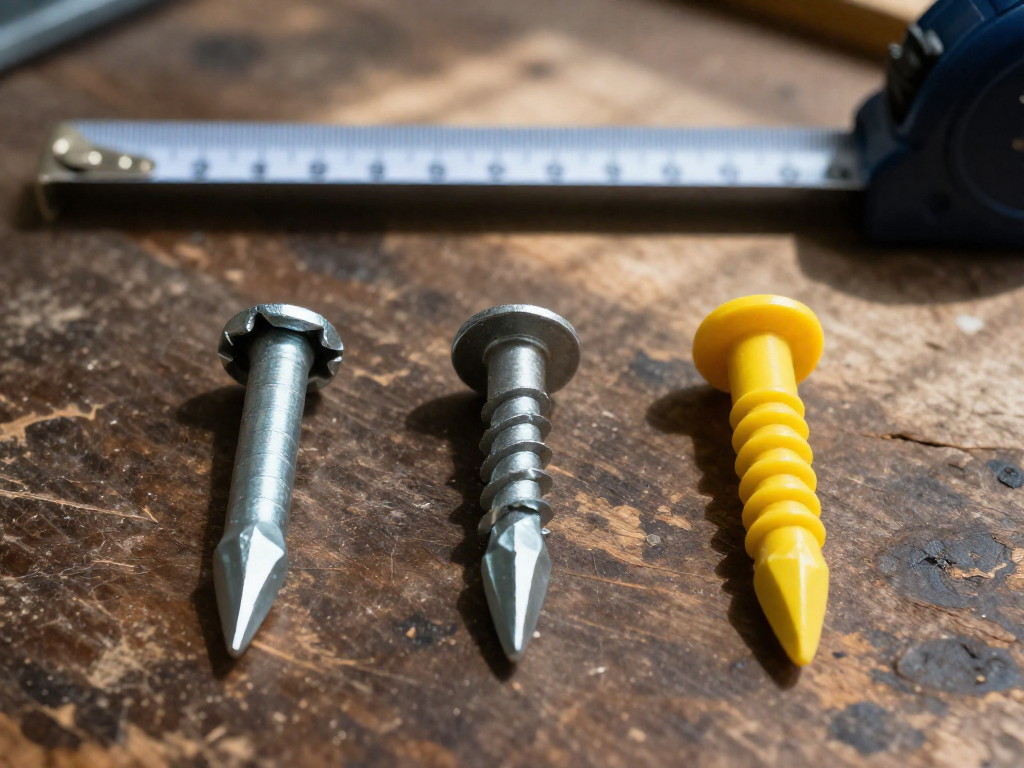
DIYers often grab wedge anchors for any masonry, but using them in brick is a recipe for failure. We’ll break down why sleeve anchors win in brick and mortar, backed by pull-out data and real-world testing.
Why Most Anchors Fail in Brick Walls
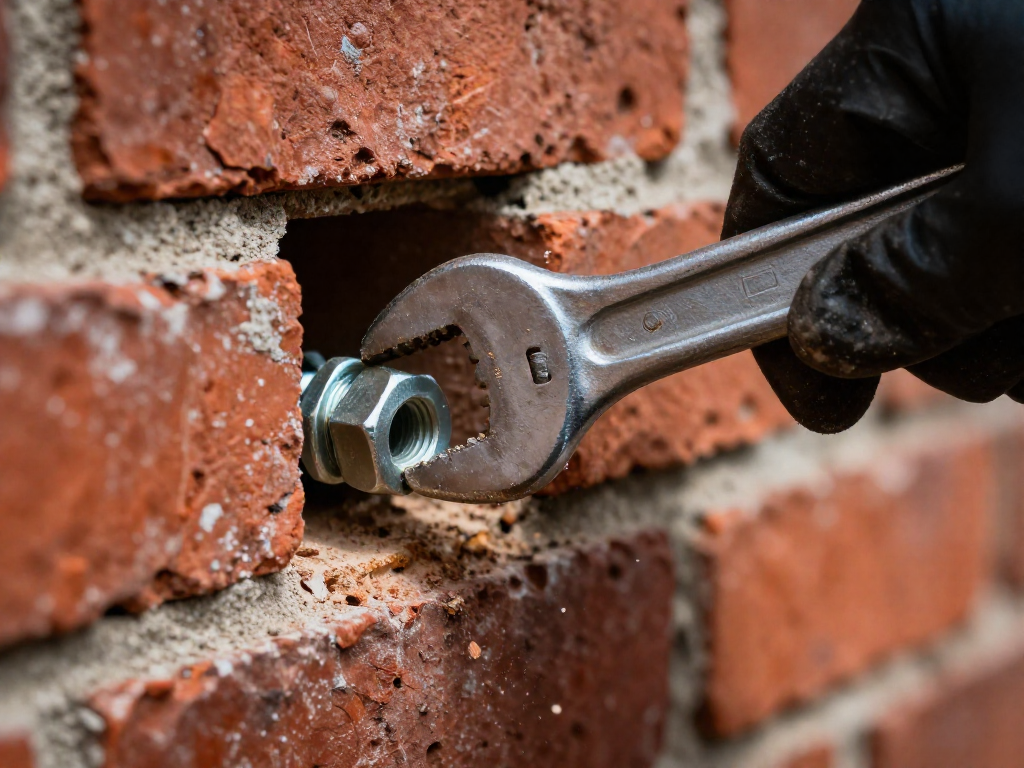
If you’re drilling into a brick wall, put the wedge anchors back on the shelf. Those things rely on pin-point wedging action that needs a solid, unbroken base—and brick is anything but. Between hollow cores and partially filled mortar joints, the irregular cavities can’t develop the full clamping force, and the concentrated stress often just crumbles the surrounding material. Sleeve anchors solve this by expanding a metal sleeve along the entire embedment depth, distributing the load over a much larger area and bridging voids that would defeat a wedge. The Brick Industry Association flatly states that wedge anchors are not recommended for brick masonry, while sleeve anchors are the manufacturer-preferred alternative. So for your shelf bracket, handrail, or outdoor fixture, start with a sleeve anchor—and size it properly. (Just remember that for life-safety or structural loads, always follow an engineer’s spec.)
The Hidden Danger: Brick and Mortar Aren’t Solid Concrete
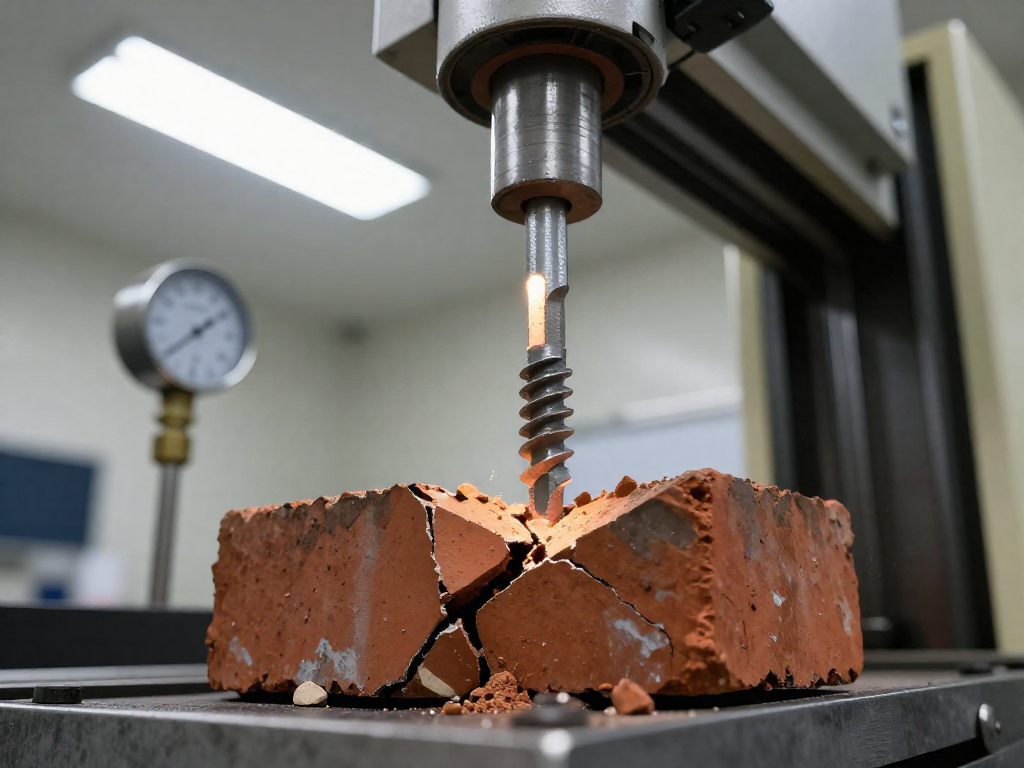
If you’ve ever fastened into poured concrete, you know the drill: drill a hole, tap in a wedge anchor, and tighten. The wedge bites into the solid mass, and you get a brutally strong hold. But bring that same wedge anchor to a brick wall, and you’re rolling the dice—and the house usually loses.
Brick masonry is a patchwork, not a monolith. Even bricks that look solid from the outside may hide hollow cores, and the mortar joints between them are rarely completely filled. That’s the problem. A wedge anchor relies on a pair of hardened wedges that force outward as you tighten the nut, creating intense point stresses against the walls of the hole. In solid concrete, those points dig in and hold. In brick, the wedge can land in a void—a hollow core or a crumbly mortar pocket—where there’s nothing to grip. The anchor spins uselessly, or worse, it feels tight initially but pulls out under load because it never fully expanded into sound material. According to the Brick Industry Association, wedge anchors “require a solid base material to develop their full capacity,” and the irregularities common in brick masonry “may make the construction unsuitable for wedge anchor installation.”
That’s exactly why sleeve anchors are the smarter choice here. Instead of a couple of wedges, a sleeve anchor expands along the entire length of a cylindrical metal sleeve. That spreads the load over a much larger bearing surface, so a single void or soft spot doesn’t kill the anchor’s grip. The sleeve just bridges the gap and finds purchase above and below. Manufacturers consistently recommend sleeve anchors for brick masonry, and in practical terms, they tolerate the mess of real-world brick far better. Even in mortar joints—which are the weakest part of the wall—a sleeve anchor is acceptable, but you need to drop your expectations. Use it for light-duty fixtures only and drill carefully to avoid blowing out the joint. If you’re anchoring into solid brick (the rare, truly solid clay units), a sleeve anchor gives you a reliable connection with no drama. Skip the wedge anchors entirely for any brick or mortar application; they’re simply the wrong tool for the job.
Sleeve Anchors: The Go-To Choice for Brick Fixings
When you tighten the nut on a sleeve anchor, the cone-shaped end pulls into the expander sleeve, forcing the metal outward against the sides of the hole. Instead of a single point of contact, you get grip spread along the entire length of the sleeve. That large bearing surface is exactly what makes sleeve anchors so reliable in brick. Bricks often contain small cores or crumbly spots, but because the expansion is distributed and not dependent on a tiny wedge biting in, it’s far less likely to spin or slip when you torque down. This is why manufacturers consistently recommend them over wedge anchors for masonry work.
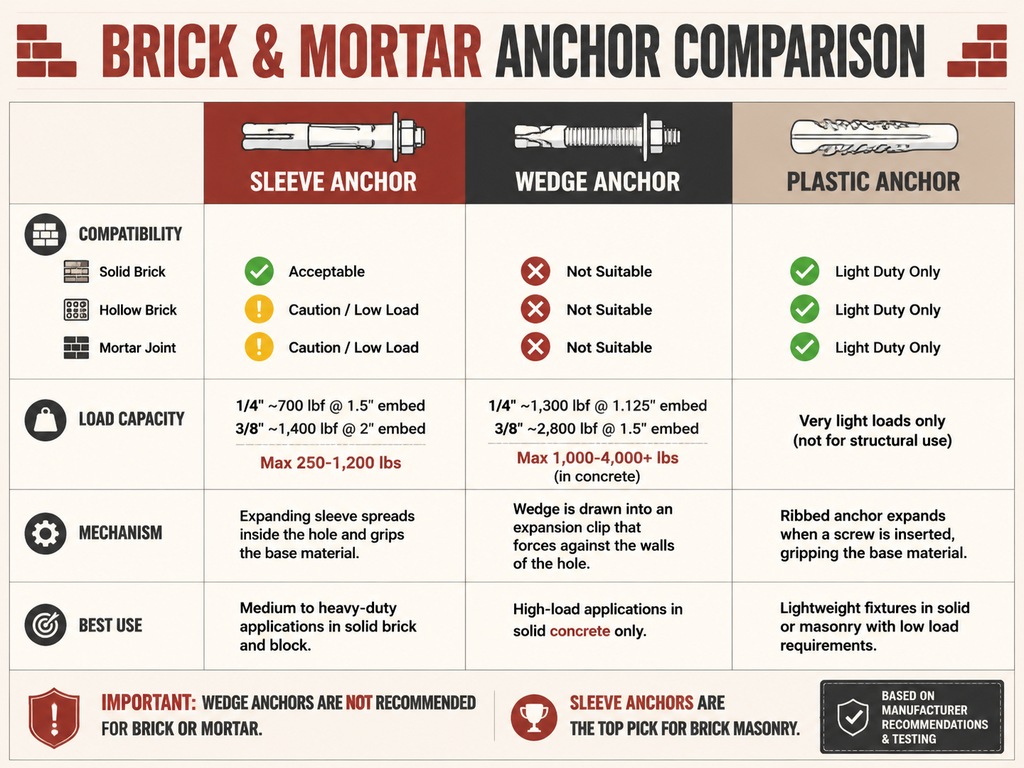
The numbers back it up, too. According to DK Hardware’s masonry anchor chart, sleeve anchors in sizes from 1⁄4‑inch to 1⁄2‑inch deliver maximum loads between 250 and 1,200 pounds in brick and block. For context, that covers everything from hanging a heavy mirror to mounting outdoor security cameras or a bracket for an air‑conditioning condenser. As long as you drill the right‑size hole with a masonry bit, clean out the dust, and tighten to the recommended torque, those ratings hold.
What about the dreaded mortar joint? Yes, you can anchor into mortar with a sleeve anchor, but only for light‑duty items like a small sign or a lightweight lattice frame. The soft, sandy mortar simply can’t develop the same grip. Industry guidance lists mortar‑joint sleeve anchors as “acceptable, low load only.” If the layout forces you into a joint, switch to a longer anchor. The extra length lets the expansion zone sit deep inside the solid brick behind the joint, dramatically improving pull‑out strength.
Real‑world testing reinforces the design. In a head‑to‑head trial on a brick wall, the Red Head sleeved anchor beat out four different anchor types, turning the creator into a convert (YouTube). The difference often comes down to installation: a clean hole, the correct embedment depth, and avoiding the temptation to over‑torque. Done right, a sleeve anchor is the versatile, forgiving fix for brick that sits right in the sweet spot between cheap plastic plugs and heavy‑duty wedge anchors (which should never touch brick). For most DIY tasks—securing shelving, brackets, or handrails to a solid brick wall—it’s the anchor you reach for first.
Why Wedge Anchors Should Stay in Concrete
Wedge anchors are a powerhouse in solid concrete, but they have no business inside a brick wall. The manufacturer guidance is blunt: Eugene Fastener’s compatibility table flatly says “Do not use” for solid brick, hollow brick, and mortar joints. That’s because the anchor’s entire working principle runs against the grain of how brick is built.
When you tighten a wedge anchor, small wedges at the end of the bolt are forced outward, creating intense point-loads against the hole walls. In a homogeneous material like poured concrete, those point-loads bite into something consistent and develop tremendous holding power—around 2,800 lbf of tension in 4,000 psi concrete for a 3/8-inch anchor at 1½-inch embedment. But brick is full of irregularities: solid units have hidden fractures, hollow bricks have cores that don’t fill a drill hole, and mortar joints are soft, shallow crumbly pockets. A wedge anchor can’t find enough solid material all around that point-load, so it never reaches its rated strength. Instead, the wedges simply push through the weak spots and the anchor pulls out—sometimes catastrophically, leaving a crumbled mess.
The Brick Industry Association warns that voids from brick cores or partially filled mortar joints make brick masonry unsuitable for wedge anchor installation. Even if you happen to hit solid brick, published concrete load ratings are meaningless; the anchor’s grip depends entirely on the local material, which in brick is far less predictable. For any fixing into brick, you need an anchor that spreads its grip over a larger area and can handle uneven surfaces—like a sleeve anchor, which the same compatibility table marks as “Acceptable.” Keep wedge anchors in concrete where they belong, because in brick they’re a gamble you don’t want to lose.
Plastic Anchors: When Light-Duty Will Do
For hanging a small picture, plastic anchors might seem tempting, but in brick they often spin in the hole without gripping, or pull out with minimal force. Reserve them for drywall or solid concrete. In brick, even a light-duty shelf demands a sleeve anchor.
Matching Anchor to Load: A Decision Guide
For brick, wedge anchors are a non-starter. They bite by wedging outward, which demands a solid surround—brick’s hollow cores cause unreliable grip (the Brick Industry Association cautions that they “require a solid base material”). Sleeve anchors, with their longer expansion sleeve, spread the load better.
For light duty like a picture frame, a plastic anchor in the brick face can work, but a 1/4‑inch sleeve anchor is rated to 250 pounds and costs only a dollar or two more. Step up to 5/16‑inch for shelving or a handrail bracket (good for a few hundred pounds), and 3/8‑inch for a heavy cabinet or pull‑up bar. In 1/2‑inch size, sleeve anchors top out around 1,200 pounds in solid brick—plenty for most projects.
Always aim the bit into the brick body, not the mortar joint. Mortar crumbles under load; brick gives the anchor’s expansion sleeve something solid to push against.
Pro Installation Tips for Brick Anchors
Stick with sleeve anchors for brick—the Brick Industry Association confirms they outperform wedge anchors in irregular base material. Use a hammer drill and carbide-tipped masonry bit, drilling ¼″ deeper than embedment to collect dust. Blow out the hole completely; leftover powder can cut pullout strength in half. Tighten only until the sleeve feels snug—over-tightening in mortar will crack it. If you hit a void, reposition the hole or use a longer anchor to reach solid brick.
The Bottom Line: Sleeve Anchors Win in Brick
For brick, sleeve anchors win. Wedge anchors aren’t rated for brick masonry (Brick Industry Association), so skip them. For light loads, plastic anchors work, but sleeve anchors are barely more expensive.
Sources
- Wedge Anchor vs Sleeve Anchor | Comparison Guide | Eugene Fastener — eugenefast.com
- Anchor Bolts For Brick Masonry — gobrick.com
- The Complete Guide to Masonry Anchors | DK Hardware — dkhardware.com
- What Kind of Anchor Do I Need for Brick? (I tested 5) — youtube.com
- Tapcon weight holding capability - Home Improvement Stack Exchange — diy.stackexchange.com
See also
- How to Choose Concrete Anchors
- Tapcon Screws vs. Sleeve Anchors
- Best Adhesive for Brick Repair
- Load Capacity of Masonry Anchors
Related articles
Machine Screws, Bolts, and Nuts: A DIYer’s Guide to Size and Grade
How do I know what size bolt and grade to use for a mechanical repair?
Jul 22, 2026 · 3 min read
Deck Screws vs. Nails: Fastening Deck Boards for Longevity
Should I use screws or nails for my deck, and what type?
Jul 22, 2026 · 6 min read
Toggle Bolts: The Strongest Drywall Anchor? When to Use Them and How to Install
How do I install toggle bolts for heavy wall-mounted items?
Jul 22, 2026 · 5 min read