Wood Screws: Choosing Between Coarse, Fine, Lag, and Deck Screws
How do I decide which type of wood screw to use for different woods and loads?
On this page
Instead of guessing which wood screw will hold, a few simple principles around thread pitch, wood density, and pull-out strength let you match the fastener to the material and the load every time.
The Quick Way to Choose: A Decision Shortcut
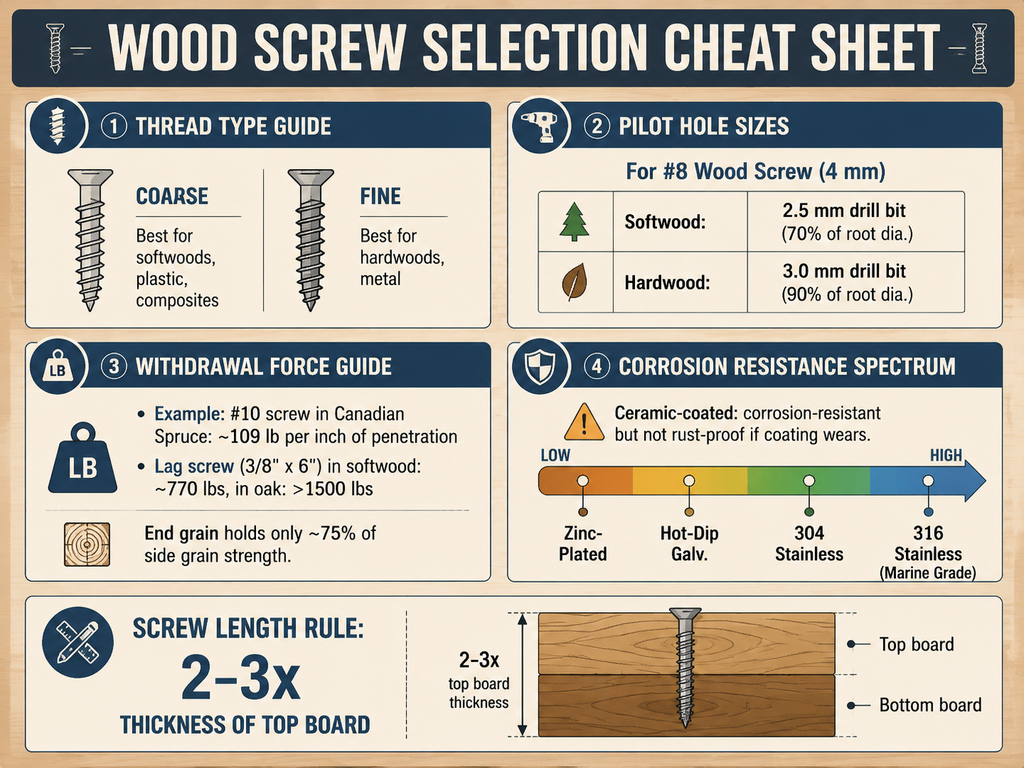
Start with the wood you’re fastening and the job it has to do. Softwoods like pine or fir take a coarse-thread screw—#8 or #10 is a safe default—and you want a length roughly 2–3 times the thickness of the top board. Outdoors, switch to stainless. Hardwoods like oak or maple need a fine thread and a larger pilot hole; the difference matters. A #8 screw, for example, gets a 2.5 mm pilot in softwood but needs 3.0 mm in hardwood (Metal Sheets). A dab of soap on the threads makes driving into dense wood much easier without hurting hold. Load-bearing or structural work calls for a lag screw or a close look at withdrawal tables—wood species changes everything. In spruce-pine-fir, a 3/8″ × 6″ lag might be rated around 770 lbs; switch to oak and you’re past 1,500 lbs. More detail on each of these rules is coming right up.
Thread Type: The Inside Story of Coarse vs. Fine
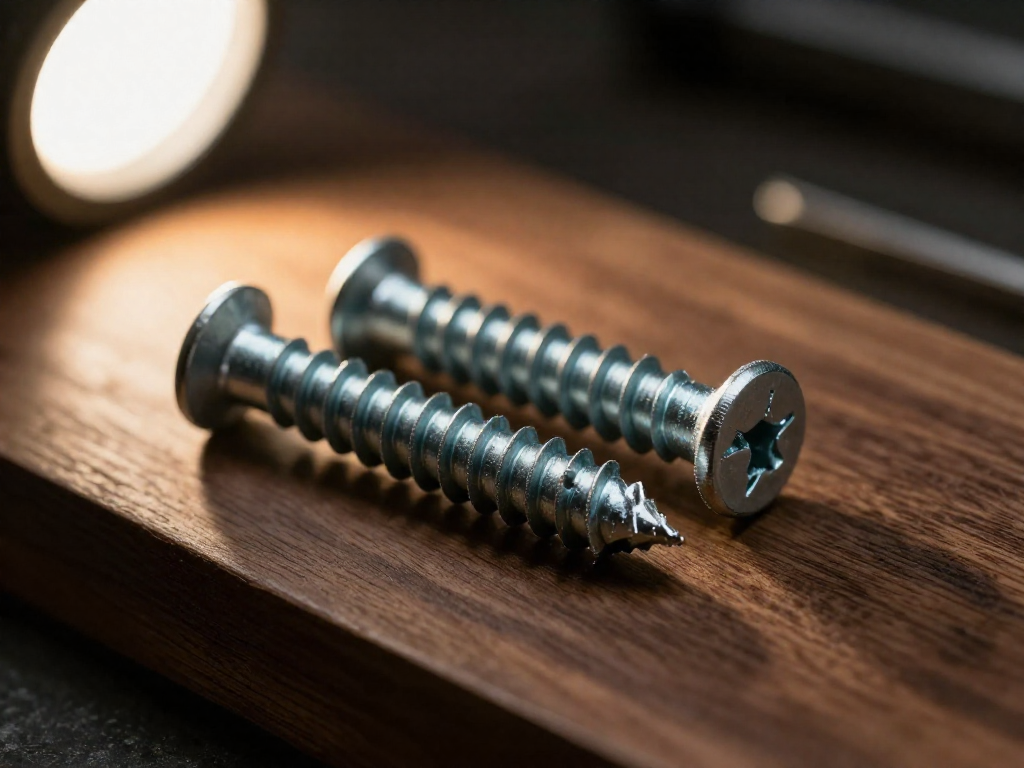
When you look at two wood screws side by side, the difference in thread pattern isn't cosmetic—it's the screw's primary interface with the wood. Coarse threads and fine threads work on fundamentally different principles, and picking the wrong one for your wood density leads to either weak grip or a split board.
Coarse threads have a wider pitch and deeper, more aggressive grooves. In softwoods like pine, fir, or cedar, the fibers are relatively spongy and compress easily under load. A coarse thread actually carves out a substantial channel, then the surrounding wood swells back slightly to lock in place. That mechanical interlock is what gives coarse-threaded screws their high withdrawal resistance in soft materials—it's not just surface friction, it's a physical displacement that resists pull-out. This is why most general-purpose wood screws and construction screws use a coarse pitch; they're optimized for the framing lumber and sheet goods that dominate DIY projects.
Fine threads, by contrast, have a shallower, tighter spiral with less aggressive cutting. When you drive a fine-thread screw into a dense hardwood—oak, maple, or hickory—the wood doesn't give much. If you tried a coarse thread here, you'd essentially be trying to force a wedge into a material that has no room to yield. The result: high insertion torque and a real risk of splitting the workpiece, especially near edges. The finer thread spreads the clamping load across more revolutions of the screw, reducing local stress and allowing you to tighten firmly without cracking. For cabinetry, furniture, or any hardwood joinery, fine threads are the safer, stronger choice.
This thread logic directly dictates how you should drill your pilot holes. The USDA Forest Products Laboratory's Wood Handbook gives a rule that ties it all together: for softwoods, the pilot hole should be about 70% of the root diameter of the threads; for hardwoods, about 90%. Why? In softwood with a coarse thread, the smaller pilot forces the thread to compress more fibers, maximizing grip. In hardwood with a fine thread, the larger pilot leaves just enough wood for the shallow threads to bite without overstressing the grain. For a common #8 wood screw, that works out to a 2.5 mm hole in pine and a 3.0 mm hole in oak—a tiny difference that makes a huge practical impact (USDA Forest Products Laboratory). Ignore this and you'll either strip the hole in softwood or split the hardwood.
One trick that often surprises DIYers: lubricating your screws with a dab of soap or wax is not only fine, it's highly recommended for dense woods. The same Wood Handbook confirms that a light lubricant eases insertion significantly and has little to no effect on ultimate withdrawal resistance. So when you're driving fine-thread screws into hard maple and the going gets tough, don't hesitate to rub a little paraffin or bar soap on the threads—you'll get them seated without sacrificing hold. The bond strength comes from the wood fibers locking around the thread, not from friction on the screw shaft, so lubrication doesn't weaken the joint.
A few final notes on thread performance: always aim to screw into side grain whenever possible. End grain withdrawals average only 75% of side grain strength, so if you must fasten into the end of a board, consider a longer screw or even a different fastener for structural loads. Also, keep in mind that published withdrawal loads for wood screws typically include a safety factor of 2 to 10, meaning the allowable load is 10–50% of what the joint could actually take before failing. That built-in cushion is your reminder to respect the specs, but not to overbuild unless the project truly demands it.
Sizing It Right: Choosing Diameter and Length
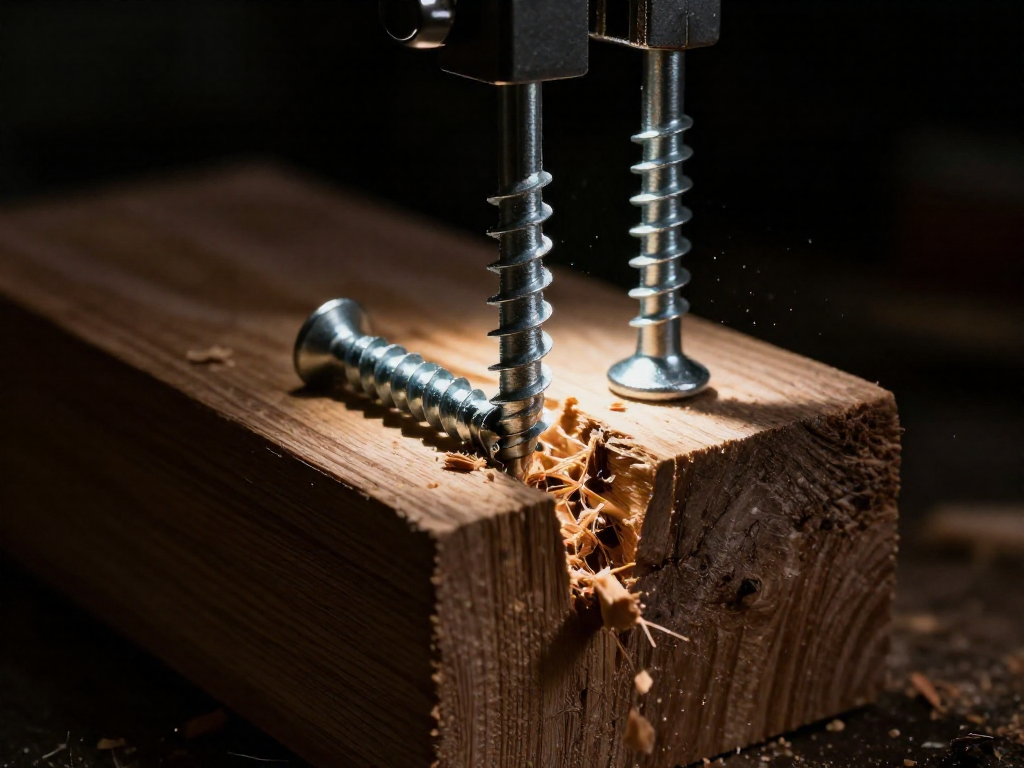
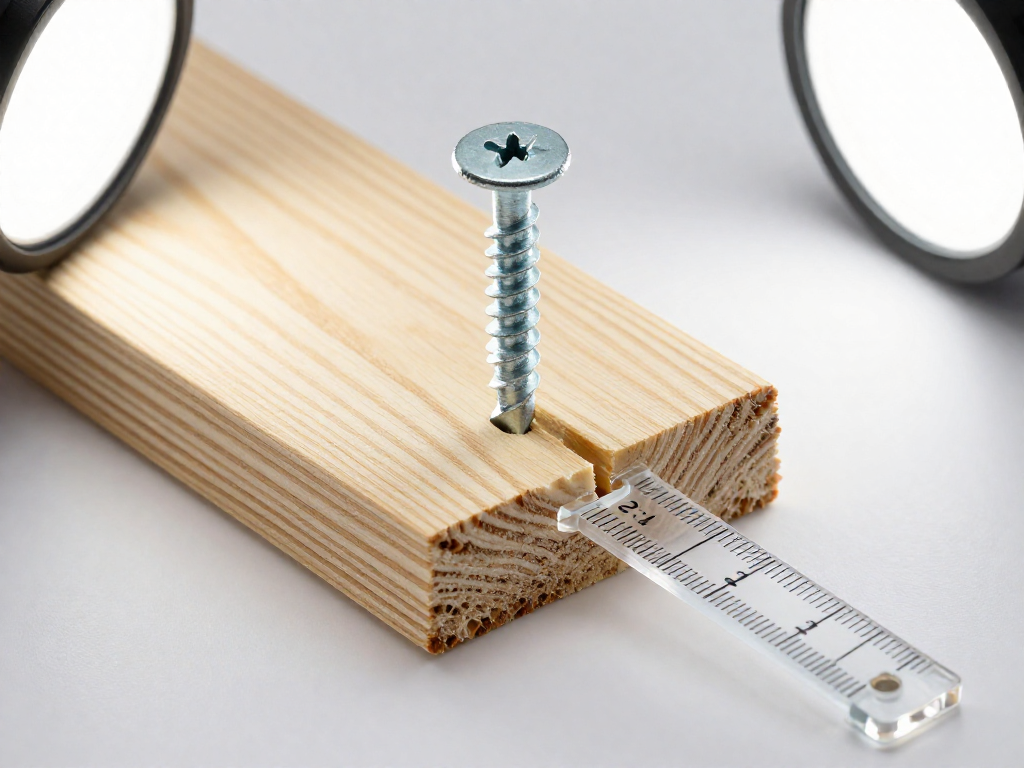
As a rule of thumb, your screw should penetrate the bottom piece by 2–3 times the thickness of the top board you’re fastening. That means a 1/2″ board calls for at least a 1-1/4″ screw. Any shorter and you’re cheating yourself on holding power; too long and you risk poking through the back.
Diameter matters just as much. A #6 (3.5 mm) is fine for light-duty hinges or small brackets, but step up to a #8 (roughly 4 mm) for most indoor furniture or cabinet builds—it’s the workhorse you’ll reach for again and again. When you need serious clamping force or you’re working outdoors, a #10 (about 5 mm) gives you a much beefier bite, especially combined with the deeper penetration that outdoor projects demand.
What’s actually happening when you drive a screw? The withdrawal resistance depends on the wood’s density, the screw diameter, and how deep it goes—and diameter matters squared. According to the Engineering Toolbox, the withdrawal force in pounds per inch of thread engagement is roughly F = 2850 × SG² × D, where SG is the wood’s specific gravity and D is the screw diameter in inches. Plug in a #10 screw (0.190″) and spruce (SG 0.45), and you get about 109 pounds of hold per inch of penetration. Bury it 2 inches deep, and you’re looking at over 200 pounds before it lets go.
So for an interior bookshelf, a 1-1/2″ #8 is spot-on. For deck boards, a 3″ #10 is the proven standard, giving you both the extra length and the thicker shank to resist lateral shear. If you’re driving into dense hardwoods, rub a little bar soap or wax on the threads—it eases entry without measurably sacrificing withdrawal strength. And remember: these rules apply to conventional wood screws; if you’re hanging a heavy gate or building a load-bearing header, that’s lag screw territory and you’ll want to size up accordingly.
Load-Bearing Demands: Withdrawal Strength You Can Count On
When a screw fails, it usually pulls straight out like a nail—so withdrawal strength matters every bit as much as shear. You can put a number on it. For a common wood screw in seasoned side grain, the pull-out force per inch of thread engagement is:
F = 2850 × SG² × D
where F is in pounds per inch, SG is the specific gravity of the oven-dry wood, and D is screw diameter in inches.
This formula comes straight from wood engineering tables and holds up well as long as you drill a properly sized pilot hole (about 70% of the thread root diameter in softwoods, 90% in hardwoods).
Plug in a real-world example. A #10 screw (0.190" diameter) driven into Canadian spruce with SG 0.45 yields: F = 2850 × (0.45)² × 0.190 ≈ 109 lb per inch of penetration (Engineering Toolbox). With a 3-inch embedment, the ultimate withdrawal force is about 327 lb. But that’s the breaking point—you never design to that. Allowable loads include safety factors from 2 to 10, meaning you can only count on 10–50% of the ultimate. For that same #10 screw, a safe working load might be anywhere from 33 to 164 lb, depending on the application and building codes. If you’re hanging a heavy object from the ceiling—say a swing or a punching bag—treat the load as dynamic and lean toward the higher end of the safety factor (at least 5×). A static bookshelf might get by with a 3× factor.
Wood species changes everything. Oak (SG ≈ 0.65) roughly doubles the withdrawal: about 229 lb per inch. That same #10 at 3 inches embedded in oak could theoretically withstand nearly 690 lb at failure. In practice, this means a heavy timber project lets you use smaller or shorter screws than you’d need in pine or spruce.
But don’t rely on side-grain numbers if you’re driving into the end grain of a board. Screws into end grain hold only about 75% of the load they carry in side grain, as noted in the USDA Wood Handbook. Whenever possible, orient connections for side grain loading, or at least bump up screw diameter and embedment when end grain is unavoidable.
When standard wood screws aren’t enough, lags take over. A 3/8-inch diameter, 6-inch-long lag in spruce-pine-fir softwood carries an allowable withdrawal of 770 lb according to the AWC connection calculator. The same lag in oak jumps past 1,500 lb. That’s 10 to 15 times the safe load of a #10 structural screw—exactly what you need for deck ledgers, bearing posts, or heavy equipment mounted to a timber frame.
A practical tip: dense woods can gall or snap a screw during driving. Rubbing a little soap on the threads makes insertion far easier and doesn’t hurt withdrawal strength. You get the full engineering grip without wrestling the screw.
The numbers show that withdrawal strength isn’t a mystery. Pick the right screw diameter and length for your wood’s density, avoid end grain where strength counts, and when the math says a common screw will fall short, don’t hesitate to use a lag.
Outdoor Durability: Corrosion-Resistant Screws That Last
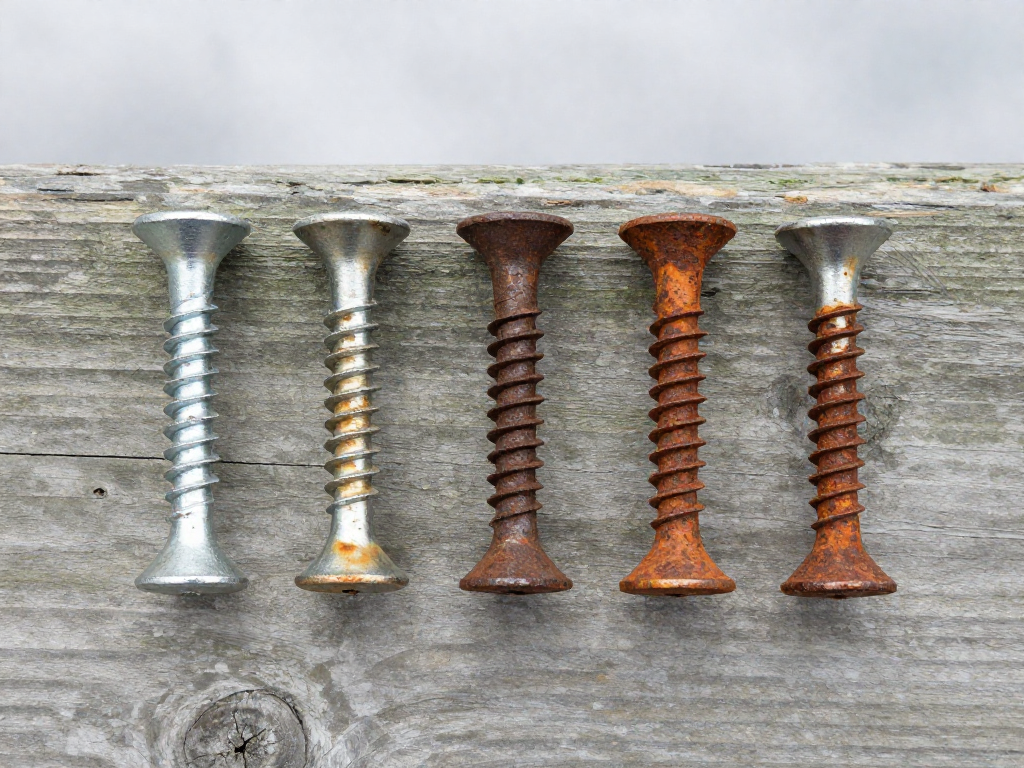
The minute a screw steps outside, the rules change. Interior zinc-plated steel is fine for cabinet hinges, but exposed to rain and sun it’ll start to rust within a season. For a deck, fence, or Adirondack chair that’s going to live outdoors year-round, you need a fastener that can handle moisture, temperature swings, and UV without corroding.
Stainless steel is the workhorse here. Type 304 stainless is a solid choice for most outdoor projects away from the coast—it resists rust in typical rain and humidity, and it won’t leave ugly black streaks on cedar or redwood. But if you’re building within a few miles of saltwater, step up to 316 stainless. It’s often called marine grade because its molybdenum content creates a passive oxide layer that essentially stops rust before it starts, even in salt spray (The Fastener Depot). The trade-off is cost: 316 screws run 30–50% more than 304, but for a pier, seawall, or a boat dock, that’s cheap insurance.
Ceramic-coated screws are another popular option, especially for decking. They’re a hardened steel core with a baked-on non-metallic coating that shrugs off moisture—until it’s scratched. Drive a ceramic-coated screw without pre-drilling or slip with the bit, and you’ll break the seal, exposing the steel beneath to rust. They’ll hold up for years if installed carefully, but they’re not the right pick for truly corrosive environments. Many deck screws also feature a Type 17 slash point that cuts its own hole in dense hardwoods like ipe or cumaru, and you can find these points on both coated and stainless screws.
Bottom line: if you’re near the ocean, go 316 stainless and don’t look back. For inland decks, fences, and outdoor furniture, 304 stainless or a quality ceramic-coated deck screw—driven gently—will serve you well. Just never grab that bucket of interior zinc screws for an outdoor project; it’s a false economy that’ll have you re-screwing everything in a year.
Installation Tricks That Prevent Failure
Always drill a pilot hole. For softwoods, make the hole about 70% of the thread root diameter; in hardwoods, go up to 90%. The Wood Handbook recommends a 2.5 mm pilot for a #8 screw in softwood and 3.0 mm in hardwood. In hardwood, also take a moment to countersink — it prevents surface tear-out as the head seats.
In dense hardwoods, lubricate the screw. A dab of soap or wax cuts driving friction dramatically and, contrary to intuition, hardly affects withdrawal resistance. Pair that with a driver set on a moderate clutch; you’ll avoid stripping the hole or shearing the head.
Lag screws aren’t just big wood screws. Drill a clearance hole through the top piece for the smooth shank, then a separate pilot hole in the bottom piece sized for the threaded portion. And avoid counting on end grain for load-critical joints — screws driven into end grain average only 75% of side-grain withdrawal strength. If you must go into the end, reinforce the joint or add a mechanical interlock.
Common Questions Answered
Can I just use drywall screws for wood projects? Short answer: don’t. Drywall screws are hard and brittle — they’re designed for fastening gypsum to studs, not for structural wood joints. Under load, they can snap without warning. Wood screws are made from more ductile steel and are far tougher in shear.
What’s the difference between a lag screw and a regular wood screw? Lags are heavier: thicker shanks and a hexagonal head that you drive with a wrench. They’re meant for structural connections where withdrawal strength matters. For example, a 3/8-inch by 6-inch lag in spruce-pine-fir softwood has a withdrawal rating around 770 pounds; switch to oak and that number jumps above 1500 pounds (Engineering Stack Exchange). Wood screws, even the beefy #12 or #14 sizes, aren't in the same league.
How do I hide screw heads? Countersink the hole so the head sits below the surface, then glue in a matching wood plug or use a high-quality wood filler. For plugs, cut them from the same stock with a plug cutter bit for an almost invisible fix.
Do I need washers? Most flat-head wood screws don’t — the tapered underside wedges into the counterbore and spreads the load. Round-head screws and lag screws, especially in softwoods, benefit from a flat washer under the head to keep it from pulling into the wood as you tighten.
Sources
- Wood Handbook, Chapter 08: Fastenings — research.fs.usda.gov
- Wood Screws - Withdrawal Force — engineeringtoolbox.com
- Inline pull load rating of lag bolts in wood? - Engineering Stack Exchange — engineering.stackexchange.com
- The Only Screw Size Guide You Need (Screw Size Chart Inside) | DK Hardware — dkhardware.com
- Wood Screw Sizes Explained | UK Gauge, Metric & Pilot Hole Chart — metalsheets.co.uk
- Wood Screws: Sizes, Types, & Uses | The Fastener Depot — thefastenerdepot.com
- Corrosion-Resistant Deck Screws for Coastal & Hurricane Construction | AJAX Fasteners — ajaxco.com
- The Complete Guide To Rust-Proof Screws & Fastener Coatings — thefastenerdepot.com
- Wood Screw Sizes Explained - A Beginners Guide — youtube.com
See also
- Nails vs. Screws: When to Use Which for Woodworking
- How to Choose the Right Anchor for Drywall vs. Plaster
- Best Adhesives for Bonding Wood to Metal
- Outdoor Fastener Corrosion Ratings Explained
- Guide to Pre-Drilling and Countersinking
Related articles
Machine Screws, Bolts, and Nuts: A DIYer’s Guide to Size and Grade
How do I know what size bolt and grade to use for a mechanical repair?
Jul 22, 2026 · 3 min read
Deck Screws vs. Nails: Fastening Deck Boards for Longevity
Should I use screws or nails for my deck, and what type?
Jul 22, 2026 · 6 min read
Toggle Bolts: The Strongest Drywall Anchor? When to Use Them and How to Install
How do I install toggle bolts for heavy wall-mounted items?
Jul 22, 2026 · 5 min read