Chemical-Resistant Adhesives: Bonding for Labs, Garages, and Kitchens
What glue can handle exposure to gasoline, oil, solvents, or cleaning chemicals?
On this page
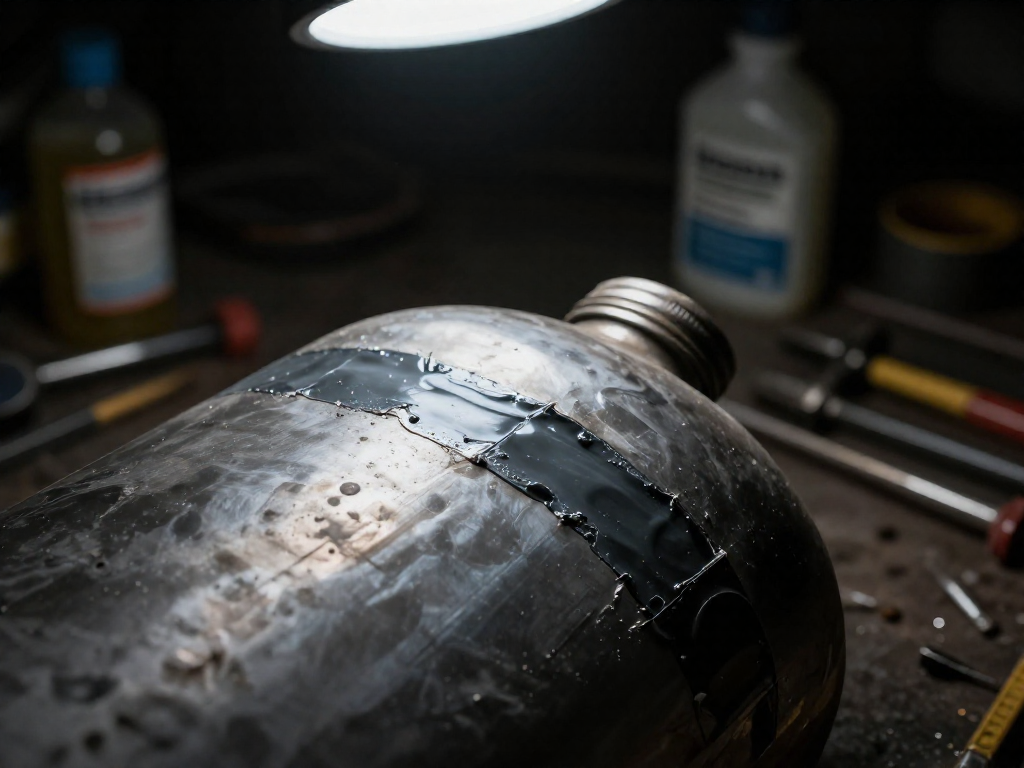
Most adhesives fail when exposed to gasoline, solvents, or strong cleaning chemicals. This article cuts through the confusion, comparing epoxy, silicone, and specialty adhesives (like chemical-resistant tapes and polyurethanes) to help you choose the right bond for your lab, garage, or kitchen project. We’ll also highlight specific products that have been tested against harsh chemicals.
What Makes an Adhesive Chemically Resistant?

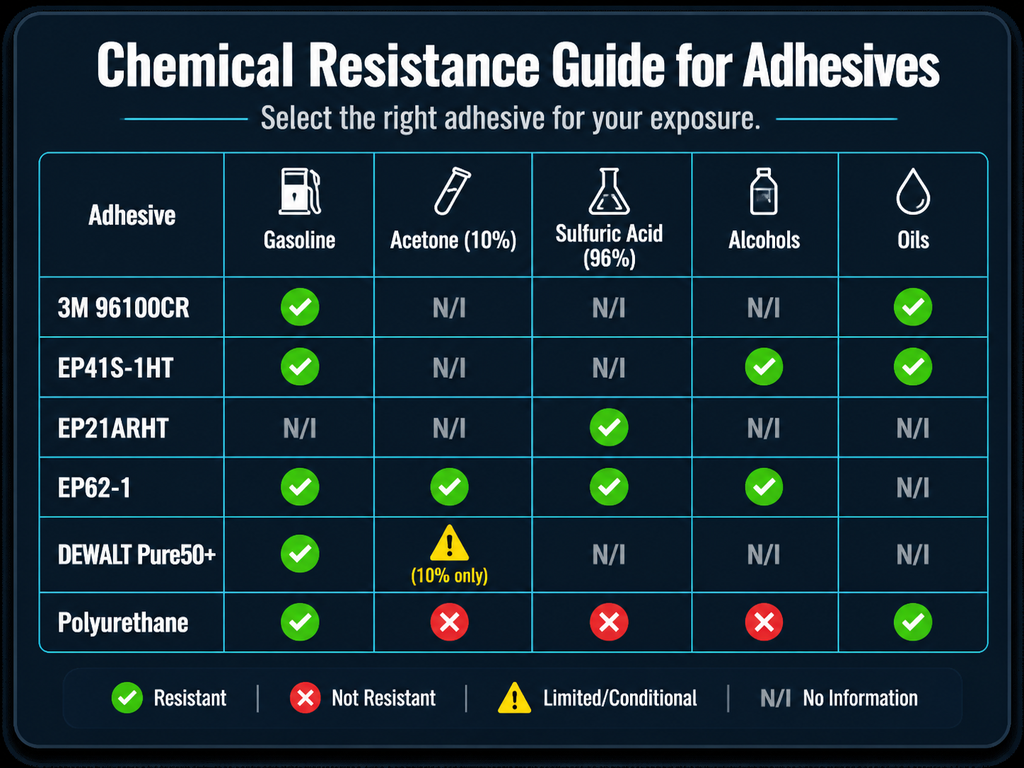
If you need a bond that can shrug off gasoline, oil, or aggressive cleaning chemicals, don’t just grab a tube labeled “epoxy” and call it a day. The right answer depends on the specific chemical you’re fighting: a high-performance two-component epoxy like Master Bond EP41S-1HT laughs at prolonged immersion in gasoline, gasohol, fuels, and many solvents (Master Bond), but that same epoxy might fail quickly in concentrated sulfuric acid. Chemical resistance is a precise match, not a universal badge.
What drives that difference? An adhesive’s polymer backbone determines which molecular attacks it can endure. Epoxies are generally tough, but formulations vary wildly: some cure into a dense, crosslinked network that blocks solvents, while others turn mushy. Temperature, concentration, and exposure time are the other critical dials. A brief spill of premium gasoline at room temperature won’t harm a cured DEWALT Pure50+, but drop the same adhesive into 100% acetone and it fails—even at just 10% concentration, the chart flips to “not resistant.” Hot chemicals accelerate attack; immersion hammers a bond far harder than occasional wiping.
Ignore the myth that any “chemical-resistant” label solves your problem. Manufacturers test against specific chemical families: fuels, strong acids, alkali, solvents. For a garage fuel leak, you want an epoxy that shrugs off aliphatic hydrocarbons; for a kitchen backsplash exposed to vinegar and bleach, an acid-resistant toughened system like Master Bond EP125 (stable to 500°F) might be overkill but effective. Polyurethanes handle oil and fuel well, yet buckle under strong solvents. Always check the datasheet for your exact chemical, concentration, and worst-case contact scenario—spec sheets exist for a reason.
Epoxy Adhesives: The Gold Standard for Harsh Chemicals
When it comes to standing up to harsh chemicals, two-component epoxies are in a league of their own. They’re the most reliable choice for labs, garages, and industrial environments where gasoline, solvents, or concentrated acids are part of the daily grind. The secret lies in their dense, cross-linked structure, which forms an impermeable barrier once fully cured. But here’s the catch: not all epoxies are created equal. Off-the-shelf hardware store options often can’t hold a candle to specifically formulated systems, and picking the wrong one can lead to rapid softening and bond failure.
If your main concern is fuels and oils, Master Bond EP41S-1HT is a workhorse. It withstands prolonged immersion in gasoline, gasohol, diesel, and a broad range of organic solvents like toluene, ethyl acetate, and various alcohols. For applications that combine fuel resistance with elevated temperatures, EP62-1 maintains its strength and chemical inertness even under heat.
When concentrated acids are in play, most adhesives would be destroyed in minutes. That’s where EP21ARHT comes in—it’s in a class of its own, proven to endure over a year of continuous immersion in 96-98% sulfuric acid and 20% hydrochloric acid (Master Bond). Yes, a whole year. That kind of durability is practically unheard of outside specialized epoxies.
For bonds that must handle both chemicals and high heat, EP125 delivers thermal stability up to 500°F alongside resistance to acids, alkalis, salts, and most organic solvents. And if you’re working in a cold garage and need a cure that happens below 40°F, EP27 gets the job done while still shrugging off 70% sulfuric acid and 30% nitric acid.
In a lab or medical setting, you might need an adhesive that stands up to repeated sterilization. EP42HT-2Med cures at room temperature and holds up against chemical sterilants, EtO, autoclaving, and radiation—all while meeting USP Class VI biocompatibility standards.
The takeaway? If you’re dealing with aggressive chemicals, a generic epoxy isn’t going to cut it. Softening or crumbling after a single spill is a real risk. Instead, match the specific formulation to the chemicals you’ll face, and follow the manufacturer’s curing instructions to the letter. The difference between a bond that fails and one that lasts for years under chemical attack is choosing the right epoxy.
Alternatives to Epoxy: Tapes, Polyurethanes, and Silicones
Sometimes a rigid epoxy bond is overkill—or a messy, precise-fit nightmare. When you need flexibility, a dead-clean application, or a specific chemical resistance profile that a general-purpose epoxy doesn't nail, tapes, polyurethanes, and silicones step up.
Chemical-resistant transfer tapes deliver solvent-proof holding power without mixing. The go-to example is 3M's 96100CR series—an acrylic transfer tape that resists oil, fuel, and aliphatic hydrocarbons beautifully (SpecialChem). It's thin, instant-grab, and leaves zero squeeze-out, making it ideal for attaching labels, overlays, or gaskets in lab and garage settings. The catch? It's not a gap-filler; substrates must be smooth and flat.
Polyurethane adhesives split the difference between epoxies and sealants. They cure with ambient moisture into a tough, slightly flexible film. Manufacturer data shows good resistance to petroleum-based chemicals: the DEWALT Pure50+ polyurethane anchor, for example, handles full-strength gasoline and stands up to 10% acetone for brief spills. However, polyurethanes generally weaken under prolonged attack from strong solvents and concentrated acids. Think fuel filters and oil-pan gaskets, not immersion in paint stripper.
Silicone adhesives and sealants are the go-anywhere champs for mild chemical duty. They shrug off household cleaning chemicals—bleach, vinegar, dilute acids and alkalis—and stay flexible from -75°F to 400°F and beyond. That makes them perfect for sealing around sinks, lab bench edges, and kitchen splashbacks. But don't count on them for structural loads or constant fuel contact: silicones swell and lose bond strength when submerged in gasoline or oils.
Cyanoacrylates (super glues) are tempting because they're fast, but they fail quickly against almost anything harsher than soapy water. Skip them for any chemical-facing joint.
Quick Comparison: Chemical Resistance at a Glance
| Adhesive Type | Gasoline | Motor Oil | Acetone | Bleach | Vinegar (Acetic Acid) |
|---|---|---|---|---|---|
| Transfer Tape (3M 96100CR) | Excellent | Excellent | Fair | Good | Good |
| Polyurethane (e.g. DEWALT Pure50+) | Good | Good | Fair (brief contact) | Good | Fair |
| Silicone | Poor | Poor | Fair | Excellent | Excellent |
| Cyanoacrylate | Not Recommended | Poor | Poor | Poor | Poor |
Ratings assume fully cured adhesive and brief chemical contact unless noted. Check manufacturer data for immersion and long-term exposure.
The right pick depends on the mess you'll make. For a clean, oil-resistant lap joint, reach for a transfer tape. For a flexible seal against kitchen acids, silicone is hard to beat. Polyurethane bridges the gap when you need toughness and some flex with decent fuel tolerance. None are a drop-in replacement for epoxy in a hot solvent bath—but they don't need to be.
How to Choose the Right Adhesive for Your Specific Chemical
Start by naming the chemical you're up against—gasoline, brake fluid, bleach, sulfuric acid, acetone—because resistance isn't universal. For fuel and oil exposure, a high-performance epoxy like Master Bond EP41S-1HT is a top choice; it withstands prolonged immersion in gasoline, diesel, oils, and many solvents. For gas tank patches or quick garage fixes, chemical-resistant transfer tapes from 3M can also hold up well against fuels. If you're facing strong acids, skip the general-purpose stuff and go straight to a specialized epoxy: Master Bond EP21ARHT survives more than a year in 96–98% sulfuric acid or 20% hydrochloric acid. In kitchens, where bleach, vinegar, and ammonia cleaners are the daily grind, silicone sealant handles caulking jobs while a fuel-resistant epoxy bonds countertop materials. Lab environments push extremes—here, always consult the manufacturer's resistance chart. According to DEWALT's adhesive chemical resistance chart, their Pure50+™ tolerates brief contact with gasoline and 10% acetone, making it suitable for spill-prone setups. When in doubt, test a sample under your exact conditions; even the best data needs a real-world sanity check.
Application Tips for Lasting Chemical-Resistant Bonds
Start with surfaces that are absolutely clean, dry, and free of any oil, grease, or past chemical residues—even a trace film can undermine adhesion. For the strongest bond, let the adhesive fully cure before any chemical exposure. A typical two-part epoxy needs 24 to 72 hours at room temperature, though some formulations benefit from a heat cure to reach their rated resistance (DEWALT’s chemical resistance chart stresses that even brief spills can cause failure if the bond isn’t fully cured). If you’re using a chemical-resistant tape, apply firm, even pressure to ensure intimate contact with the substrate—no air gaps.
In harsh environments, consider sealing the bond edges with a compatible lacquer or thin epoxy coat to prevent chemicals from wicking into the bondline. Always work in a well-ventilated area when bonding items that will contact fuels, solvents, or strong cleaning agents, and wear appropriate gloves and eye protection.
Sources
- Chemical-resistant adhesives: Types, selection tips, and test methods — specialchem.com
- Top 5 Chemical Resistant Adhesives — masterbond.com
- Chemical Resistant Adhesives — azom.com
- DeWALT - Adhesive Chemical Resistance Chart — buildsite.com
See also
- Best Adhesives for Plastic to Metal Bonding
- High-Temperature Adhesives for Engine Repair
- Waterproof Adhesives for Kitchen and Bath
Related articles
Humidity-Tolerant Adhesives: Bonding in Moist Climates Without Blushing
Which adhesives cure properly in very humid environments?
Jul 22, 2026 · 5 min read
DIY Car Repair Adhesives: Fixing Trim, Lights, and Panels That Last
Compare double-sided tape, epoxy, and polyurethane for car trim, panel, and headlight repairs. Data-backed guide with real adhesion strengths and weather durability.
Jul 22, 2026 · 8 min read
Outdoor Fastener Alternatives: When Adhesives Beat Screws for Exterior Projects
In outdoor projects, when should I use adhesive instead of mechanical fasteners?
Jul 22, 2026 · 10 min read