Freeze-Thaw Resistant Adhesives for Exterior Stone and Concrete
Which adhesives can survive repeated freezing and thawing without losing bond?
On this page
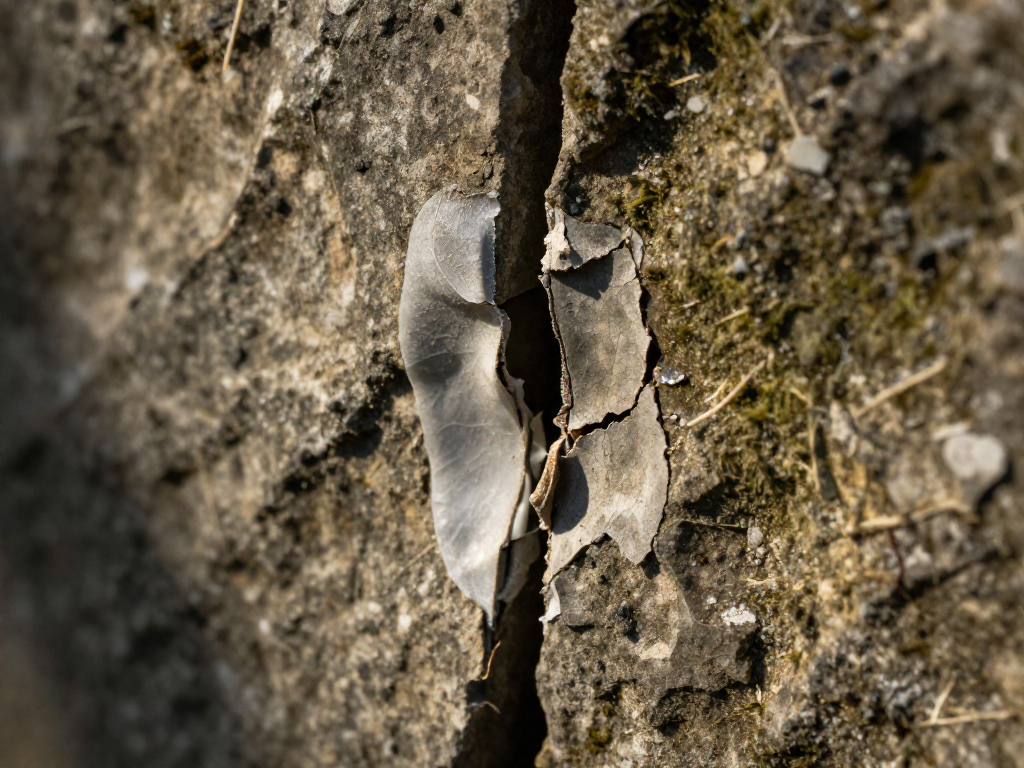
Start with the familiar problem of a stone step or concrete paver that shifts or cracks after a harsh winter, then pivot to the adhesive technology that prevents it.
Why Most Adhesives Fail the Freeze-Thaw Test
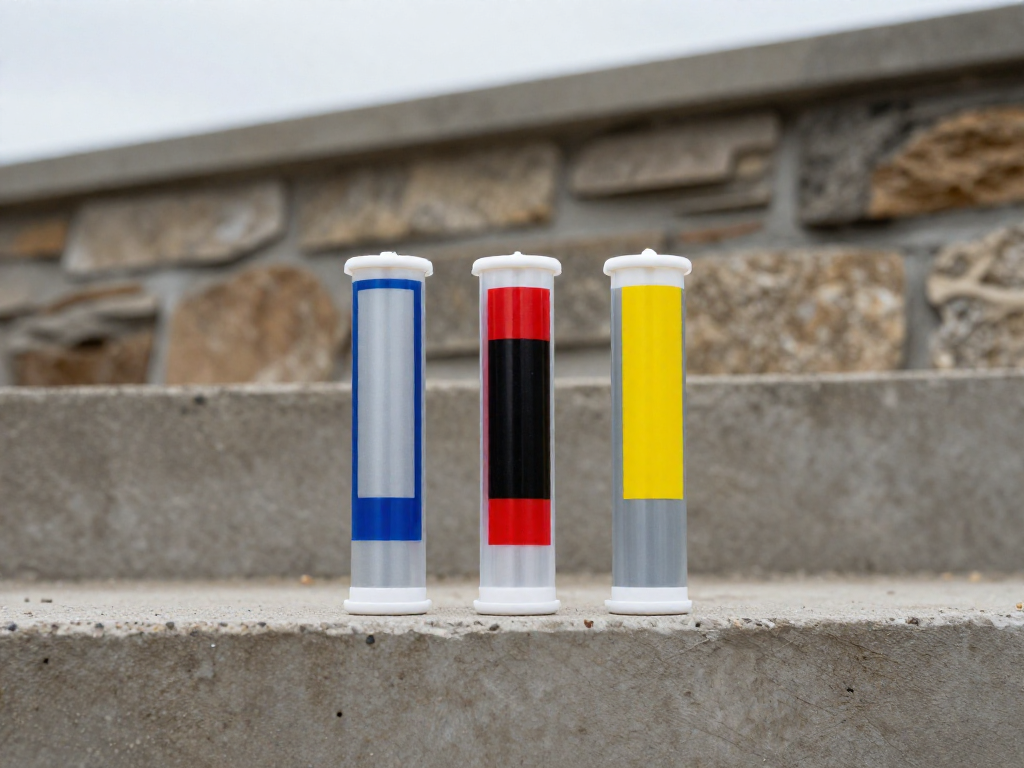
Adhesives that bend without breaking are the only ones that last through freeze-thaw cycles. Two-component polyurethanes and chemically modified flexible epoxies absorb the stress, while standard rigid formulas crack apart.
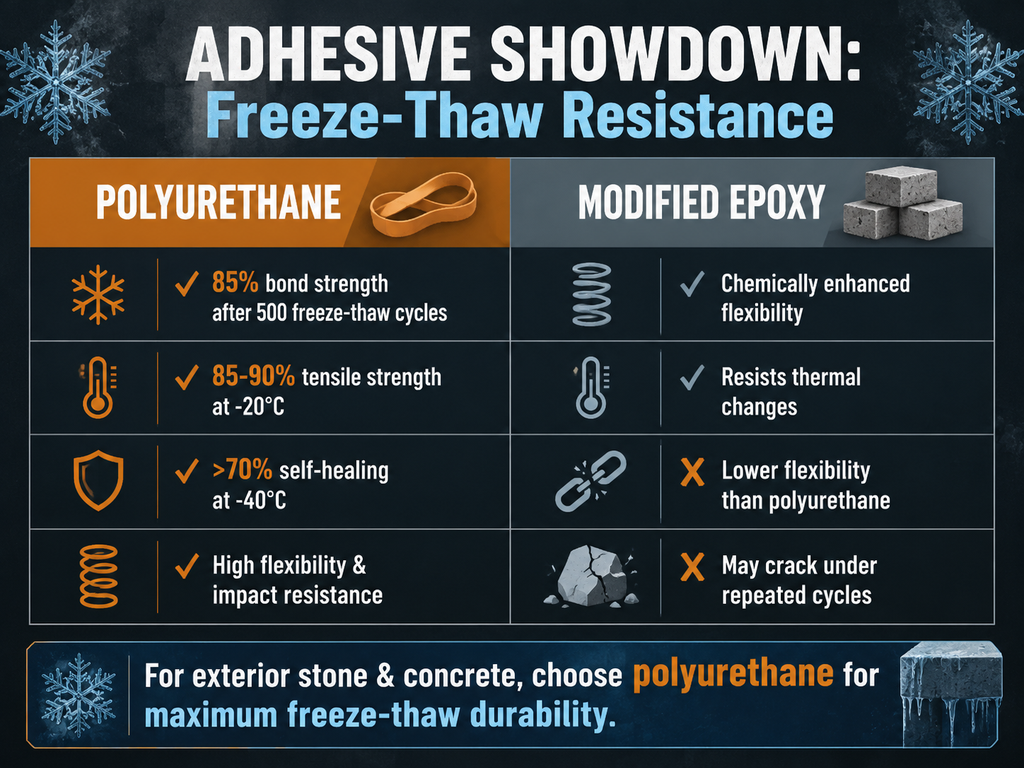
Water inside every stone or concrete joint expands by about 9% when it turns to ice, generating immense hydraulic pressure. That expansion forces the bond line apart. When the ice thaws, the materials contract. After dozens of cycles, a brittle adhesive develops microcracks, loses adhesion, and eventually delaminates. Conventional epoxies and construction adhesives get even stiffer in sub-zero temperatures, making them especially vulnerable to this fatigue. In contrast, polyurethanes retained over 85% of their initial strength after 500 freeze-thaw cycles in Adhesives Magazine testing—proof that the right formulation can deform repeatedly without failing.
Polyurethane Adhesives: The Freeze-Thaw Champion
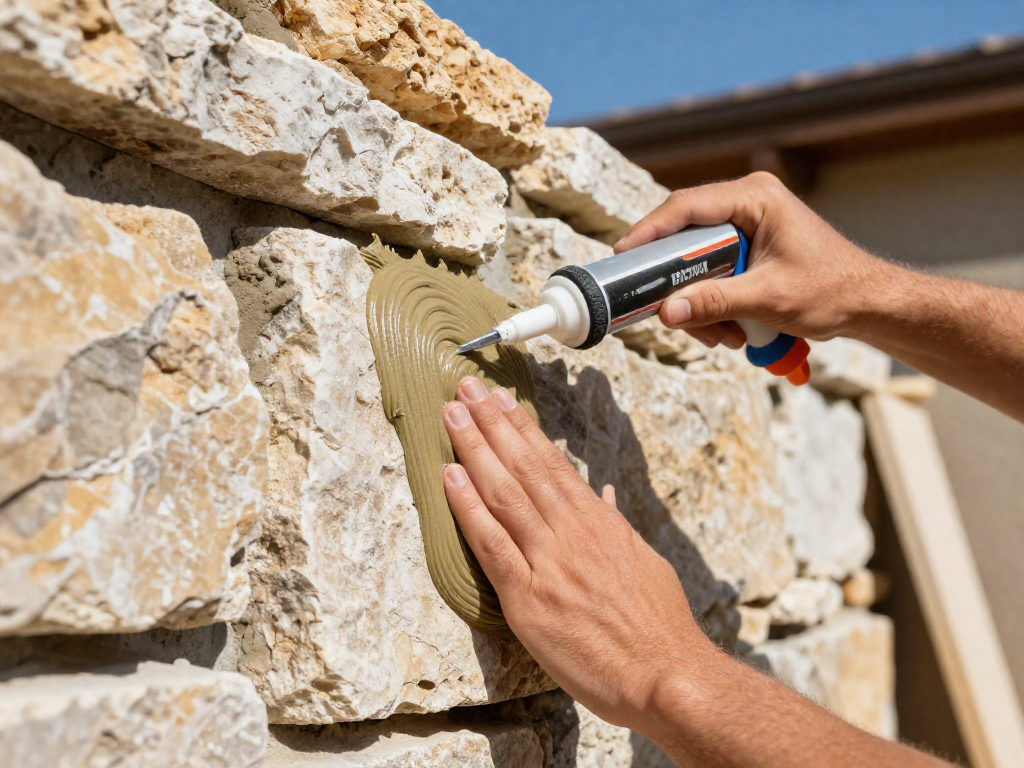
If there’s one adhesive family that laughs at freeze-thaw cycles, it’s polyurethane. According to a study cited by Adhesives Magazine, polyurethane adhesives exposed to 500 freeze-thaw cycles retained over 85% of their initial bond strength—an endurance figure that leaves rigid competitors in the dust.
That staying power isn’t magic; it’s flexibility. Stone and concrete expand and contract significantly as temperatures swing past freezing. Standard epoxies cure into glassy, brittle solids that fight that movement, building stress at the bond line until the joint simply pops. Polyurethane stretches with the substrate instead of resisting it. At -20°C, many formulations still deliver 85–90% of their room-temperature tensile strength, while typical alternatives manage only 50–60%. Some grades even get better the colder it gets: certain polyurethanes can self-heal microcracks at -40°C with over 70% efficiency, actively repairing damage before it spreads.
Outdoors, you rarely get a bone-dry surface to bond. This is where moisture-cure polyurethanes do something counterintuitive—they use that dampness to cure. The humidity in exterior stone or the lingering moisture from a rain shower actually accelerates cross-linking, turning a potential liability into an advantage. For patching cracked concrete steps, reattaching a loose stone veneer, or setting a capstone that will see snow and sun, a moisture-cure polyurethane is the most forgiving and reliable pick.
Product-wise, you can’t go too far wrong with a polyurethane construction adhesive like Loctite PL Premium or SikaBond Construction Adhesive. Both bond aggressively to masonry and stay pliable after curing. Sure, there are flexible epoxies out there (SurePoxy VLM Gel is one formulated for thermal shock resistance), but they’re playing catch-up to a polyurethane’s natural give. For exterior stone in freeze-thaw territory, polyurethane is the baseline solution that almost always gets the job done—no chemical wizardry required.
Modified Epoxy: When a Rigid Bond Makes Sense
Standard epoxies are rigid by nature, and that's the number-one reason they crack and delaminate after a single winter. As exterior stone and concrete expand and contract through freeze-thaw cycles, a brittle adhesive that can't move with the substrate is doomed. But not all epoxies are the same — a subset of chemically modified formulas brings enough flexibility to survive outdoors without sacrificing epoxy's core strengths.
Take SurePoxy VLM Gel, a two-component, 100%-solids epoxy that's been purpose-built for thermal resilience. It's chemically enhanced to achieve a very low modulus, giving it far greater give than standard epoxies — enough to handle the repeated dimensional swings of freezing and thawing (Kaufman Products). At the same time, it retains high compressive strength, excellent gap-filling capability (ideal for uneven stone faces and spalled concrete), and superior resistance to de-icing salts and other chemicals that eat away at lesser adhesives.
Even modified epoxies, however, remain measurably less flexible than a polyurethane. If you're bonding dissimilar materials with very different coefficients of thermal expansion, or if the joint will see significant vibration or structural movement, this still isn't your first choice. Where a modified epoxy earns its keep is in vertical repairs — filling deep cracks in a concrete retaining wall, laminating a fractured stone cap, or any situation where you need the adhesive to stay put without sagging. The two-component system requires precise mixing and near-surgical surface prep (clean, dry, and abraded), but when that's done right, the bond endures years of freeze-thaw punishment where a standard epoxy would have given up after the first frost.
What NOT to Use (and a Few Niche Alternatives)
Standard hardware-store epoxy is rigid with limited flexibility (Gluegun.com), so it can’t move with the stone and concrete as they expand and contract during freeze-thaw cycles. Expect cracks along the bond line within one winter. Silicone sealants stay flexible but offer almost no structural strength; they belong in joints meant for sealing, not load-bearing repairs.
If you need a middle ground, MS polymer (hybrid) adhesives handle temperature swings reasonably well. They won’t match the freeze-thaw stamina of a top-tier polyurethane, but for light-duty exterior stonework where failure isn’t a safety concern, they are worth testing.
Finally, don’t trust a label that just says “exterior.” Many adhesives marketed for outdoor use lack the low-temperature flexibility required to survive repeated freezing and thawing. Look for data sheets that explicitly list freeze-thaw resistance or retention of strength at sub-zero temperatures.
Application Tips for a Bond That Lasts Decades
The best freeze‑thaw adhesive is only as good as the surface it sticks to. Start with stone or concrete that’s clean, dry, and slightly roughened—a light grind or wire brushing opens pores so the adhesive can grab mechanically, not just chemically. Apply the adhesive at the temperature the manufacturer specifies; most polyurethanes and modified epoxies need the substrate at least 5°C (40°F) during application and cure. Curing below that can permanently weaken the bond, and freezing before full cure is a deal‑breaker.
Give the joint room to move. Avoid razor‑thin bond lines—a 1–2 mm thickness (about the thickness of a dime) lets the adhesive absorb thermal stresses without tearing itself apart. Once the parts are in place, shield them from rain or hard freezes for 24 to 48 hours. A tarp and a work light are cheap insurance. For vertical stone veneer, use temporary shims or straps until the cure is complete; you’re not relying on stick‑fast alone during that vulnerable window.
Why bother with these steps? Because even adhesives that survive 500 freeze‑thaw cycles with over 85% strength retention (Adhesives Magazine) need a solid foundation. Great preparation is what turns that lab‑grade toughness into decades of hold on your own patio or wall.
Quick FAQ: Freeze-Thaw Adhesive Questions Answered
Regular construction adhesive fails outdoors; polyurethane bonds last 20+ years, retaining over 85% strength after 500 freeze-thaw cycles (Puglue). Skip primer on stone; modified epoxy only worth it for high compressive strength.
Sources
- Polyurethane Adhesive in Low Temperatures (–40°C Tested) — puglue.com
- Infrastructure | KAUFMAN PRODUCTS — kaufmanproducts.net
- Epoxy Vs. Polyurethane Adhesives for Structural Applications: How to Decide — gluegun.com
See also
- How to Bond Stone to Concrete for Outdoor Projects
- The Best Adhesives for Patio and Hardscape Repairs
- Moisture-Cure vs. Two-Part Adhesives: When to Use Each
Related articles
Humidity-Tolerant Adhesives: Bonding in Moist Climates Without Blushing
Which adhesives cure properly in very humid environments?
Jul 22, 2026 · 5 min read
DIY Car Repair Adhesives: Fixing Trim, Lights, and Panels That Last
Compare double-sided tape, epoxy, and polyurethane for car trim, panel, and headlight repairs. Data-backed guide with real adhesion strengths and weather durability.
Jul 22, 2026 · 8 min read
Outdoor Fastener Alternatives: When Adhesives Beat Screws for Exterior Projects
In outdoor projects, when should I use adhesive instead of mechanical fasteners?
Jul 22, 2026 · 10 min read