Gluing Wood to Metal: What Actually Works for Furniture Repairs
Which glue is best for bonding wood to metal in furniture?
On this page
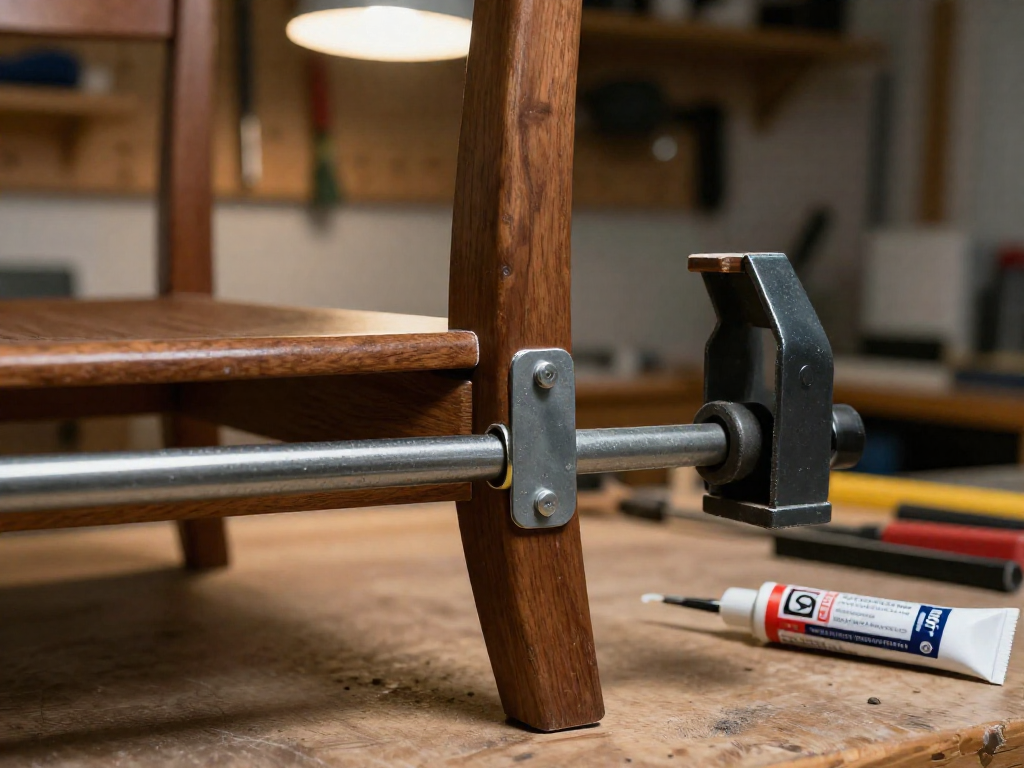
Whether you're attaching a wooden tabletop to a metal base or repairing a wobbly chair, the wrong adhesive can turn a simple fix into a dangerous break. This guide cuts through the noise to show exactly which glues hold wood to metal under real furniture conditions.
Why Wood-to-Metal Bonds Fail Without the Right Glue
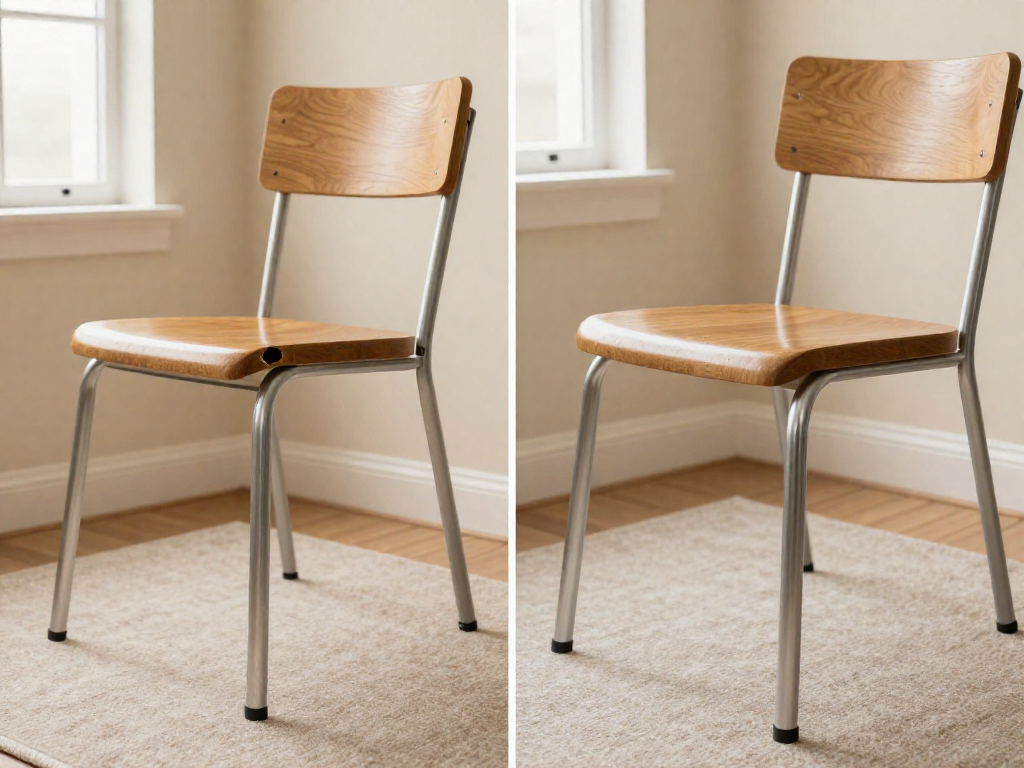
Standard wood glues (PVA) rely on soaking into wood fibers—they can’t grip slick metal. That’s why a quality polyurethane or epoxy is the answer. Polyurethane glues can reach wood-steel shear strengths from 2 to over 8 N/mm², though they need moisture to cure and expand to fill gaps (Research published in PMC). Epoxies offer a rigid, non-porous bond that resists shear and moisture. However, without flexibility, the daily expansion and contraction of wood against metal will eventually crack a brittle glue line, so choose a structural adhesive with a bit of give.
Epoxy: The High-Strength, Rigid Bond for Structural Joints
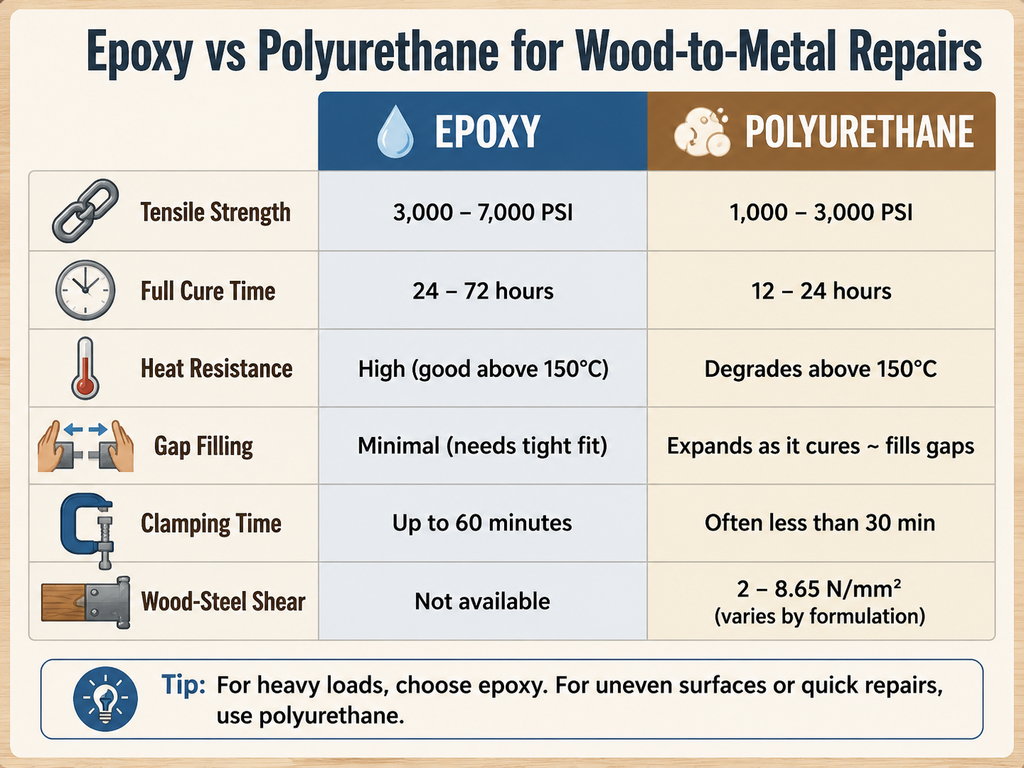
When a wood-to-metal joint has to carry real weight—think a chair leg or the stretcher of a dining table—epoxy is the adhesive you reach for. It cures into a hard, inflexible film that locks the mating surfaces together without creeping, so the joint stays put even under constant stress. In testing, epoxy shows tensile strength in the 3,000–7,000 PSI range, roughly two to three times that of typical polyurethane construction adhesives (PUGLue). That raw strength translates directly to furniture repairs: once fully cured, the bond resists the twisting and levering forces that make lesser glues fail.
Time is the trade-off. A standard two-part epoxy takes roughly 24 to 72 hours to reach full structural strength. Quick-set versions grab in as little as five minutes, but even those need clamping for up to an hour while the adhesive solidifies enough to hold on its own. That's not a step to skip; epoxy does not foam or gap-fill aggressively the way polyurethane does, so firm, even clamping is what pushes the two surfaces into intimate contact and builds a thin, uniform bond line.
Epoxy also earns its place in applications where heat is a concern. Polyurethane begins to break down after prolonged exposure above 150°C, a threshold a hot radiator or a sun-soaked window frame can challenge. Epoxy formulations, particularly those rated for metal, shrug off that kind of heat without softening. For a wooden chair back joined to a steel frame that sits next to a heater, epoxy gives you the thermal safety margin that polyurethane simply can't.
The combination of high tensile strength, thermal stability, and a rigid cure makes epoxy the clear pick for structural wood-to-metal joints that must not wobble. Look for a two-part epoxy labelled for metal bonding, scuff both the wood and the metal with coarse sandpaper, and wipe everything down with a solvent like acetone before mixing. The extra patience during the cure pays off in a repair that feels as solid as the original build.
Polyurethane: The Flexible, Gap-Filling Contender
If your repair involves uneven surfaces or a joint that will face vibration, polyurethane adhesive (PUR) is often the smarter choice over epoxy. Its signature trick? The glue expands as it cures, foaming into gaps and creating a tight bond even when your surfaces aren’t perfectly flat. That expansion is a double-edged sword, though — without proper clamping it can push wood and metal apart, ruining alignment. A lightweight clamp or heavy weight is all you need; resist the urge to overtighten, which just starves the joint of glue.
Strength-wise, don’t expect a single number from any polyurethane. Depending on the formulation, wood-to-steel shear strength can vary from as low as 2 N/mm² all the way up to 8.65 N/mm², according to research compiled by PMC. A high-quality two-component PUR typically lands in the 4.44–4.91 N/mm² range for these bonds, while a simpler pMDI adhesive might manage only 2.09 N/mm². For context, that top end rivals some epoxies, but you’re trading sheer rigidity for something more valuable in furniture: flexibility.
That give is why polyurethane shines on tabletops, decorative trim, or any assembly where wood moves with humidity changes or daily use. The cured bond absorbs vibration and minor swelling without cracking — something a brittle epoxy line simply can’t do over time. Cure time is another practical win: PUR adhesives set hard in 12–24 hours, cutting the wait compared to many structural epoxies that need 24–72 hours for full strength.
Two important limits. First, polyurethane adhesives degrade after prolonged exposure above 150 °C, so keep them away from fireplace surrounds, radiator covers, or other high-heat zones. Second, that expanding foam can get messy; tape off any areas you want to keep clean and wipe fresh squeeze-out with acetone before it cures. If you’re repairing a chair leg that takes constant impact, epoxy’s compressive strength still wins. But for a wobbly tabletop or a split decorative bracket where a little flex prevents a future crack, a quality polyurethane is the gap-filling workhorse you’ll reach for again and again.
Epoxy vs. Polyurethane: How to Choose for Your Furniture
Choose based on what the joint must do, not just strength ratings. Epoxy’s high tensile strength (3,000–7,000 psi) makes it stiff—perfect for structural legs, heavy-load brackets, or outdoor furniture (if coated) where the bond must not flex. That rigidity becomes a liability when movement or vibrations enter the picture.
Polyurethane is your go-to for uneven surfaces and joints that may shift slightly. It expands as it cures, filling gaps and grabbing rough textures, and reaches handling strength fast—typically 12–24 hours. Wood-steel shear strengths can range from 2 N/mm² to over 8 N/mm², rivaling some epoxies while adding toughness.
Common mistakes: using epoxy on a chair rung that flexes—the brittle bond will snap. With polyurethane, skipping clamps invites trouble; the expanding adhesive can push the joint apart, so clamp firmly for at least an hour while it sets. And keep polyurethane away from sustained heat—prolonged exposure above 150°C degrades the bond (Jesons). If the furniture sits near a radiator or in direct sun, epoxy (or a mechanical backup) is safer.
Surface prep isn’t optional: rough up the metal with coarse sandpaper, wipe with acetone, and work with dry, stable wood. Dirty or slick surfaces defeat any adhesive.
3 Non-Negotiable Steps for a Wood-to-Metal Bond That Lasts
Most wood-to-metal failures are prep problems, not glue problems. Start by scuffing the metal surface with 80–120 grit sandpaper to create a mechanical tooth, then wipe it down thoroughly with acetone. A clean, roughened surface gives the adhesive something real to grip.
When you apply the glue, clamping makes the difference. For epoxy, maintain firm pressure for at least 60 minutes—Loctite recommends this as a baseline for metal bonds. With polyurethane, use just enough clamping force to keep the parts aligned and prevent foaming out; over-tightening can squeeze out adhesive and starve the joint. After clamping, leave the piece completely undisturbed. Epoxy needs a full 24–72 hours to cure, polyurethane at least 24 hours. Test the bond with a gentle tug before finishing the repair.
Sources
- PU Glue vs Epoxy Strength - Polyurethane Adhesive — puglue.com
- Polyurethane vs Epoxy Adhesives: Industrial Bonding Guide | Jesons — jesons.net
- Adhesive vs Epoxy: Which Bonding Method Is Best? — blacklandmfg.com
- Metal glue: All you need to know — loctiteproducts.com
- Polyurethane Glue vs. Other Adhesives: 5 Key Benefits - Chemix — chemix-tech.com
- Experimental Analysis of Bonding in Steel Glued into Pine Timber - PMC — pmc.ncbi.nlm.nih.gov
See also
- How to prep metal for adhesive bonding
- Understanding adhesive shear strength vs. tensile strength
- Our test: best glues for metal-to-metal joints
- Wood glue showdown: PVA vs. polyurethane
Related articles
Attaching Foam to Wood: Craft vs Structural Applications
How do I glue foam to wood without melting or weakening the foam?
Jul 22, 2026 · 6 min read
Joining Concrete to Wood: The Right Adhesive for Fence Posts and Decks
Which adhesive is best for attaching wood to concrete in outdoor projects?
Jul 22, 2026 · 11 min read
How to Bond Acrylic to Metal: Achieving a Clear, Strong Joint
What's the best adhesive for bonding acrylic (plexiglass) to metal without clouding?
Jul 22, 2026 · 6 min read