High-Temperature Adhesives: Bonding Near Engines, Stoves, and Exhausts
Which glues can withstand temperatures over 500°F?
On this page
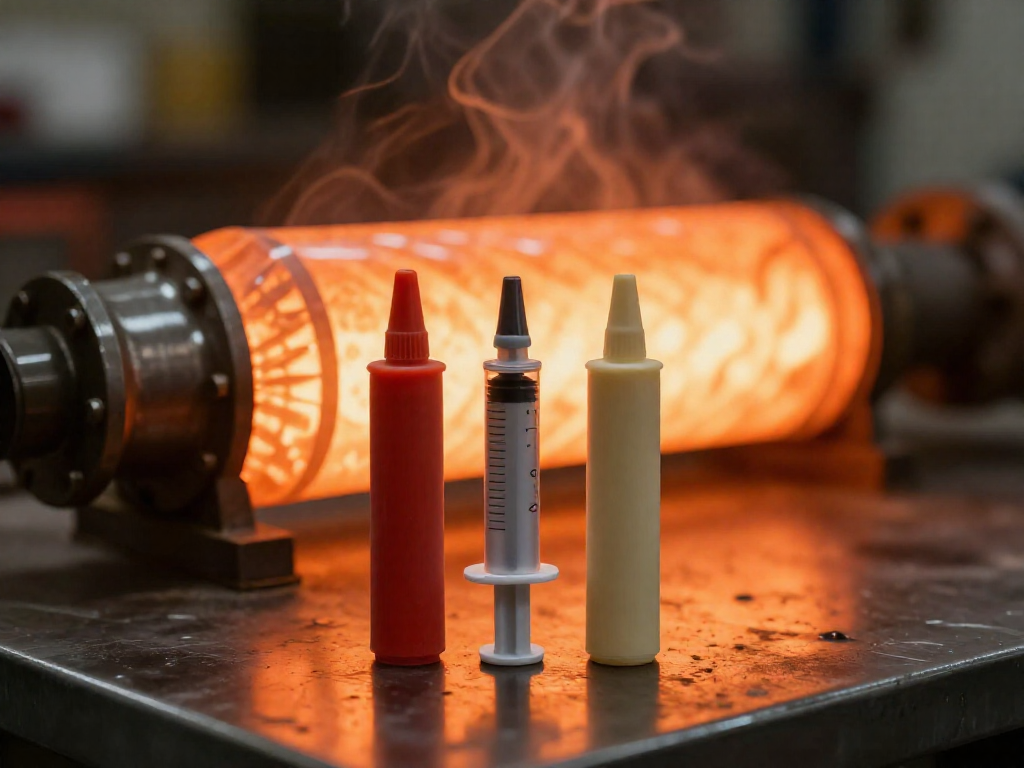
When your repair is within inches of a glowing exhaust manifold or a 500°F oven, ordinary glue becomes useless. This guide cuts through the marketing to compare the three adhesive families that actually survive the heat, from flexible silicones to ultra-durable ceramics.
Why Ordinary Glues Fail in High Heat
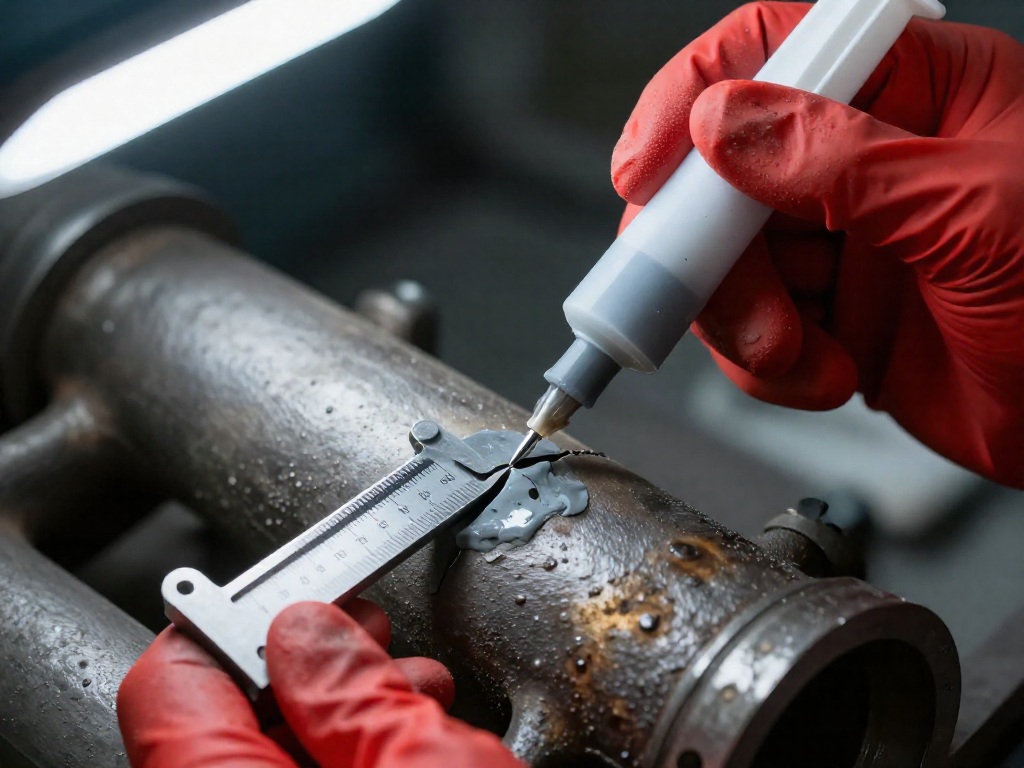
True high-temp bonding—over 500°F—demands adhesives from a different league: ceramic and polyimide-based compounds. Ordinary epoxies and cyanoacrylates soften and creep because heat unravels their polymer chains; by 300°F most consumer glues are already failing. Engine bays, oven doors, and exhaust components routinely spike past that zone. Polyimide adhesives, for example, take continuous 350°C (662°F) and peaks to 500°C (932°F) with 20–28 MPa shear strength (Nagase Chemtex). If your repair lives near a heat source, a failed bond isn't just a nuisance—it can be a safety hazard.
The Temperature Spectrum: 200°F to 2000°F+
When you're working near an engine, stove, or exhaust, not all heat is created equal. You need to match the adhesive to the peak temperature the joint will actually see.
General-purpose silicone hits its limit around 392°F (200°C). That's fine for a valve cover gasket, but nowhere near a hot exhaust manifold.
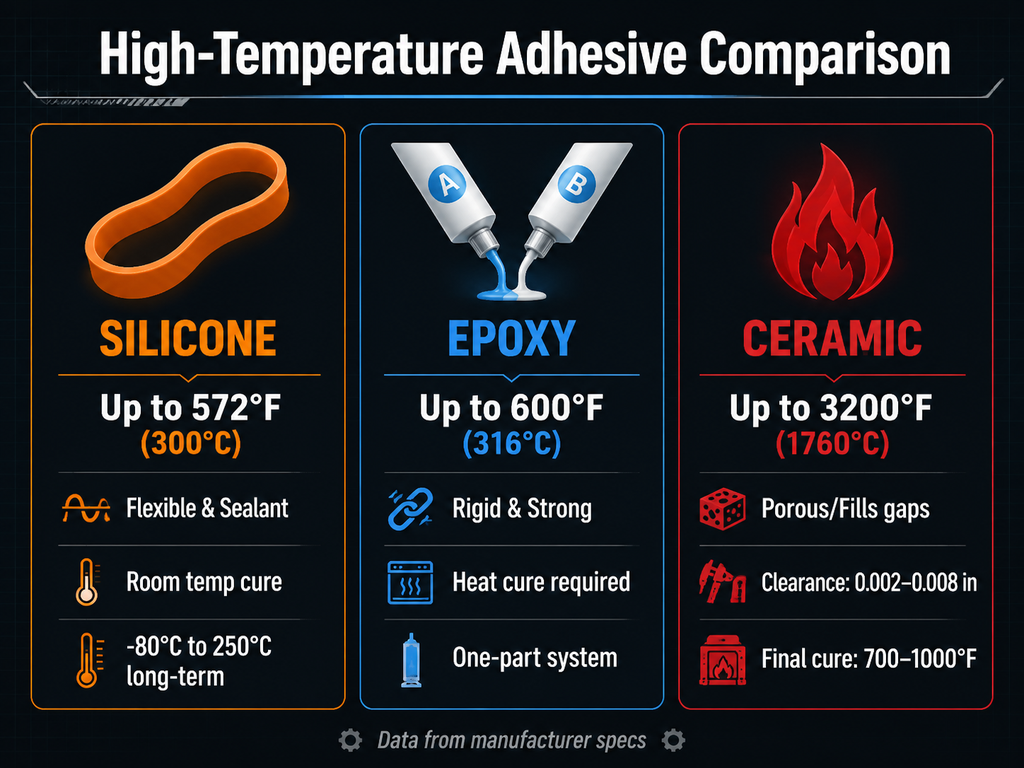
High-temp silicones push continuous ratings to roughly 570°F (300°C). They're the step up for fireplace inserts or oven door seals where temperatures cycle but stay below that threshold.
When you need something stiffer and structural, a heat-cured epoxy can take you to about 600°F (316°C). These require an oven cure but deliver bond strength that silicones can't match.
If you're staring at a glowing manifold or a cracked stove liner, you're in ceramic territory. Ceramic adhesives, like those from AB Thermal, handle from 1560°F to 3200°F (850°C to 1760°C). They're essentially liquid stone and need a high-temp cure to stabilize, but once set they're in a league of their own.
Niche options like polyimide adhesives sit between epoxies and ceramics, with continuous use to 660°F (350°C) and peaks to 930°F (500°C). For most DIY jobs, you'll be choosing among the first three, but it's good to know what's available when the heat really climbs.
Silicone vs. Epoxy vs. Ceramic: Which Adhesive Survives the Heat?
When you need a bond that won’t quit at 500°F and beyond, the choice comes down to three families: silicones, epoxies, and ceramics. Each brings a different combination of heat resistance, strength, flexibility, and curing hassle. Pick the wrong one and you’ll be scraping off crumbly residue after the first heat cycle.
Silicone adhesives are the straightforward, vibration-friendly workhorses. General-purpose silicones typically top out around 200°C (392°F), but high-temperature formulations push much higher. The one-part MasterSil 800, for example, cures at room temperature and holds up to 572°F (300°C) — a rating MasterBond confirms is suitable for continuous exposure. This flexibility makes silicones ideal for sealing oven doors, engine gaskets, and anywhere you have thermal expansion or movement. They fill gaps easily and resist moisture, but they’re not structural adhesives. For a seal that can stretch and recover while the metal around it warps, silicone is almost certainly your answer. Aremco even offers silicone coatings rated to 1100°F (590°C) for moisture protection, though these are often used as sealants rather than primary load-bearing bonds.
Epoxies flip the script: rigid, strong, and able to carry a load — but only if you can manage their specific cure requirements. Single-part epoxies like EP17HT-LO achieve 600°F (316°C) service temperatures, but they demand a heat cure, typically one to two hours at 250–300°F. That’s a dealbreaker if you’re bonding a large stove part that can’t go into an oven, but a perfect fix for a small engine block repair where you can preheat the metal. In general, epoxies work well with metals, ceramics, and many rigid plastics. Their shear strength is far higher than silicones, so they’re the go-to for cracked exhaust brackets or cast-iron stove components that see tightening bolts. Just remember: once cured, they don’t flex. A hot part that expands unevenly can pop a brittle epoxy joint, so match the material’s thermal expansion if you can.
When temperatures climb past 700°F, ceramics take over. These are paste-like adhesives loaded with refractory fillers that cure to a stone-hard, heat-resistant bond. Aremco’s 617 glass-filled sealer is rated to 1500°F (816°C), while AB Thermal’s ceramic adhesives go all the way to a staggering 3200°F (1760°C). This is the territory of exhaust manifold cracks, furnace firebrick, and incinerator lining repairs. Ceramics demand precision: the joint gap must be tiny — between 0.002 and 0.008 inches (50–200 microns) — and the final cure requires a bake-out at 700°F to 1000°F. Without that heat soak, the adhesive won’t fully stabilize and could fail under thermal shock. They are completely rigid, so they’re useless on parts that flex or vibrate. But for sealing a porous refractory or patching a cracked burner, nothing else competes.
If your application sits between epoxy’s ceiling and ceramic’s sweet spot, specialty sodium silicate adhesives like MB600SCN (rated to 700°F) offer a middle path that cures at room temperature or with mild heat. And for the truest extremes, polyimide-based adhesives can handle continuous 350°C (662°F) with peaks to 500°C (932°F) while retaining impressive shear strength, but they require a complex imidization cure at 250–300°C, putting them beyond most DIY repairs.
In practice, start by reading the temperature rating on the package, but then look at the substrate. A gasket surface that will pulse and shift? Silicone. A rigid, bolted flange that will be baked hard? Epoxy. A glowing-hot ceramic burner that sees open flame? Ceramic adhesive. Choose based on the stress the joint will see, not just the thermometer reading.
Beyond the Spec Sheet: Surface Prep, Cure Cycles, and Thermal Expansion
A temperature rating on a datasheet is useless if you skip the steps that make the bond survive. High-temp adhesives fail most often from application mistakes, not material limits.
Ceramic adhesives need a rough surface—think grit-blasted, not polished—and an unforgiving glue line. Aremco's instructions specify 0.002 to 0.008 inches (2–8 mils) clearance; go thicker and the rigid bond cracks during thermal cycling. After assembly, cure the joint at 700°F or higher—sometimes up to 1000°F—to fully stabilize the material before service. Without that post-cure heat soak, the bond never reaches its rated temperature ceiling.
Epoxies fall short the same way. A one-part epoxy like Master Bond’s EP17HT-LO needs a heat cure to hit its 600°F resistance; air drying alone won’t do it. Always check the manufacturer’s cure schedule—if it says ramp to 350°F for two hours, don’t cut that step short.
Then there’s the quiet killer: thermal expansion mismatch. Aluminum expands far more than ceramic, so a rigid adhesive simply tears itself apart on the first heat cycle. That’s why silicones, which stay flexible, handle CTE mismatch best—they stretch rather than snap. For joints where you can’t avoid a rigid bond, design in a stress-relieving geometry or accept that it’s temporary.
Finally, moisture. Porous ceramics like refractories wick humidity, and steam will blow out a bond when the part hits temperature. Seal the exposed edges afterward with a high-temp silicone coating rated to at least 1100°F, like Aremco’s own sealer, and the bond stays dry.
Real-World Applications: Engines, Stoves, and Exhausts
When you’re fixing something that gets seriously hot, the right adhesive depends entirely on how much heat and whether the material cycles on and off. For cast-iron engine blocks or intake manifolds, a high-temperature epoxy rated to 500–600°F will often seal a crack if the surface is properly prepared. But nothing short of a ceramic adhesive survives an exhaust manifold that gets red-hot. For those parts, you need a product that stays intact above 1500°F. Ceramic adhesives from AB Thermal are rated as high as 3200°F, covering everything from furnace firebricks to turbocharger housings (AB Thermal).
Around stoves and ovens, silicone adhesives are the workhorse. For reattaching a glass cooktop or sealing an oven door gasket, a high-temp silicone sealant that handles 500°F and the constant expansion and contraction will hold without turning brittle. Some specialist silicones, like Aremco’s LC4010-BT, can take 1020°F, but for most home applications, a standard high-temp silicone rated to 572°F is plenty.
For combustion chambers and firebrick inside a furnace, only ceramic adhesives make sense—look for a rating of 2000°F or higher. These water-glass-based formulas cure hard and resist thermal shock once they’re fired.
Quick FAQ: High-Temperature Adhesive Questions Answered
Q: Best high-temp adhesive for metal?
A: Up to 600°F, a high-temp epoxy like Master Bond EP17HT-LO works; beyond that, a ceramic like Aremco 617 handles 1500°F.
Q: Can silicone handle a furnace?
A: Only high-temp silicone rated 500°F+; general types fail fast. Aremco's silicone coatings go to 1100°F.
Q: Does high-temp epoxy need heat to cure?
A: Many do—some need an oven, others cure under engine heat. Always check the data sheet.
Q: JB Weld temperature limit?
A: Standard JB Weld withstands 550°F; high-heat versions exist for hotter spots.
Your Next Step: Choosing the Right Adhesive
Nail down your temperature requirements first—both the sustained operating heat and any peak spikes. That single number narrows the field immediately. From there, weigh flexibility and cure method against your project's demands. For most DIY repairs, a high-temperature silicone or a one-part epoxy is the practical pick. Ceramics can handle 3200°F, but they demand a 700°F minimum final cure to be fully stable (Aremco). Always grab the manufacturer’s datasheet and verify the numbers match your exact use case.
Sources
- Exploring the High Temperature Reliability Limits for ... — circuitinsight.com
- High Temperature Resistant Bonding, Sealing and Coating Compounds | MasterBond.com — masterbond.com
- [PDF] Aremco—High Temperature Solutions — aremco.com
- procedure for sealing ceramic adhesives and potting ... — aremco.com
- Introduction to Adhesives by Heat Resistance (100℃+, 200℃+, 300℃+)|Nagase Chemtex Co., Ltd. — group.nagase.com
- High Temperature Ceramic Adhesives — abthermal.com
See also
- Ultimate Guide to Epoxy for Metal Repairs
- Silicone vs. Polyurethane: Choosing the Right Sealant
- How to Prepare Surfaces for High-Strength Bonding
Related articles
Humidity-Tolerant Adhesives: Bonding in Moist Climates Without Blushing
Which adhesives cure properly in very humid environments?
Jul 22, 2026 · 5 min read
DIY Car Repair Adhesives: Fixing Trim, Lights, and Panels That Last
Compare double-sided tape, epoxy, and polyurethane for car trim, panel, and headlight repairs. Data-backed guide with real adhesion strengths and weather durability.
Jul 22, 2026 · 8 min read
Outdoor Fastener Alternatives: When Adhesives Beat Screws for Exterior Projects
In outdoor projects, when should I use adhesive instead of mechanical fasteners?
Jul 22, 2026 · 10 min read