How to Bond Fabric to Leather: A Craftsperson’s Guide
What's the best adhesive for attaching fabric to leather in crafts?
On this page
Start with the frustration of ruined projects due to peeling or stiff bonds, then promise a precise guide.
Why Most Glue Advice Fails for Fabric-to-Leather Bonds
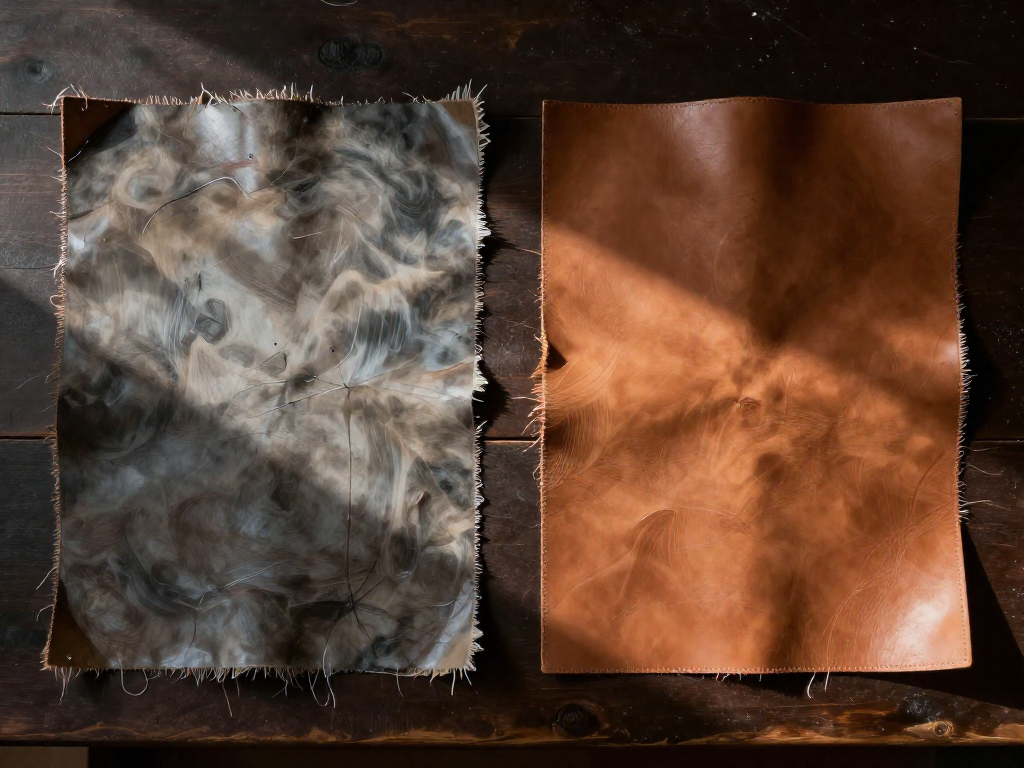
A flexible contact cement or a fabric-specific spray adhesive—not a generic 'strongest glue'—works best for fabric-to-leather crafts. Fabric absorbs glue while leather repels it, so penetration control is crucial. Using a one-size-fits-all spray often leads to bleed-through or weak bonds. Specialized formulas like 3M Foam Fast 74 are engineered for porous materials and deliver a durable, flexible hold (Sailrite).
The 3 Best Adhesives for Attaching Fabric to Leather
For a flexible, lasting bond between fabric and leather, these three stand out.
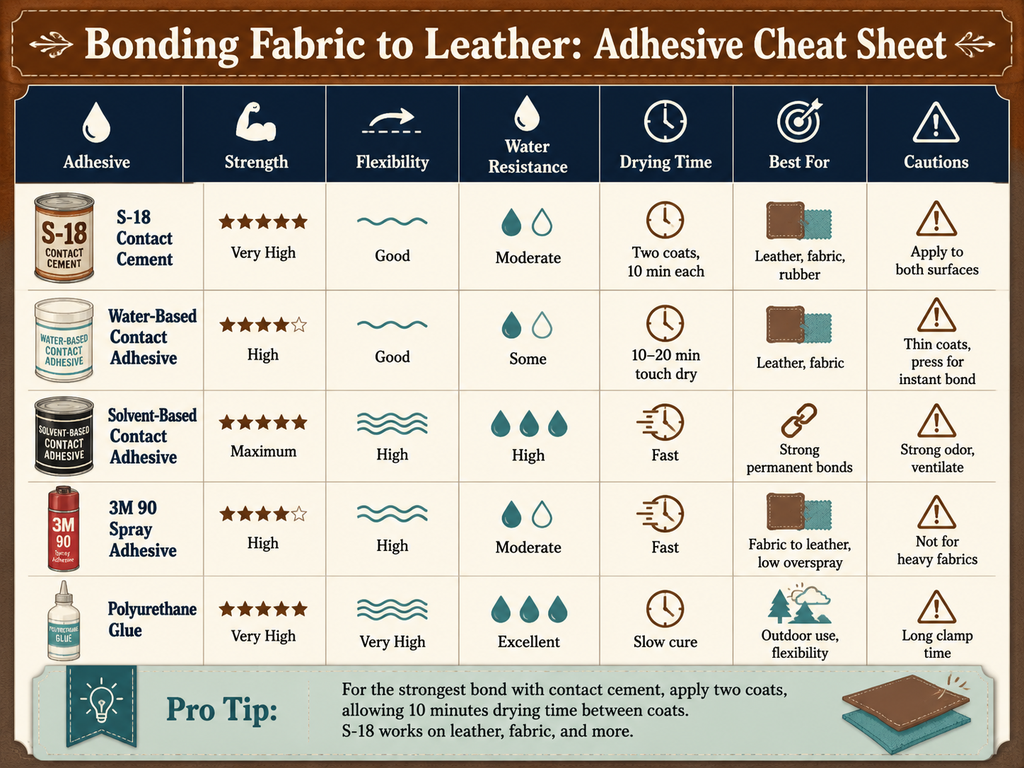
Contact cement (Barge, S-18) is the workhorse of leathercraft. It remains pliable after curing, resists moisture, and grabs tenaciously—but you must coat both surfaces and let them dry to tack before joining. It creates a permanent, near-invisible bond that won’t bleed through.
Spray adhesive gives fast, even coverage across large areas, making it ideal for laminating. 3M 90 lays down a controlled, web-like pattern, while 3M Super Trim handles heavy fabrics but can bleed through lightweight ones (Sailrite). Avoid general-purpose 3M Super 77—it oversprays easily and lacks flexibility.
PVA glue (white glue) is the reversible choice. It’s weak enough to eventually separate with moisture, which is a virtue when you might need to replace a worn lining. Reserve it for low-stress areas where future repairs are probable.
How to Apply Contact Cement for a Lasting Bond (2-Coat Method)
The secret to a bond that won’t peel apart after a week isn’t a fancy glue—it’s how you apply it. Contact cement creates a near-instant grip, but only if you treat both surfaces with a thin double coat. Skip this, and you’ll end up with a weak, dusty-looking seam that fails along the edges.
Start clean. Wipe the leather with a deglazer or isopropyl alcohol to remove any waxy finish, and make sure the fabric is lint-free. Mark your alignment lightly with a pencil or masking tape, because once the cement touches, there’s no sliding things around.
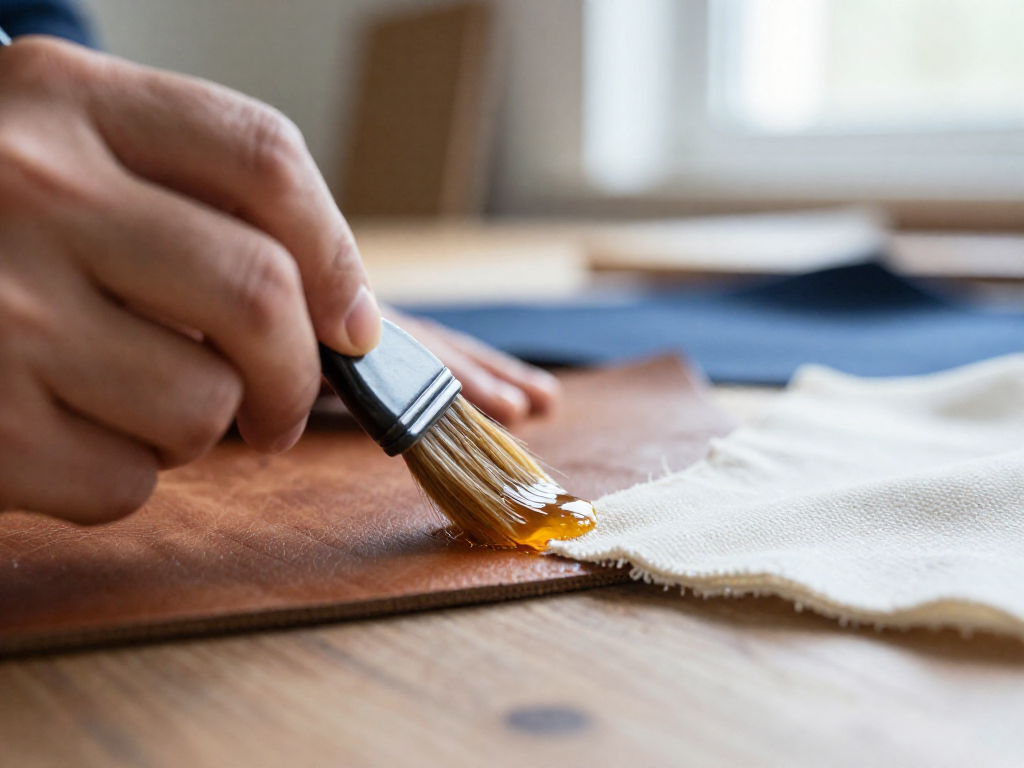
First coat: thin and even. Brush or spread a light layer onto both the fabric and the leather—coating only one side won’t work, as contact adhesives rely on two wet films merging. For solvent-based cements like Barge or Renia, 10 minutes is usually enough to reach a tacky, non-stringy state. Water-based formulas (like many leathercraft adhesives) take closer to 15–20 minutes in average shop humidity. Don’t rush: the glue should be dry to a light touch but still grabby.
Second coat seals the deal. Apply a second thin layer to both pieces and wait another 10 minutes (or until tacky again). This double hit fills microscopic pores in the leather’s grain and the fabric’s fibers, turning a surface cling into a true mechanical bond. In one hands-on shoe repair test, the two-coat method held long after a single coat gave out (How to Repair Shoes).
Press firmly. After the final open time, mate the pieces with deliberate pressure—a bone folder or firm roller works great—and hold for a few seconds. Do not reposition. The bond is instant, and prying them apart will tear fibers and weaken the join. For crafts like bag straps or costume armor, this technique delivers a hold that flexes without cracking, though always work in a ventilated area because solvent formulas pack a strong odor.
When Spray Adhesives Make Sense (and When They Don’t)
Spray adhesives earn their keep when you’re bonding large, lightweight fabric panels to leather—think lining the inside of a bag or upholstering a chair back. For standard fabric, grab 3M 90; for foam-backed fabric, switch to 3M 74 Foam Fast. Steer clear of 3M Super 77—it oversprays and doesn’t flex with leather (The Upholstery Forum). To avoid bleeding, test on a scrap first and apply only a light mist coat.
Quick Guide: Which Adhesive for Your Project?
Contact cement is your structural workhorse, drying fast without soaking through—perfect for leather and fabric (Vernijura). For shoe repairs, Barge cement bonds soles and fabric uppers reliably. Handbags follow the same rule: use contact cement on stress points, and switch to a fabric-specific spray like 3M 90 for large linings. In upholstery, a light spray of Camie 373 or Misty holds foam and fabric temporarily, while leather trim calls for contact cement to avoid creases.
Sources
- Spray Adhesive ??? - The Upholstery Forum — theupholsteryforum.com
- Choosing the Right Spray Adhesive - Sailrite — sailrite.com
- Leather shoes: which adhesive to use for shoemaking? - Vernijura — vernijura.fr
- How to Repair Shoes with Separating Soles | DIY Shoe Glue Tutorial — youtube.com
- Fusing Rubber and Fabric. What is the best adhesive to use? How to clamp weird angles for fusing? — reddit.com
- Leathercraft Glue. Which Is The Best Adhesive For Your Leatherwork? — leathercraftmasterclass.com
FAQ
Can I use super glue for fabric to leather?
No, super glue is a poor choice for fabric-to-leather bonds. It dries rigid and brittle, so it will crack and fail when the materials flex, and it can leave stiff, discolored spots on the fabric.
Will contact cement work on all types of fabric?
Contact cement works well on most fabrics, but it can bleed through lightweight or loosely woven fabrics—Sailrite warns that aggressive spray adhesives may cause bleed-through. Some synthetic fabrics may require specialty adhesives for optimal hold.
Do I need to clamp the bond?
With contact cement, no clamping is required. You apply it to both surfaces, let it dry until tacky, then press them together firmly for an instant bond. If you use a slow-drying adhesive like PVA, light clamping or pressing while it sets helps ensure full contact.
Is there an odorless alternative to contact cement?
Yes, water-based contact adhesives and PVA glues give strong bonds with minimal odor. Solvent-based contact cement is notoriously smelly—"the only thing stronger than its smell is its bond"—but water-based versions offer a low-odor option without sacrificing performance for fabric-to-leather jobs.
See also
- How to Bond Leather to Wood
- Best Adhesives for Outdoor Upholstery
- 5 Ways to Repair Leather Tears
Related articles
Attaching Foam to Wood: Craft vs Structural Applications
How do I glue foam to wood without melting or weakening the foam?
Jul 22, 2026 · 6 min read
Joining Concrete to Wood: The Right Adhesive for Fence Posts and Decks
Which adhesive is best for attaching wood to concrete in outdoor projects?
Jul 22, 2026 · 11 min read
How to Bond Acrylic to Metal: Achieving a Clear, Strong Joint
What's the best adhesive for bonding acrylic (plexiglass) to metal without clouding?
Jul 22, 2026 · 6 min read