Polyurethane Adhesives Explained: Waterproof, Flexible, and Foaming
What makes polyurethane glue special, and where is it better than epoxy?
On this page
Comparing moisture-cure PU to other adhesives; uses in construction, woodworking, and marine.
What Is Polyurethane Adhesive—and Why It’s Not Just Another Glue
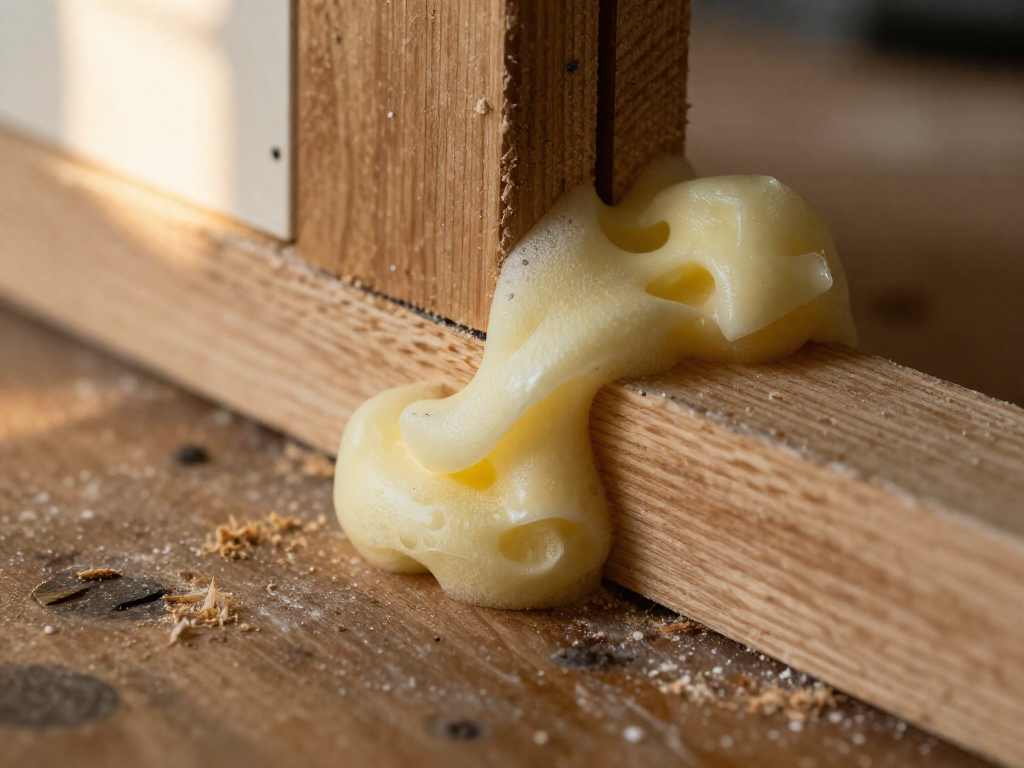
Unlike most glues that dry by evaporating solvents, polyurethane cures by pulling moisture from the air and the surfaces you're bonding. That reaction causes it to foam up slightly, which fills tiny gaps and locks irregular surfaces. After cure, it stays flexible—so it won’t crack when materials expand or vibrate. Plus, it's fast: some two-part formulas tack up in as little as 60 seconds. Polyurethane isn't a one-trick pony: while epoxy wins on sheer strength and heat resistance, polyurethane's flexibility and impact resistance make it the smarter choice for joints that flex or vibrate (Gluegun.com).
The Moisture Factor: Why Humidity Makes or Breaks the Bond
Moisture-cure polyurethane adhesives harden by pulling water vapor from the air—a chemical reaction that crosslinks the polymer chains. That’s why humidity isn’t just helpful; it’s essential. In a systematic study, the adhesive’s fully cured storage modulus plateaued once relative humidity exceeded 65%, while drier conditions slowed curing dramatically (ScienceDirect). Below that threshold, you may get a tacky, weak bond that never reaches design strength.
If you’re working in a dry climate or an air-conditioned shop, lightly mist one surface with water before applying the glue. A fine spray is enough—too much can accelerate foaming, but won’t weaken the final cure. Clamp the parts and expect full strength in about 24 hours, though many products set firmly enough to handle in under 4 hours. Don’t rush the cure: moisture-cure polyurethanes build strength over time, and patience pays off in a bond that resists water, flex, and impact.
Signature Strengths: Waterproof, Flexible, and Gap-Filling
Most glues weaken when wet, but polyurethane thrives. It cures into a bond that stays intact even under constant immersion or salt spray—so much so that it’s used to assemble wind turbine blades enduring marine air and UV (Adhesives & Sealants Industry). That same moisture-cure chemistry makes it a genuine waterproof solution for outdoor repairs and submersible joints.
After curing, polyurethane remains flexible. It can absorb vibration, impacts, and movement without cracking—a huge advantage when bonding materials that expand differently or when there’s ongoing mechanical stress. This flexibility is why it’s a go-to for boat decks, RV panels, and truck accessories.
Polyurethane’s third superpower is gap-filling. As it cures, it foams slightly, expanding into cracks, seams, and irregular voids. You don’t need a perfectly aligned joint; the glue will fill gaps and strengthen the bond. Products like 3M 550 put all three traits into practice: they operate from -40°F to 194°F and form a paintable skin in 60–90 minutes (3M), so you get a weather-sealed, semi-flexible repair in about an hour.
Polyurethane vs. Epoxy: A Head-to-Head for Real Jobs
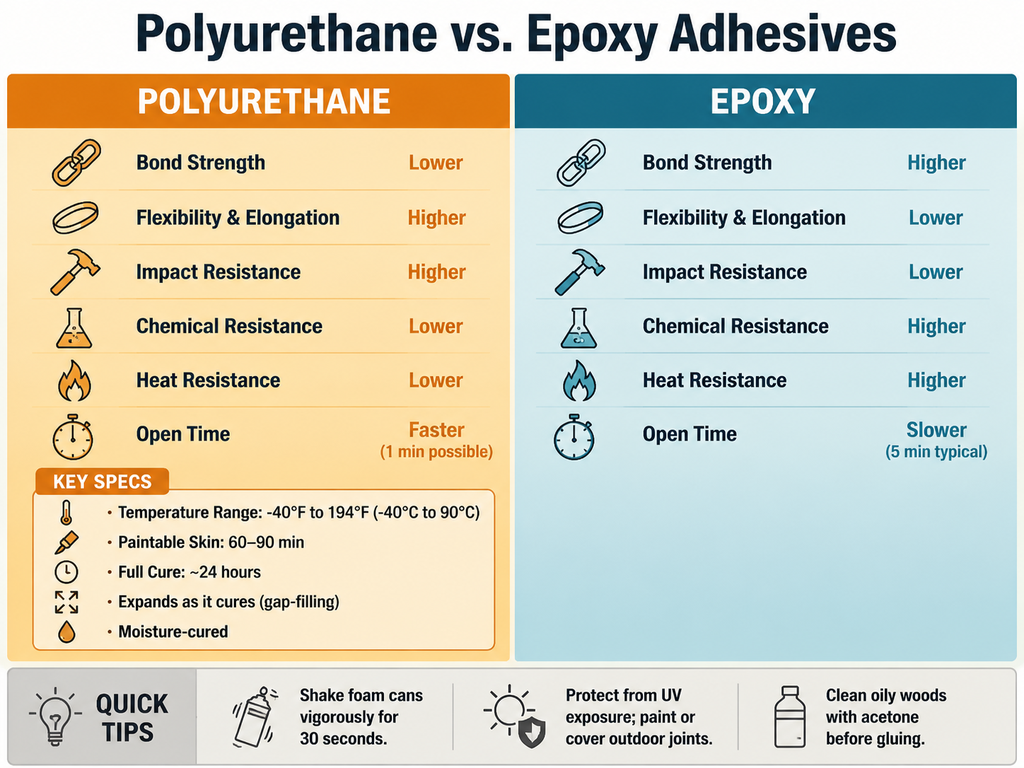
The simplest way to choose: epoxy wins on raw strength, chemical resistance, and heat tolerance, while polyurethane wins on flexibility, impact resistance, and speed. If you're bonding surfaces that will flex, vibrate, or get knocked around—think wooden boat planks, shoe soles, or a car bumper tab—polyurethane is usually the smarter pick. Epoxy rules static, structural bonds where you need maximum rigidity and no creep over time, like anchoring threaded rod into a concrete foundation.
That difference shows up in the numbers. Epoxy bonds regularly hit tensile shear strengths above 3,000 psi on prepared metal, but it cures into a glass-hard solid that can crack under a sharp impact. Polyurethane remains more elastic, absorbing shock without snapping the glue line. It's also noticeably faster: some two-part polyurethanes have open times as short as one minute, versus even the quickest epoxies typically running around five minutes (Gluegun.com). That fast grab isn't just convenient—it means you can reposition less and move on sooner, which matters on a production line or a busy weekend repair.
Heat and chemicals are where polyurethane steps aside. Most standard formulations soften above 194°F (90°C), while many epoxies handle constant exposure above 300°F without degrading. If the joint will see fuel, solvents, or strong acids, epoxy's dense cross-linked structure holds up far better. Polyurethane also hates prolonged UV; outdoor joints survive only if painted or shielded from direct sunlight, whereas epoxy weathers years of exposure with just a topcoat for cosmetic protection.
Bottom line: for a joint that needs to move, take a hit, or cure in a hurry, reach for polyurethane. For a bond that needs to lock two parts together permanently under heat or chemicals, epoxy is the anchor.
Where PU Beats Epoxy in the Real World
Epoxy grabs the spotlight for ultimate strength, but in the field, polyurethane often wins simply because the world moves. Wind turbine blades are a prime example: their structural bonds must absorb constant flexing, vibration, UV bombardment, and salt spray without cracking. That’s a job for a tough, permanently flexible adhesive—not a brittle one—and moisture-cure PUs are increasingly used in those blade assemblies.
Green building is another area where PU has pulled ahead. Henkel and Sika have launched next-generation moisture-cure formulations that meet LEED and other green building certification standards (Adhesives & Sealants Industry). They’re specified for panel bonding and insulation because they stay flexible through decades of thermal cycling without off-gassing the solvents that would knock a project out of sustainability ratings.
For anyone waterproofing an RV roof or sealing a marine hatch, there’s 3M™ Polyurethane Adhesive Sealant 550 Fast Cure. It handles temperatures from -40°F to 194°F and forms a paintable skin in 60–90 minutes—no separate primer, no brittle failure down the road. That combination of extreme weather resilience and fast cure makes it a go-to for outdoor construction, vehicle repair, and dockside work.
It’s no surprise the global polyurethane adhesives market topped $8 billion in 2024 and is still climbing. When assemblies need to shrug off weather, movement, and time, PU isn’t just a consumer glue—it’s an industrial-strength workhorse that beats epoxy at its own game.
How to Get a Tough Bond: Tips, Times, and Critical Mistakes
Clamping is non-negotiable with polyurethane glue. For Titebond Polyurethane, that means 2–4 hours under clamp pressure, and it’s fully cured in about 4 hours (Titebond). Most other PU adhesives need the full 24 hours before you handle the joint, so check your label. On oily woods like cedar or cocobolo, swipe the mating surfaces with acetone first—Titebond’s testing shows this simple wipe prevents bond failure.
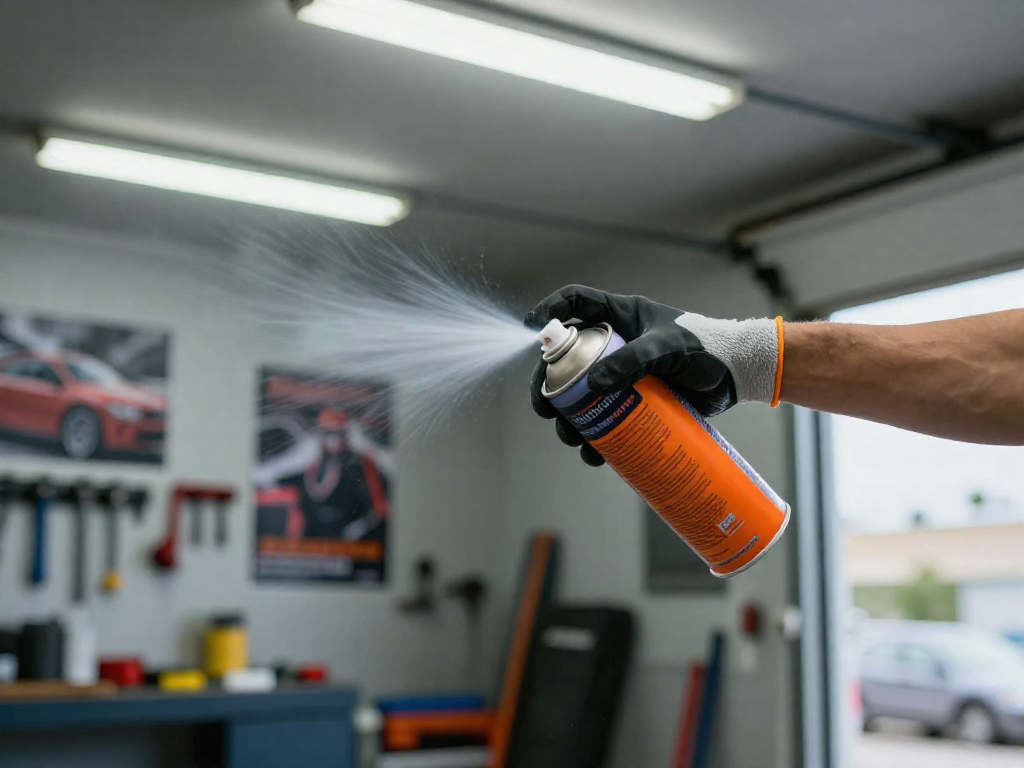
If you’re using a foam adhesive, shake the can vigorously for 30 seconds. Tytan Professional warns that skipping this leaves unmixed components and a weak, crumbly cure. Once applied, don’t rush the full cure. A skin may form in an hour, but strength builds slowly.
Finally, polyurethane hates sunlight. UV degrades it into a chalky mess. For any outdoor joint, paint it or cover it—the bond stays tough, but the glue itself needs shielding.
When to Reach for Epoxy Instead
Polyurethane’s flexibility is a standout feature, but when you need a load-bearing metal-to-metal bond, epoxy is the better call. Epoxy delivers higher strength and can handle constant heat above 200°F—conditions that cause polyurethane to soften (Gluegun). It’s also the go-to for chemical-heavy environments. If the joint must stay rigid, polyurethane’s give works against you; epoxy cures hard and keeps things from shifting. And when clarity counts—say for a visible repair—a clear epoxy won’t yellow like polyurethane does over time. For these jobs, skip the PU and mix up a two-part epoxy instead.
The Bottom Line: A Quick Decision Guide
If your project involves outdoor wood, marine exposure, construction gaps, or joints that need to move, polyurethane is the right choice—it fills gaps, stays flexible, and bonds in damp conditions. For high-load metal, chemical plant repairs, or sustained heat, reach for epoxy’s superior strength and chemical resistance. Just remember: polyurethane needs surface moisture to cure, typically requires clamping for 2–4 hours, and degrades in UV light. Unprotected polyurethane gets brittle in sunlight—paint or coat exposed joints (Tytan Professional). Polyurethane is a modern, versatile tool when you use it right.
Sources
- Curing Kinetics and Structure-Property Relationship of Moisture-Cured One-Component Polyurethane Adhesives — sciencedirect.com
- 3M™ Polyurethane Adhesive Sealant 550 Fast Cure | 3M United States — 3m.com
- Moisture-Cure Polyurethane Adhesives: A Quiet Force in Industrial Innovation | Adhesives & Sealants Industry — adhesivesmag.com
- WO2009070293A1 - One-component, moisture-cure polyurethane adhesive - Google Patents — patents.google.com
- Polyurethane Glue vs. Other Adhesives: 5 Key Benefits — chemix-tech.com
- Epoxy Vs. Polyurethane Adhesives for Structural Applications: How to Decide — gluegun.com
- Our Guide to Glue On Metal [Updated for 2025] | Gorilla Glue UK — uk.gorillaglue.com
- 7 mistakes in working with foam adhesives - expert advice from Tytan Professional - Tytan Professional Slovensko — tytan.com
- Titebond Polyurethane Glue — youtube.com
See also
- Epoxy vs. Polyurethane: Which Should You Use?
- Best Adhesives for Marine and Outdoor Projects
- How to Bond Oily Woods Like Teak and Ipe
- Gap-Filling Adhesives: When You Need More Than Just Glue
Related articles
UV-Cure Adhesives (Liquid Optical Clear Adhesives): Perfect for Glass and Electronics
What is UV glue, and when should I use it instead of regular super glue?
Jul 22, 2026 · 5 min read
Contact Cement: The Secret to Laminate, Leather, and Shoe Repairs
How do I use contact cement correctly to avoid bubbles and weak bonds?
Jul 22, 2026 · 5 min read
Structural Adhesives: Understanding MMA and Acrylics for Load-Bearing Metal Bonds
What are structural adhesives, and when do I need them over regular glue?
Jul 22, 2026 · 10 min read