Screws for Concrete: Tapcon vs. Concrete Screws vs. Anchor Bolts
What are the best concrete fasteners for DIY projects like framing or installing a mailbox?
On this page
Choosing the right fastener for concrete can be confusing—Tapcon screws anchor like magic, but are they better than traditional wedge anchors? This guide breaks down holding strength, ease of use, and when to use each.
What Are the Main Concrete Fastener Types?
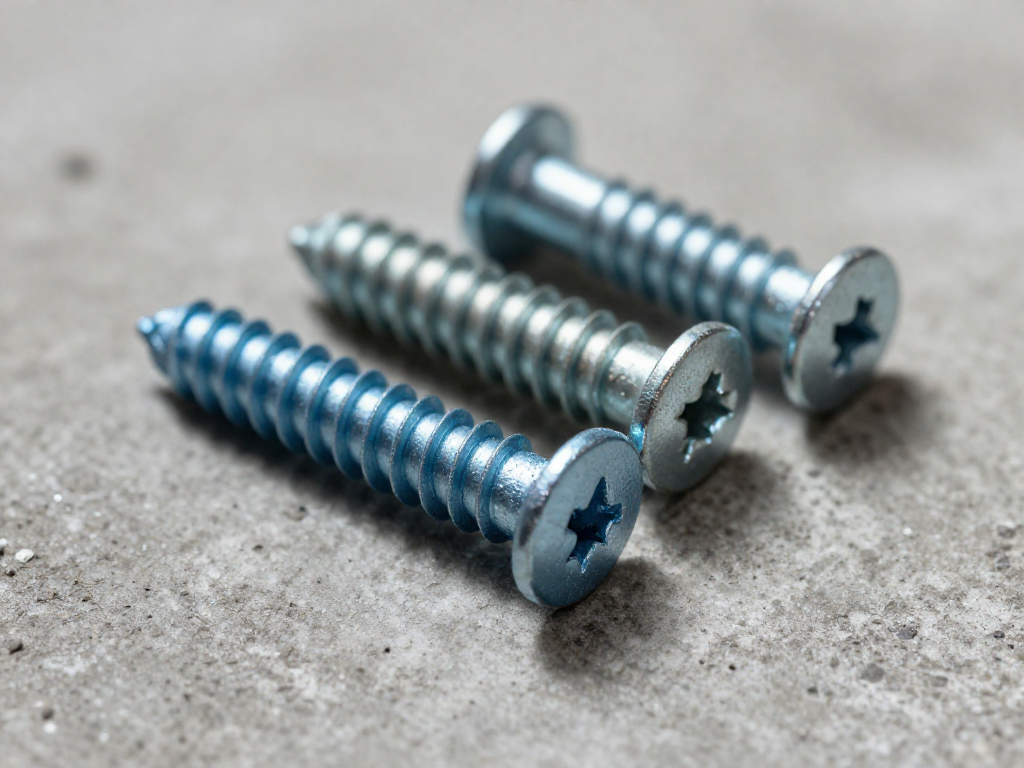
For most DIY jobs like framing or installing a mailbox, you’re picking from three options: Tapcon (the biggest brand of concrete screw), other concrete screws, and expansion anchor bolts (wedge or sleeve). As a rule, choose screws for removable projects and wedge anchors when you need a permanent, high-strength hold (Fasteners Plus).
Tapcon Concrete Screws: Sizes, Strengths, and Load Ratings
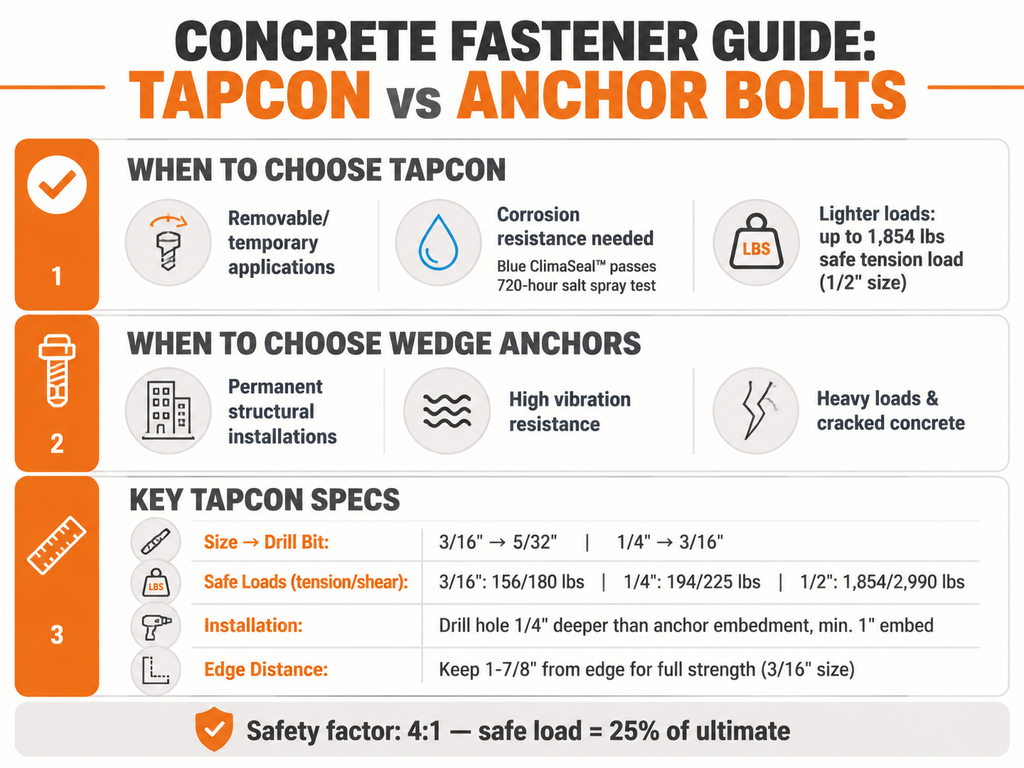
Before drilling, know this: concrete strength matters. All the numbers that follow assume 3,000 psi concrete—the typical minimum for residential slabs. If you're fastening into older or crumbly concrete, these ratings will be lower. Also, Tapcon's manufacturer requires a 4:1 safety factor, so divide any ultimate load by four to get your safe working load. Never skip that step—it's built into the design, not a suggestion.
For small- to medium-duty jobs, the 3/16-inch diameter Tapcon is the workhorse. Embedded 1 inch in 3,000 psi concrete, it holds 625 lbs ultimate tension and 720 lbs ultimate shear. That converts to a safe working load of 156 lbs in tension and 180 lbs in shear—plenty for a railing bracket or a light fixture. Step up to the 1/4-inch size at the same embedment, and you get 775 lbs ultimate tension and 900 lbs ultimate shear, giving you 194 lbs and 225 lbs safe.
When you need serious holding power, skip the sleeve anchors and reach for a Large Diameter Tapcon. The numbers are eye-opening. At 5/16-inch diameter embedded 1-3/4 inches, ultimate pullout jumps to 2,785 lbs. A 3/8-inch anchor sunk 2-1/2 inches hits 5,445 lbs, and a 1/2-inch anchor buried 3 inches delivers 7,415 lbs of pullout resistance. Those ratings put them shoulder to shoulder with wedge anchors—and in some cases, better. For perspective, the 1/2-inch Tapcon's ultimate shear is 11,960 lbs. (These large-diameter specs come straight from the Tapcon technical sheet for 3,000 psi concrete.)
But material matters just as much as diameter. In lightweight hollow block, a 3/16-inch Tapcon's ultimate tension collapses to 220 lbs, safe load a measly 55 lbs. If you're anchoring a mailbox post into a concrete-filled cinder block, test the block's strength before relying on published numbers.
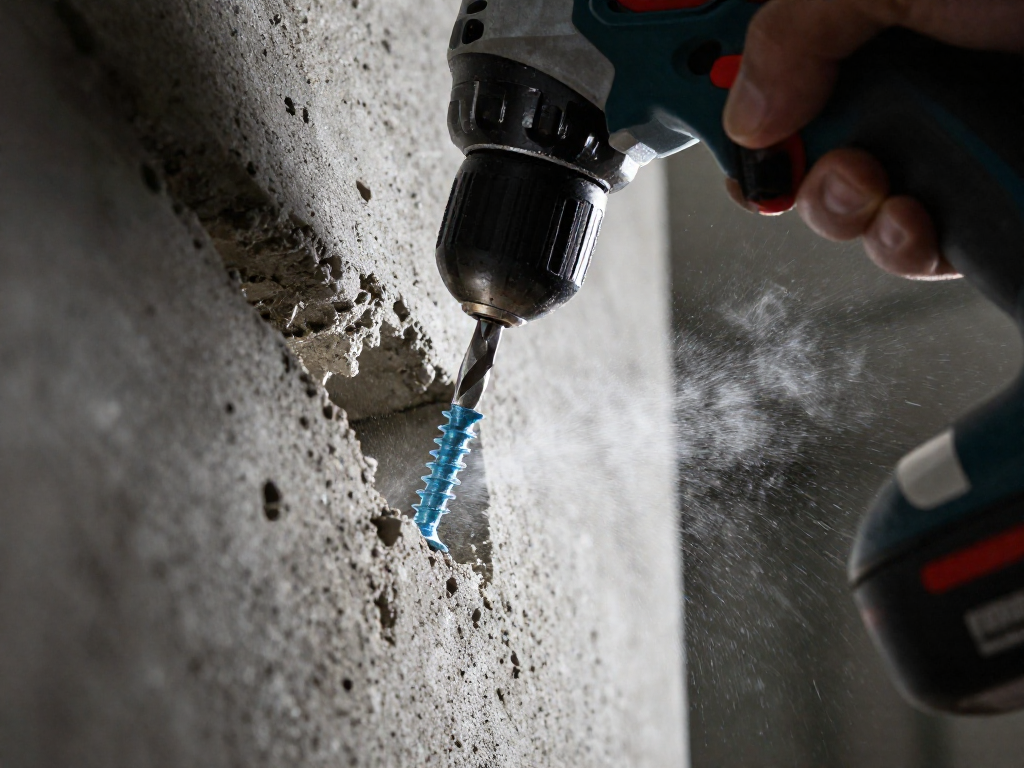
Installation is simple but unforgiving. Use a hammer drill—a regular drill will just spin. For 3/16-inch Tapcons, the carbide bit must be 5/32 inch; for 1/4-inch anchors, use a 3/16-inch bit. Drill the hole to the required depth (usually 1/4 inch deeper than embedment), clean the dust, and drive the screw with a steady trigger. Don't over-torque.
Finally, a practical guide: for framing a 2x4 bottom plate, 3/16-inch Tapcons every 12 inches will do fine. For a heavier ledger board or a pergola post base, bump to 1/4-inch or larger. And remember, Tapcons are removable—useful for temporary setups—but for permanent, vibration-prone installs, wedge anchors might be a better long-term bet.
How Wedge and Sleeve Anchors Work (and When They Excel)
Wedge anchors are essentially threaded studs with a tapered wedge at the end. You drill a hole, drop the anchor in, and as you tighten the nut, the wedge rides up the cone, expanding outward against the concrete. That expansion creates a mechanical lock that’s incredibly resistant to pulling out — far and away more than a Tapcon in heavy loads.
Sleeve anchors work similarly, but they have a full-length sleeve that expands along the entire embedment. They’re a bit more forgiving during installation, but they typically don’t match the ultimate strength of a wedge. For DIY jobs, sleeve anchors are handy for medium-duty attachments, but when the job demands max pull-out resistance — think structural posts, railings, or machinery bolted to a slab — wedge anchors earn their keep.
The real standout feature is how they handle dynamic forces. Unlike concrete screws, which can loosen under vibration, wedge anchors maintain their grip even in cracked concrete. That’s why they’re the go-to for permanent installations in non-static conditions (Ferry International). Just remember: once set, a wedge anchor is there to stay. The wedge itself can’t retract, so you’re not unscrewing and reusing them. If you might need to take the fixture down later, think twice.
Tapcon vs. Wedge Anchors: Surprising Strength Showdown
It’s easy to assume wedge anchors always dominate, but large-diameter Tapcons flip that script on static strength. A 3/8-inch Large Diameter Tapcon embedded 2‑1/2 inches in 3000 psi concrete delivers an ultimate pullout of 5,445 lbs—10% higher than a comparable wedge anchor and 28% higher than a sleeve anchor, according to Tapcon’s published load tables (Tapcon). In shear, the gap widens: 5,955 lbs, which is 46% more than a wedge anchor. Move up to the 1/2-inch diameter at 3-inch embedment, and pullout essentially matches a wedge anchor at 7,415 lbs, but shear jumps to 11,960 lbs—an eye-opening 53% higher.
Those numbers come from Tapcon’s Advanced Threadform Technology, which cuts installation torque by about 30% while adding roughly 20% more holding power compared to wedge and sleeve anchors. For a DIYer installing a ledger board or a heavy mailbox bracket, that means less grunting with the impact driver and more confidence that the screw won’t simply snap under a sideways thump. And because Tapcons are true screws, you can back them out cleanly—a big plus for temporary setups or future adjustments, whereas wedge anchors are essentially permanent once set.
However, this isn’t a universal victory. Wedge anchors still own the crown for critical structural applications, especially where vibration, cyclic loads, or cracked concrete are factors. Tapcons can struggle in conditions where the concrete might crack later, and their vibration resistance lags behind. So if you’re mounting heavy machinery, seismic bracing, or anything where failure could be catastrophic, stick with wedge anchors. For most DIY projects on solid, uncracked concrete, a large-diameter Tapcon gives you all the strength you need with less hassle.
Installation Essentials: Drills, Depths, and Common DIY Mistakes
If you skip the hammer drill, you’re asking for trouble. A standard rotary drill will just spin and burn out against concrete. You need the impact action to clear dust and seat the hole. Use a hammer drill and a carbide-tipped masonry bit sized exactly to the anchor: a 5/32" bit for a 3/16" Tapcon, a 3/16" bit for a 1/4" Tapcon. Drill each hole 1/4" deeper than the anchor’s embedment depth to leave room for debris. Minimum embedment is 1 inch, and shallower won’t develop full strength.
Placement matters as much as depth. If you crowd an edge or another anchor, you lose capacity fast. For a 3/16” Tapcon, staying 1‑7/8” from an edge keeps full tension strength; squeeze it down to 1” and you’re at 83% capacity. Spacing between 1/4” anchors should be 4” for full tension—cut that to 2” and capacity drops to 66% (ITW Redhead). Those numbers are for solid normal-weight concrete; hollow block or lightweight pours reduce everything further.
Finally, don’t overdrive. Tapcons cut their own threads, but concrete isn’t steel—crank too hard and you’ll strip the hole, leaving you with zero grip. Snug the fastener until the fixture is tight and stop. A torque-limiting drill helps, but a sensitive trigger finger works too. If the screw suddenly spins free, back it out and start fresh in a new hole (fill the stripped one with epoxy).
Choosing the Right Fastener for Your DIY Project
If you're mounting a mailbox, hanging shutters, or setting up temporary bracing, grab concrete screws. Tapcons (and similar brands) are the go-to because you can back them out cleanly later. For heavy, permanent stuff—deck posts, flagpoles, heavy machinery—wedge anchors earn their place. They’re built for brute strength and vibration resistance, the kind you don’t want to undo.
In lightweight hollow block, the rules change. Wedge anchors aren’t designed for the voids and won’t hold; they're unsuitable. Concrete screws can work, but you'll rely on drastically reduced load ratings. A 3/16-inch Tapcon embedded 1 inch in hollow block only gives you about 220 lbs ultimate tension and 400 lbs shear—safe working loads land at 55 lbs and 100 lbs, so size up or add more anchors.
For damp or outdoor exposure, corrosion resistance matters. Tapcon’s Blue ClimaSeal coating is rated for 720 hours in salt spray (ASTM B117) with minor rust (Tapcon product data). If you're using wedge anchors outside, go with hot-dip galvanized versions.
The quick cheat: if you might ever need to back it out, use concrete screws. If you need it to never move and shrug off vibration, go wedge.
Sources
- Large Diameter Tapcon® Anchor ... — pdf.lowes.com
- Submittal Information — itwredhead.com
- Tapcon Installation 3-16 and 1-4 — tapcon.ca
- Tapcon Anchors - Product Data — buildsite.com
- Concrete Screws vs. Wedge Anchors | Fasteners Plus — fastenersplus.com
- Concrete Screws vs Concrete Anchors: Which Fastener Is Better for Masonry? — ferry-international.com
See also
- Article on concrete epoxy versus anchors
- Guide to fastening metal to concrete
- Anchor selection for hollow block and brick
Related articles
Machine Screws, Bolts, and Nuts: A DIYer’s Guide to Size and Grade
How do I know what size bolt and grade to use for a mechanical repair?
Jul 22, 2026 · 3 min read
Deck Screws vs. Nails: Fastening Deck Boards for Longevity
Should I use screws or nails for my deck, and what type?
Jul 22, 2026 · 6 min read
Toggle Bolts: The Strongest Drywall Anchor? When to Use Them and How to Install
How do I install toggle bolts for heavy wall-mounted items?
Jul 22, 2026 · 5 min read