Sticking Rubber to Metal: Recommendations from Shoe Repairs to Automotive
What's the best adhesive for bonding rubber to metal in various applications?
On this page
Not all rubber is the same, and neither are adhesives. If you've ever had a glue joint peel apart, it’s likely because you used a rigid adhesive on a flexible rubber — or skipped critical surface prep. This guide compares contact cement, cyanoacrylate, and polyurethane across different rubber types and real-world applications, so you can choose the right one and make it hold.
Why Rubber Type Matters More Than You Think
Ask “what’s the best adhesive for rubber to metal?” and the honest answer is another question: what kind of rubber? The rubber side of the bond is almost always the troublemaker, and ignoring its chemistry is the fastest route to a failed repair. Not all rubber is created equal—EPDM, neoprene, natural rubber, and silicone each demand a completely different bonding strategy.
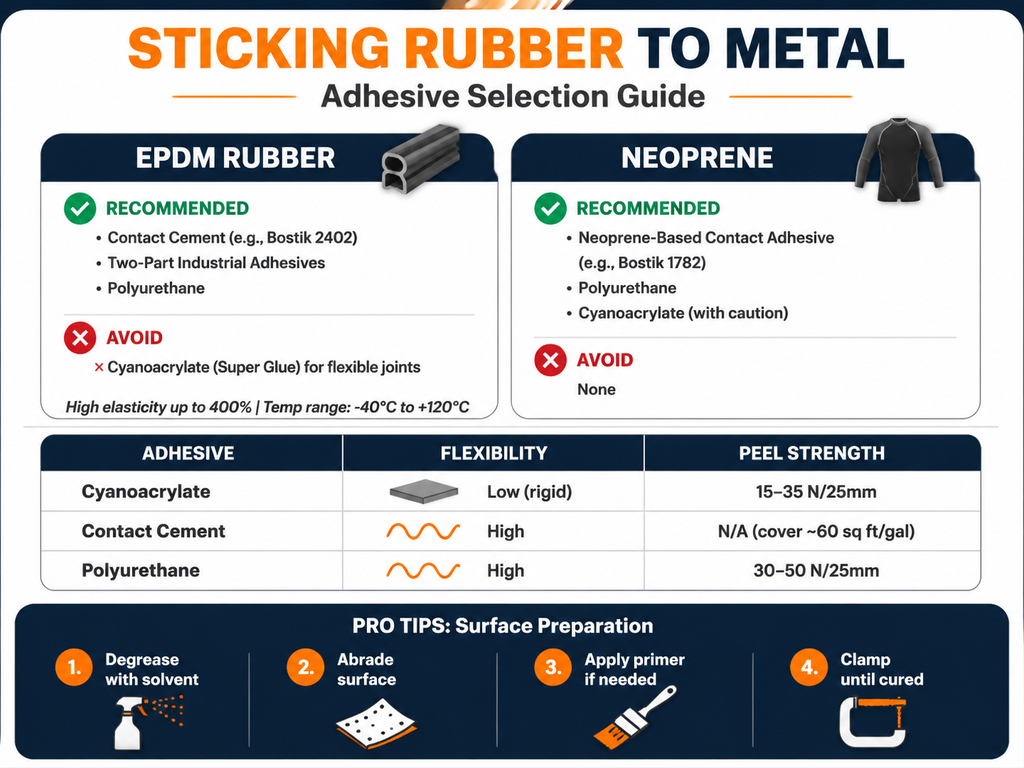
EPDM rubber is a prime example. It’s non-polar and low-energy, which means its surface actively repels most adhesives. You can’t just use super glue and call it done; cyanoacrylates typically fail on EPDM because they cure rigid, while the rubber itself can stretch up to 400% before breaking (Avery Dennison). That extreme elasticity demands a bond line that moves with the rubber—solvent-based rubber adhesives or two-part industrial formulas handle this, but rigid glues crack or peel under strain.
Neoprene and natural rubber are more forgiving. Their surfaces are less adhesive-resistant, and they bond reliably with neoprene-based contact cements like Bostik 1782 or 2402. These stay flexible and durable once cured, making them the straightforward choice for those materials.
Silicone rubber is another outlier. Even cyanoacrylate—which often bonds stronger than rubber itself on other types—won’t stick to silicone without a dedicated primer. Permabond POP chemically primes the surface so that CA adhesives can grab hold. Skip that step, and the bond will fail.
Before you reach for any adhesive, identify the rubber. The difference between a repair that lasts and one that peels apart in a day often comes down to that first step.
Adhesive Showdown: Contact Cement vs. Cyanoacrylate vs. Polyurethane
When rubber meets metal, the bond has to handle flex, peel, and often moisture—so picking the right glue hinges on what you need most: permanent flexibility, instant grab, or a tough, weatherproof connection.
Contact cement is the heavy hitter for flexible, moving joints. Solvent-based neoprene formulas like Bostik 2402 or LionGuard LG-BA10 are the standard in roofing, automotive, and shoe repair because they stay pliable after curing. You brush or spray both surfaces, wait for the solvent to flash off (typically 10–15 minutes), then press them together—the bond is immediate and won’t creep. Once joined, the glue line resists peeling forces and temperature swings without cracking, which is exactly what you need for EPDM gaskets, vibrating engine mounts, or soles that bend with every step. Because it’s so flexible, contact cement is specifically recommended for rubber-to-metal projects where movement is inevitable.
Cyanoacrylate (super glue) gives you a near-instant, rigid fix—and that’s its double-edged sword. Curing in seconds from surface moisture, it often forms a bond stronger than the rubber itself. But it’s brittle: under any peel or twist, it can snap cleanly. Lab tests put the T-peel strength for rubber-to-rubber bonds at only 15–35 N/25mm, depending on the grade and surface prep. That makes cyanoacrylate fine for small, static parts where you can’t clamp—think a tiny pad on a metal bracket—but a liability on a car door seal or a shoe sole. Tough exceptions exist: silicone rubber won’t bond at all unless you prime it first with something like Permabond POP.
Polyurethane adhesives split the difference, adding weather toughness to the flex equation. Polyurethanes cure by drawing moisture from the air, building a bond that’s strong yet slightly elastic. Measured T-peel values land around 30–50 N/25mm, according to testing by TechBond—higher than cyanoacrylate and close to what you get from contact cements, but with the bonus of uninterrupted curing in damp conditions. They’re the go-to for outdoor equipment repairs, flooded basement seals, or any joint that will see rain or humidity. The tradeoff: you must clamp the parts and wait hours for a full cure, and the glue won’t start working if the air is bone-dry.
All three demand clean, degreased metal—wipe with solvent and lightly abrade the rubber for best results. Contact cement wins for fast, flexible production work; cyanoacrylate for quick, rigid fixes on non-moving parts; polyurethane when the bond has to survive the elements.
From Shoe Soles to Engine Mounts: Matching Adhesive to Application
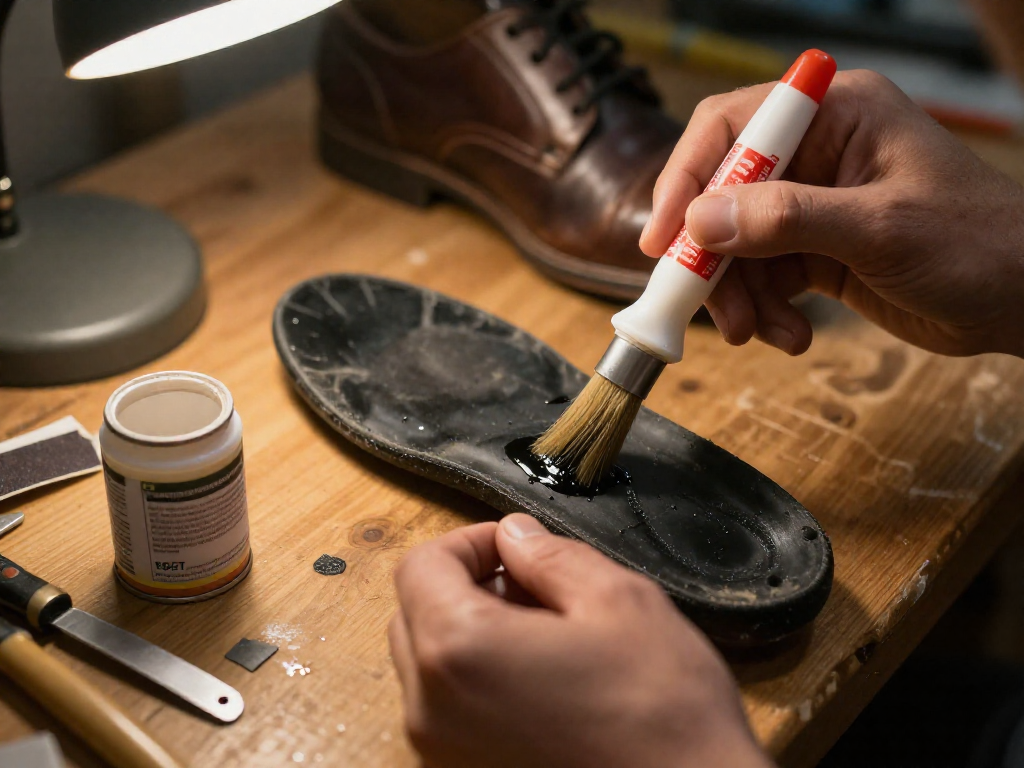
For a resole job where a leather outsole meets the metal shank inside a dress shoe, reach for contact cement. It stays flexible through constant bending, unlike super glue, which dries stiff and will crack at the first step.
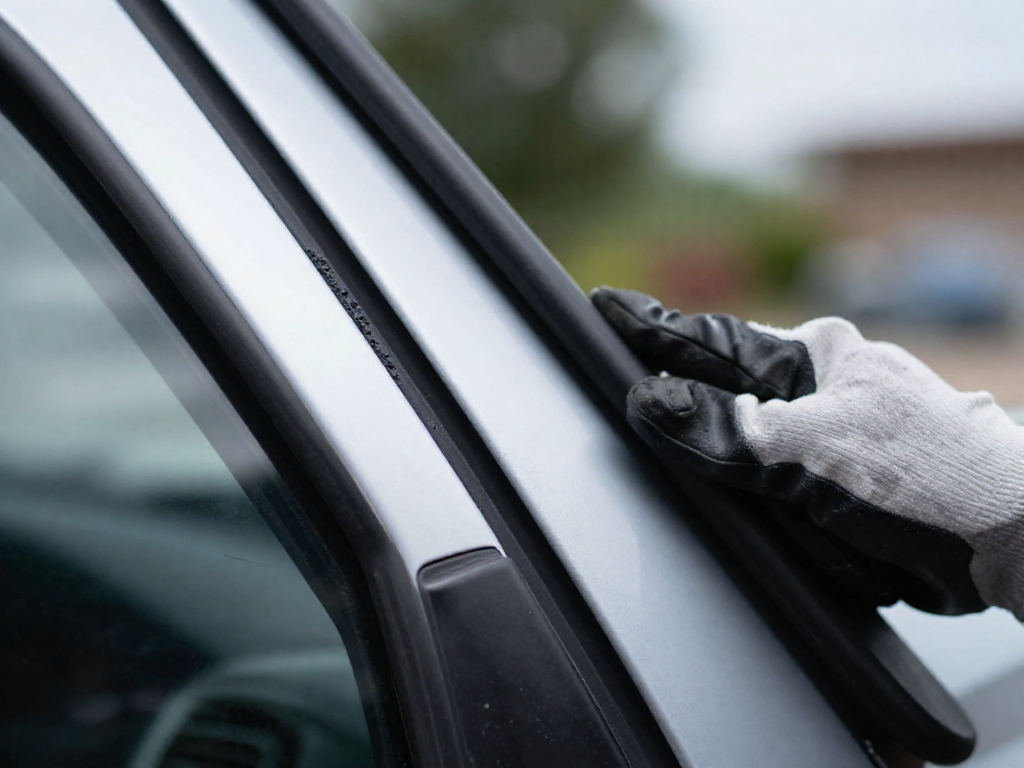
EPDM automotive weatherstripping against a painted door jamb is a whole different challenge—here you need a solvent-based contact adhesive. Neoprene-based options like Bostik 1782 or 2402 bond aggressively to EPDM and metal and can handle repeated door slams without peeling. Just make sure both surfaces are clean and dry before assembly.
Underhood rubber mounts face heat, oil, and vibration, so step up to a polyurethane or two-part industrial adhesive. Polyurethane adhesives routinely deliver peel strengths in the 30-50 N/25mm range (per TechBond), forming a tough, gap-filling bond that stands up to engine bay abuse. They work well on most rubbers, including neoprene and EPDM.
For a rigid rubber handle or a trim piece that won’t flex, cyanoacrylate (super glue) can get the job done fast. But if there’s any movement at all, walk past the CA aisle—the rigid bond will fail, and you’ll be back where you started. And a footnote: never trust a repair on a safety-critical component like an engine mount without a mechanical backup; adhesives are strong, but they aren’t magic.
Surface Prep: The Make-or-Break Step
Even the best adhesive fails if you skip surface preparation. Metal needs degreasing, rubber needs cleaning and, for stubborn types, a dedicated primer. Get this right, and the bond will outlast the repair.
Start with metal: wipe it down with a solvent like acetone or isopropyl alcohol to strip away every trace of oil, grease, or fingerprints. A quick buff with a clean cloth is usually enough. For rubber, wash with mild soap and warm water, rinse thoroughly, and let it dry completely. Avoid harsh solvents on rubber — they can degrade the surface and make bonding worse.
Some rubbers demand more than a scrub. EPDM and silicone are notoriously difficult because their low-energy surfaces repel adhesives. Here, a chemical primer is non-negotiable. It etches or activates the material so glue can grip. For silicone, Permabond’s POP primer lets cyanoacrylate achieve a reliable bond where it would otherwise peel right off. EPDM often responds to solvent-based primers or a two-part adhesive system designed for the job.
Finally, if the rubber is shiny and smooth, scuff it lightly with fine-grit sandpaper. You’re not removing material — just creating microscopic texture for mechanical adhesion. Wipe away any dust, and you’re ready to bond.
5 Common Mistakes That Ruin Rubber-to-Metal Bonds
The surest way to kill a rubber-to-metal bond is reaching for super glue. Cyanoacrylate dries rock-hard and will crack under the flex of a shoe sole or vibration of a bracket (Gorilla Glue). Skipping primer on EPDM is another invisible mistake—its slick, non-polar surface rejects almost every adhesive without one. Even the right chemistry fails if you don’t degrease the metal first; an oil film you can’t see is enough to prevent adhesion. And choosing a glue by price rather than chemistry, or curing it in cold, damp conditions, often means repeating the repair.
The Bottom Line: Which Adhesive Should You Choose?
For the vast majority of rubber-to-metal bonds that need to flex, a neoprene-based contact cement is your best starting point — it stays pliable and grips well to both surfaces. Products like Bostik 1782 or LionGuard LG-BA10 are proven for EPDM and neoprene. If you need an instant, rigid hold and the joint won't see much movement, cyanoacrylate can work, especially with a primer (like Permabond POP for difficult silicone). When in doubt, identify the rubber type first — EPDM, neoprene, and silicone each call for a different approach. Contact adhesives stay flexible; super glue cures brittle and can crack under movement (Gorilla Glue UK).
Sources
- Best Adhesive for Rubber Bonding | EPDM, Neoprene & Nitrile — adsupply.co.uk
- Reliable Bonding of EPDM* with PSA**Tapes — tapes.averydennison.com
- Best Adhesives for Rubber to Rubber Bonding: Peel Test Results & Guide — techbondglobal.com
- Contact Adhesive vs. Super Glue: Which One Is Right for Your Project? - Gorilla Glue UK — uk.gorillaglue.com
- EPDM Bonding Adhesive LG-BA10 High-Strength, (1G) — bestmaterials.com
- Cyanoacrylate Adhesive for Rubber: Your Guide to Stronger Bonds - INCURE INC. — incurelab.com
- How to bond Silicone | Permabond Cyanoacrylates — permabond.com
See also
- adhesive-for-neoprene
- epdm-bonding-guide
- contact-cement-vs-epoxy
- how-to-bond-silicone
Related articles
Attaching Foam to Wood: Craft vs Structural Applications
How do I glue foam to wood without melting or weakening the foam?
Jul 22, 2026 · 6 min read
Joining Concrete to Wood: The Right Adhesive for Fence Posts and Decks
Which adhesive is best for attaching wood to concrete in outdoor projects?
Jul 22, 2026 · 11 min read
How to Bond Acrylic to Metal: Achieving a Clear, Strong Joint
What's the best adhesive for bonding acrylic (plexiglass) to metal without clouding?
Jul 22, 2026 · 6 min read