The Complete Guide to Epoxy Adhesives: Types, Mixing, and Best Uses
What are the different types of epoxy adhesives and when should I use each?
On this page
From 5-minute quick fixes to industrial-strength bonds that hold 14,550 lb, epoxy adhesives are not one-size-fits-all. Choosing the wrong one can lead to a brittle joint, sticky mess, or a repair that fails the next day. This guide cuts through the confusion—comparing fast-set vs slow-cure, structural vs flexible, mix ratios, pot life, and material-specific advice—so your bond holds under real conditions.
Fast-Set vs Slow-Cure Epoxies: Understanding Pot Life and Cure Times
Epoxy adhesives split into two broad families: one-part formulas that harden with heat, and two-part systems you mix yourself from a resin and a hardener. For DIY repairs, two-part epoxies rule the bench because they cure at room temperature—no oven required. Inside that world, the biggest practical fork in the road is cure speed. A fast-set epoxy grabs in a handful of minutes, while a slow-cure cousin might give you an hour or more of working time and take a full week to reach ultimate strength. The trick is matching the speed to the job, because rushing a slow-cure project leaves you with a weak bond, and grabbing a 5-minute syringe for a critical structural fix is a recipe for disappointment.
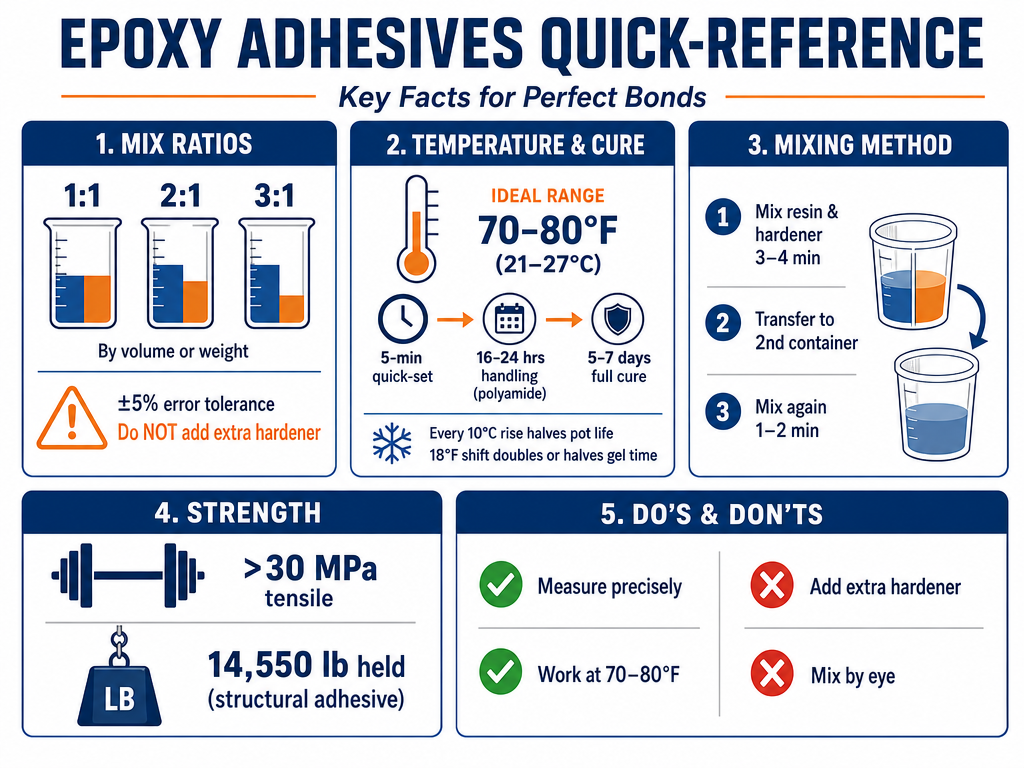
Pot life is the clock that starts ticking the moment you combine the two parts. Measured under lab conditions—typically 70–77°F with a 1-quart mass—it’s how long the mixed epoxy stays fluid enough to spread and position. In the real world, it’s not a clean switch. A formula rated at five minutes doesn’t harden at exactly 300 seconds; rather, you feel a gradual stiffening that ends your ability to reposition. Hands-on testing bears this out: in a side-by-side comparison, JB Weld’s 5-Minute Epoxy reached a truly hard stage at about 9 minutes, while Devcon’s 2 Ton epoxy thickened noticeably at just 7 minutes. That’s your working window, and once it closes, any attempt to adjust parts tears the developing bond.
On the fast end, anything with a sub-10-minute pot life is designed for speed. The Infinity Bond EP 100 clears the syringe in about five minutes, making it a solid pick for quick repairs on glass, ceramics, plastics, and metals where you can clamp or hold the parts steady. Just know that “handling strength” and “full cure” are not the same thing. Most common two-part epoxies won’t hit handling strength for several hours; the slow-building polyamide-cured types need 16–24 hours just to survive a gentle lift. Full cure—the point where strength stops climbing—lands at five to seven days in the vast majority of room-temperature-cured epoxies. So that 5-minute grab doesn’t mean you can torque a bolt on it tomorrow. It means you can let go of the clamp and walk away.
Move to medium and slow work lives, and you trade speed for control and often better ultimate bond performance. Infinity Bond EP 420 gives a practical 20- to 30-minute pot life and delivers 4,000–5,000 psi shear strength with resistance to water, salt, and acids—numbers you simply won’t see in a blister-pack 5-minute formula. When you need time to align multiple parts, butter a large surface, or ensure full wet-out on porous substrates, a 30- to 80-minute work life (Infinity Bond EP 190 stretches to about 80 minutes) becomes indispensable. Structural-grade epoxies, the kind used on lab countertops, may demand 12–24 hours before they reach full strength, but the payoff is a bond that laughs off heavy loads and vibration.
Temperature is the wild card that can turn pot life predictions upside down. That 5-minute rating assumes a cozy 72°F. Every 10°C (18°F) rise in temperature can cut pot life in half (ASTC Polymers). In a hot garage pushing 90°F, a “5-minute” epoxy might kick in under two minutes. In a cold basement at 55°F, the same goo could stay spreadable for ten minutes or more, but the cure will crawl and final strength may suffer. If you’re working outside the 70–80°F sweet spot, actively warm the repair area or cool the epoxy cartridges beforehand to put control back in your hands.
So which do you grab? Reach for a fast-set when the repair is small, gravity works against you, and you can hold or brace the part without moving it. Think of a ceramic figurine’s broken arm or a plastic trim clip that snaps into a dash. For anything that carries weight, sees vibration, or needs to be clamped and walked away from, slow-cure is the only real choice. The extra work life lets you achieve a thinner, more uniform bond line, and the extended cure builds deeper crosslinking—giving you a bond that stays put long after that 5-minute tube has failed.
Mixing Ratios and Preparation: Getting It Right Every Time
If you nail the mixing, the bond practically takes care of itself. Get the ratio wrong, and you'll wonder why the epoxy stayed tacky, turned to crumbly plastic, or never cured at all. It's the one step where confidence comes from precision, not winging it.
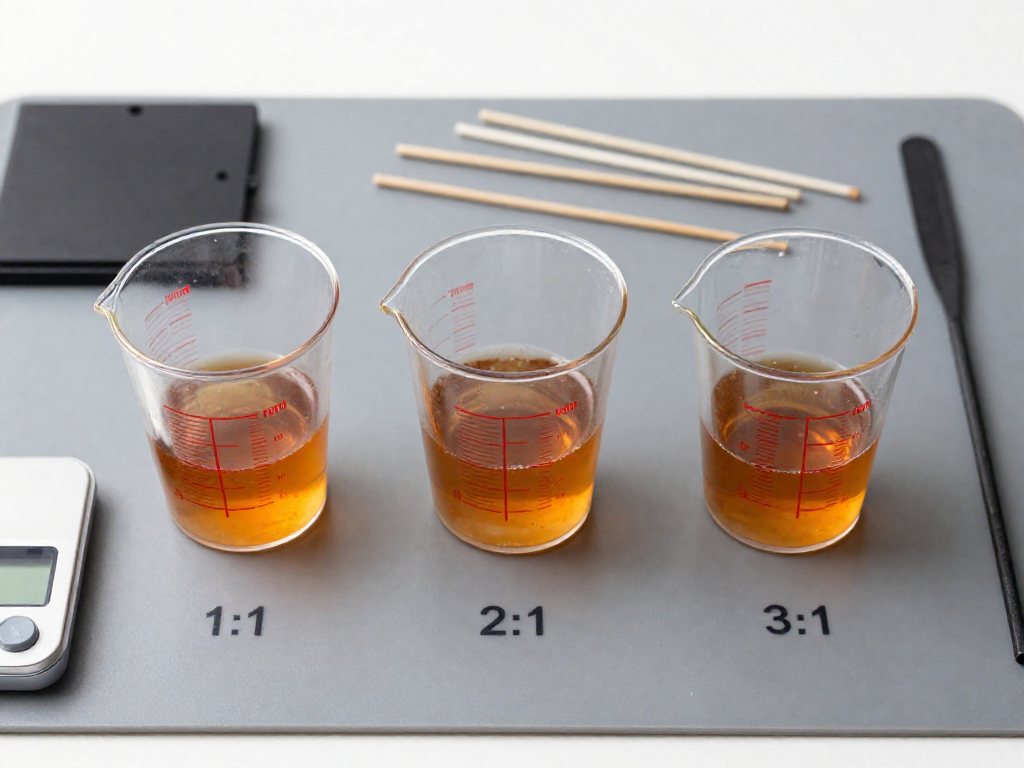
Most two‑part epoxies you'll encounter use a volume‑based ratio like 1:1, 2:1, or 3:1. The 1:1 varieties are the familiar craft resins and household repair tubes—easy to squeeze out equal blobs. Deep‑pour casting resins often go 2:1, and some industrial or structural formulations push to 3:1. But here's the trap: volume and weight ratios are rarely the same because resin and hardener have different densities. For example, EPO‑TEK 353ND has a weight‑based mix ratio that converts to a whopping 8.5:1 by volume, while their H20E flips to a modest 1.51:1 by volume. So if the datasheet says "mix 100:20 by weight" and you grab a graduated cup, you're in trouble. Always check whether the manufacturer's ratio means weight or volume, and use the corresponding tool—digital scale for weight, marked mixing cups for volume.
A stubborn myth refuses to die: adding extra hardener makes epoxy cure faster. It doesn't. Dumping in more hardener disrupts the precise stoichiometric balance and leaves you with a sticky, gooey mess that may never harden properly. Stick to the ratio on the label, period.
How close do you actually need to be? Epoxy is forgiving within a narrow window—about ±5% by weight or volume. Stray past that and you risk soft spots, brittle joints, or a surface that stays wet. Eyeballing simply won't cut it. For volume ratios, use graduated cups with clear markings and pour to the line on a level surface. For weight ratios, a digital scale that reads to 0.1 g will save you endless frustration.
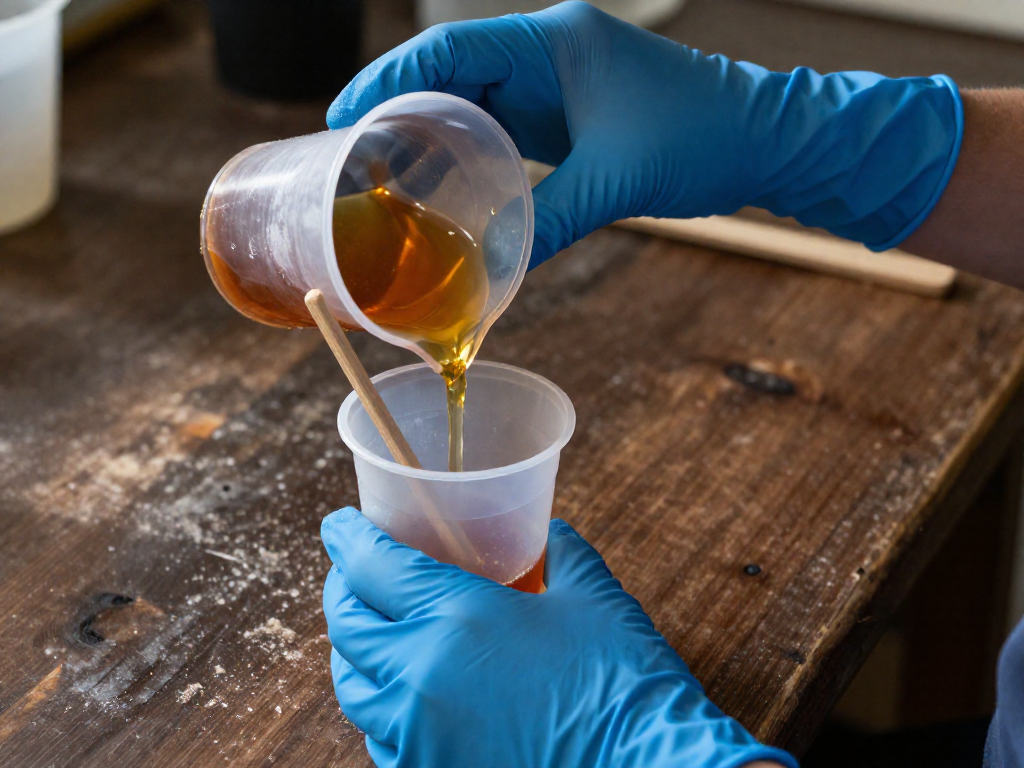
Even with the exact ratio, a sloppy stir can ruin the bond. Just swirling the cup leaves hidden streaks of unmixed resin or hardener clinging to the sides. MAS Epoxies recommends a foolproof two‑container technique: measure both parts into your first cup, then mix thoroughly for a full 3–4 minutes, constantly scraping the bottom and sides. Don't short‑change this—set a timer. Next, pour the mixture into a clean second container and give it another 1–2 minutes of mixing until the blend is completely streak‑free. That double‑container step catches any unmixed film that was stuck to the first cup.
When you respect the ratio and mix like you mean it, you'll avoid the heartbreak of a failed cure. It's five minutes of focus that pays off in a bond that handles load, moisture, and time without flinching.
For any epoxy, work in a well‑ventilated area and wear gloves. Always read the full product safety sheet before mixing.
Structural vs Flexible Epoxy: Strength, Gap Filling, and Toughness
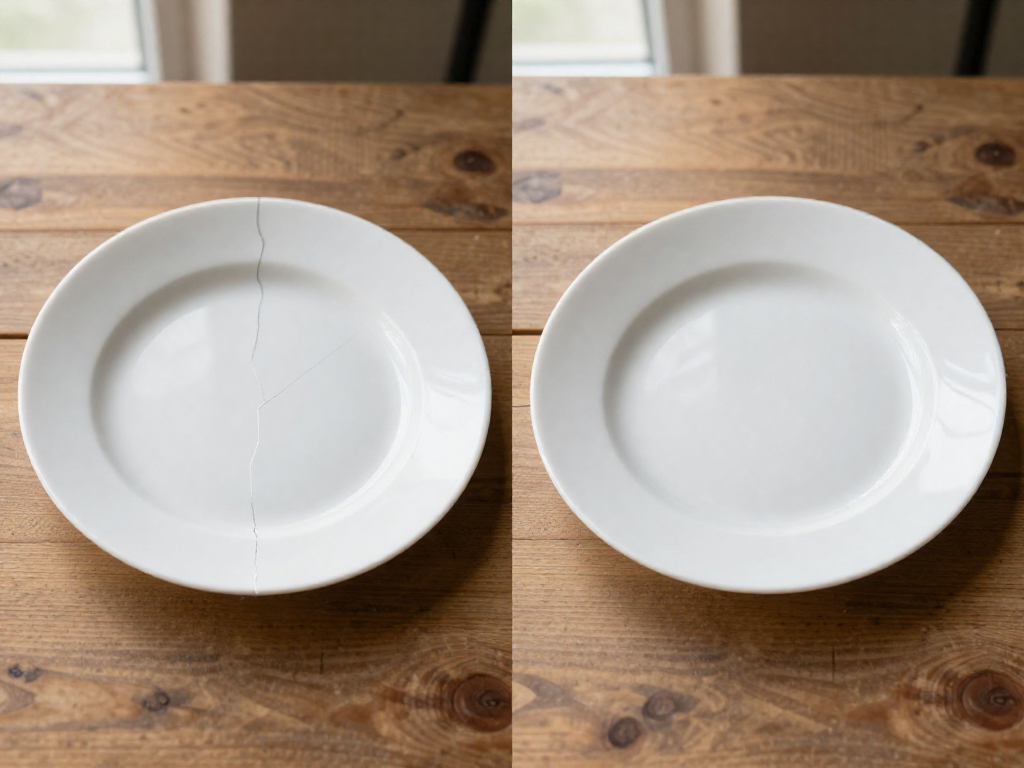
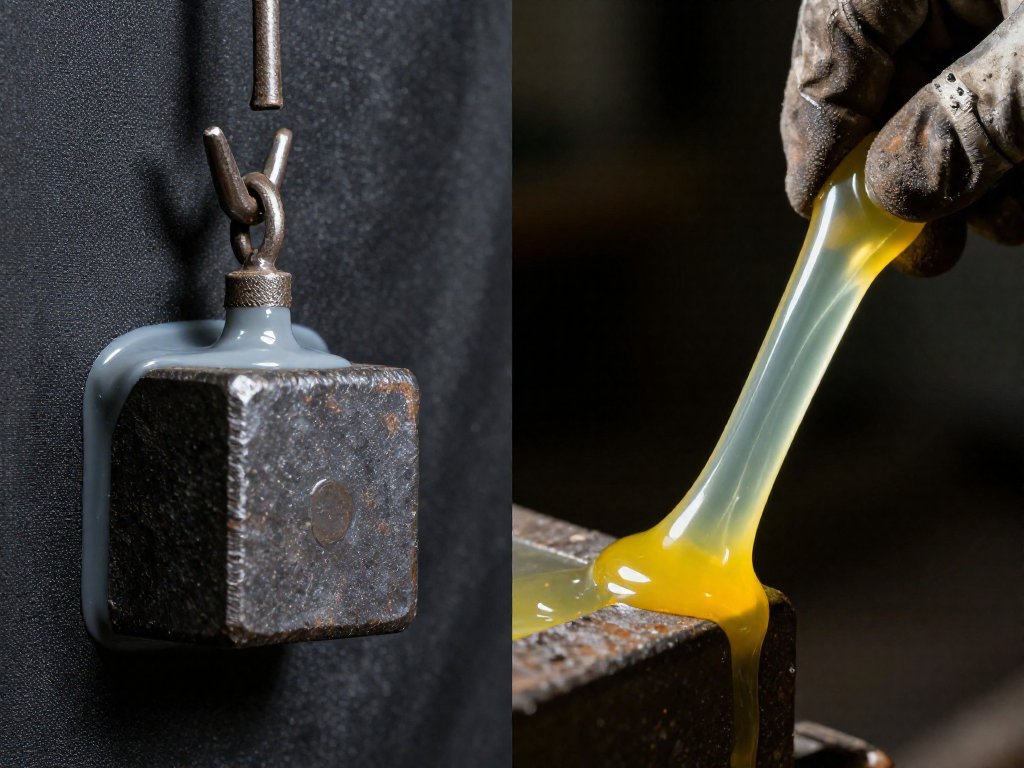
When you need a bond that braces against extreme forces, structural epoxies are the heavy artillery. These rigid adhesives typically cure into a rock-hard plastic layer that distributes stress over the entire joint. For example, Infinity Bond EP 420 delivers a shear strength between 4,000 and 5,000 psi and resists water, salt, and acid. Tensile strengths north of 30 MPa mean epoxy alone far exceeds the 6–9 MPa tensile strength of ABS plastic—so the substrate will fail before the adhesive does. The numbers get staggering quickly: in a 3M test, a structural adhesive held 14,550 pounds suspended for over 18 hours (3M). That kind of performance is why structural epoxies are the go-to for load-bearing repairs, metal-to-metal assemblies, and automotive brackets where the joint faces vibration and mechanical shock.
But strength isn’t the only dimension. Rigid epoxies have little give—they can crack when materials expand and contract at different rates. That’s where flexible epoxy formulations shine. Formulated with elastomeric additives, these adhesives allow a small amount of movement without tearing, making them indispensable for bonding dissimilar materials like plastic to metal, wood to glass, or concrete to steel. In outdoor settings where thermal cycling loosens brittle bonds, a flexible epoxy lets the assembly work without stress cracks. The trade-off: you’ll typically sacrifice a chunk of ultimate shear strength, often landing closer to 2,000–3,000 psi, but gain a bond that lasts through years of seasonal movement.
Gap-filling ability is another differentiator often overlooked. Many structural pastes are thick enough to bridge uneven surfaces, filling gaps of a quarter-inch or more without dripping. This is critical when you’re repairing fractured castings or adhering rough stone, where perfect flush contact isn’t possible. The same high viscosity, however, means structural epoxies can be overkill for lightweight decorative fixes—using a full-on structural formula to glue a ceramic figurine only invites a brittle fracture if it’s ever bumped. In those cases, a flexible or semi-rigid epoxy (or a simpler adhesive) does the job without stressing the surrounding material.
Finally, consider the environment. While many epoxies shrug off moisture and mild chemicals, prolonged UV exposure can degrade standard formulations, causing yellowing and surface crazing. If your repair lives outdoors, look for formulations with added UV inhibitors or plan to coat the cured epoxy with paint or a UV-blocking clear finish. For submerged or chemically aggressive situations, an epoxy like EP 420, which explicitly resists salt and acid, earns its keep. Bottom line: reach for a structural epoxy when the joint must carry a heavy, sustained load and you can manage a rigid bond; choose a flexible variant when the prize is endurance across temperature swings and mismatched materials.
Matching Epoxy to Your Materials: A Practical Selection Guide
When bonding ABS plastic to metal, reach for a tough, slightly flexible epoxy that won’t crack under load. Some formulations develop lap shear strengths well above 30 MPa—easily exceeding the plastic’s own yield point—so the joint can be stronger than the material itself (Forgeway Ltd). This toughness also prevents stress fractures from slight movement or impact.
Ceramic and glass repairs to metal demand a clear, low-viscosity epoxy. A fast‑setting 5‑minute formula is perfect for small jobs like a broken mug handle or a glass vase stem; the thin liquid wicks into hairline cracks and cures nearly invisible. Avoid thick gels here—they’ll leave obvious glue lines.
Wood‑to‑concrete bonds—think anchoring a sill plate or setting a fence post—call for a structural, gap‑filling epoxy. Choose a slow‑cure version with a long open time. You need that working time to trowel the adhesive across large surfaces and let it seep into concrete’s pores before it starts to set.
Dissimilar metals like aluminum and steel expand at different rates as temperatures change. A rigid epoxy will eventually crack. Instead, look for a flexible formulation that moves with the metal, absorbing the thermal cycling without breaking the bond.
No matter the pairing, surface preparation is non‑negotiable. Sand both substrates with coarse grit to give the epoxy a mechanical bite, then degrease thoroughly—even a fingerprint can ruin adhesion. Always verify the manufacturer’s data sheet for substrate‑specific recommendations, especially if one surface needs a primer.
Common Epoxy Mistakes and Myths That Ruin Bonds
The most stubborn epoxy myth is that extra hardener speeds up curing. As the folks at Resiners explain, adding more hardener won’t make resin cure faster—it just throws off the chemical balance and ruins the bond. Even a ±5% ratio error can cause problems, so measure with care. Another hidden bond-killer is loading the joint too early. Plenty of epoxies feel firm in hours, but full strength usually takes five to seven days. Rushing that cure leaves you with a creaky, failing joint. Cold workspaces cause their own trouble: a chilly garage can double pot life but risk incomplete crosslinking and a sticky mess. Poor mixing leaves streaks of unreacted hardener—scrape the sides and pour into a second container to be sure. And if the surface is glossy, dusty, or oily, even the best epoxy won’t hold. A quick wipe with alcohol and a light scuff go a long way.
Sources
- Adhesive vs Epoxy: Which Bonding Method Is Best? – Blackland Manufacturing — blacklandmfg.com
- Epoxy Resins Selection for Adhesives and Sealants: Complete Guide — specialchem.com
- Choosing An Epoxy Working Time: Short, Medium, & Long Epoxy Work Lives — hotmelt.com
- 5 Structural Adhesives Myths Disproved - 3M — multimedia.3m.com
- Test & Use 5 Minute Epoxy - Brands Compared — youtube.com
- How to Get the Epoxy Resin Mixing Ratio Just Right — resiners.com
- Tech Tip 11 - How to Convert Epoxy Mix Ratios from Weight to Volume - Meridian — meridianadhesives.com
- The Ultimate Guide for Mixing Epoxy Resin – Mas Epoxies — masepoxies.com
- Understanding Cure Times and Pot Life in Epoxy Formulations | ASTC Global — astcpolymers.com
- Choosing the right adhesive to bond ABS plastic: What you need to know - Forgeway Ltd — forgeway.com
See also
- How to Bond Plastic to Metal — Adhesive Selection Guide
- Understanding Structural Adhesives: When Super Glue Isn’t Enough
- Ultimate Surface Prep Checklist for Maximum Adhesion
- Flexible vs. Rigid Adhesives: Choosing for Your Material Pair
- Epoxy vs. Cyanoacrylate — Which to Use for Your Repair
Related articles
UV-Cure Adhesives (Liquid Optical Clear Adhesives): Perfect for Glass and Electronics
What is UV glue, and when should I use it instead of regular super glue?
Jul 22, 2026 · 5 min read
Contact Cement: The Secret to Laminate, Leather, and Shoe Repairs
How do I use contact cement correctly to avoid bubbles and weak bonds?
Jul 22, 2026 · 5 min read
Structural Adhesives: Understanding MMA and Acrylics for Load-Bearing Metal Bonds
What are structural adhesives, and when do I need them over regular glue?
Jul 22, 2026 · 10 min read