UV-Resistant Adhesives: Preventing Degradation and Yellowing Outdoors
How do I choose an adhesive that won't degrade in sunlight?
On this page
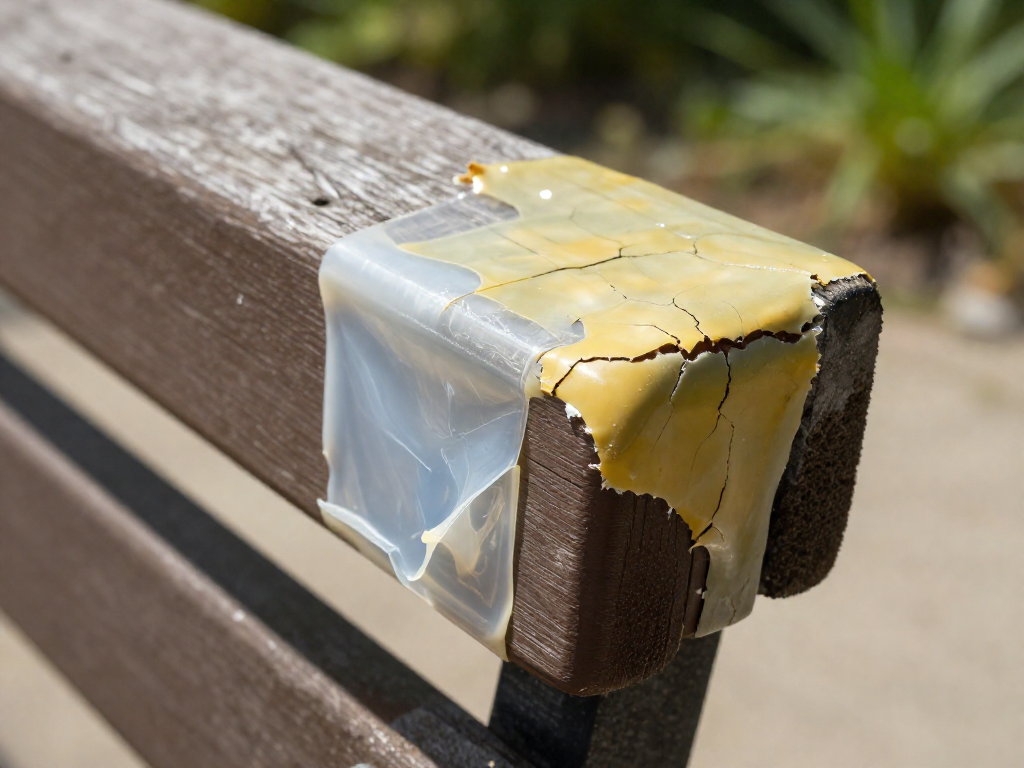
You spent a weekend building that outdoor shelf, only to see the adhesive yellow and crack by August. Not all glues are created equal under the sun. Here's how to choose one that lasts.
The Hidden Cost of UV Exposure on Adhesives
To keep a bond from falling apart in sunlight, reach for an adhesive purpose-built for UV resistance—aliphatic epoxies and UV-stabilized acrylics are the go-to choices, while standard epoxy is a trap that yellows, chalks, and loses grip within months outdoors.
Sunlight isn't just bright; it's packing high-energy UV between 290 and 400 nm that snaps polymer chains like twigs. The result is discoloration, surface chalking, and an adhesive that goes brittle instead of staying flexible. That chalky residue isn't just ugly—it's the literal remains of a degrading bond. The damage isn't limited to direct sun. Reflected UV off concrete or water can speed things up, and even indoor fluorescent and LED bulbs emit enough UV to yellow an epoxy tabletop over time.
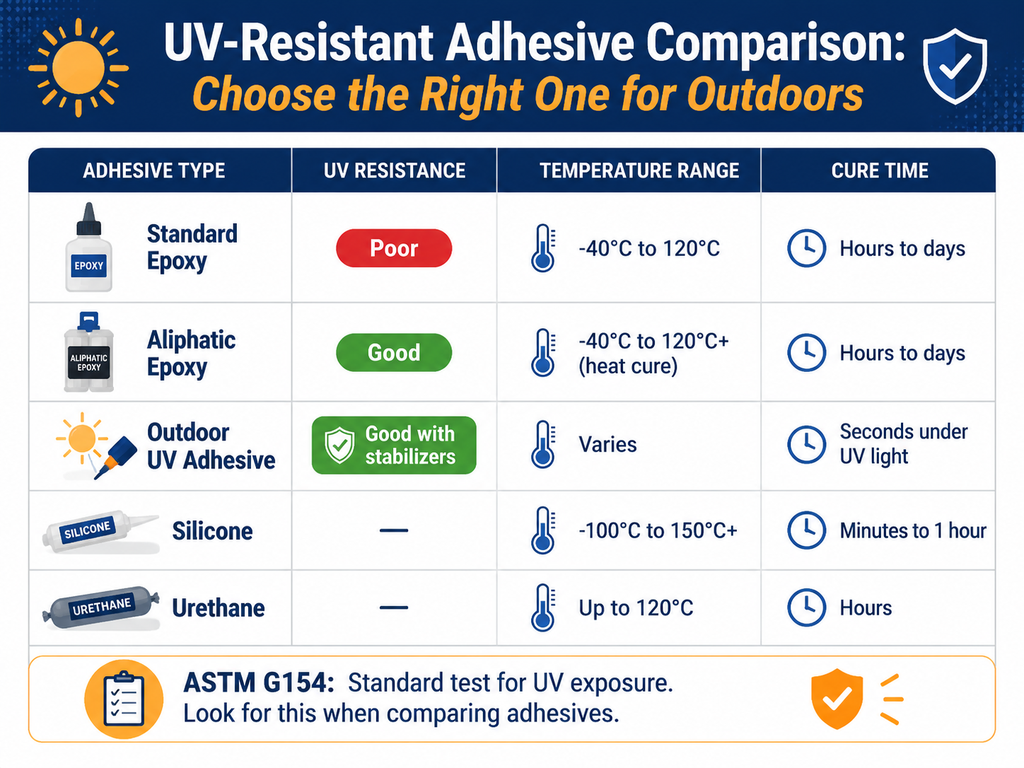
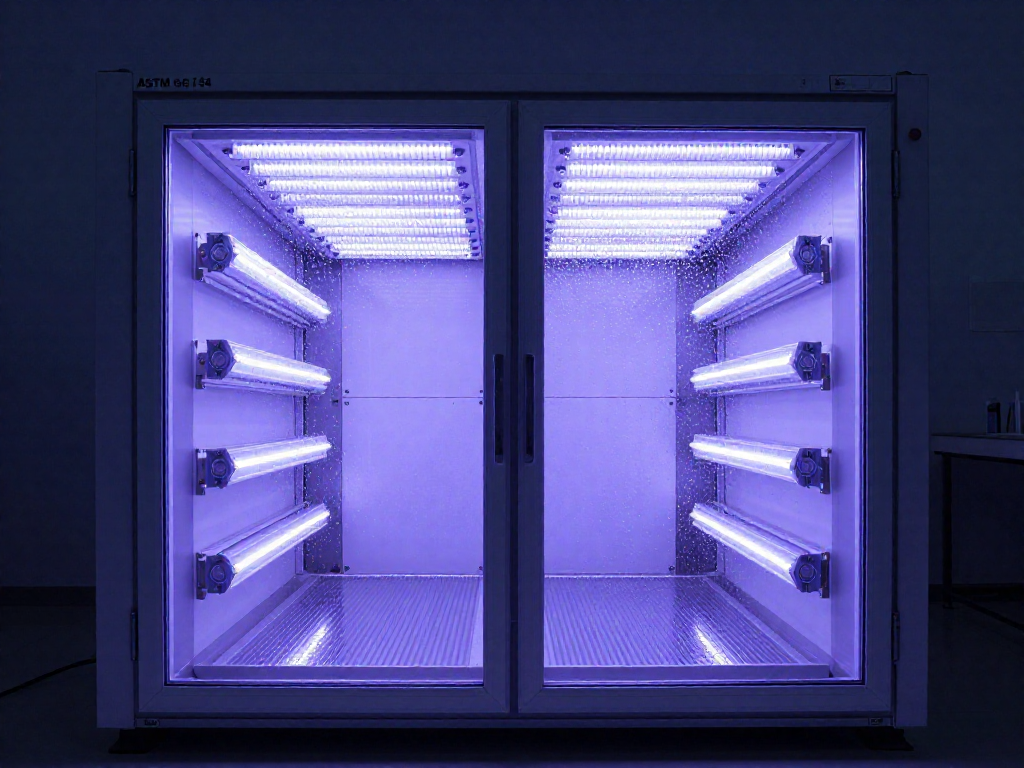
Manufacturers fight back with stabilizers. Benzotriazoles, for example, soak up UV and release it as harmless heat through a non-radiative process (Mega Bond). But these additives are only as good as the chemistry they protect. A "UV-resistant" label on a tube of standard epoxy means very little—the underlying resin still oxidizes and darkens. The real proof is in standardised testing like ASTM G154 or D904, which accelerates years of sun exposure in a lab. Stick with adhesives whose datasheets reference those tests, and you'll avoid finding your outdoor repair in pieces after a single summer.
UV-Resistant Adhesive Showdown: Silicone vs. Epoxy vs. UV-Cure Resins
When you need a bond that won't crumble after a summer in the sun, three adhesive families dominate the conversation: silicone, epoxy, and UV-cure resins. But lumping them together under a “UV resistant” banner is a mistake—each behaves radically differently under ultraviolet light.
Silicone: the flexible outdoor workhorse
Silicone adhesives are inherently UV-stable. Their molecular backbone resists breakdown from sunlight, so they stay rubbery and adherent without yellowing or chalking. That's why you see them in everything from aquarium seals to automotive gaskets. Cure speed is a real advantage: depending on formulation, silicone sets in as little as a few minutes, though full strength may take a couple of days. It stays flexible across a wide temperature range, so joints won't crack when materials expand and contract. The tradeoff is lower structural strength—don't expect it to hold two metal plates under load. For outdoor repairs on materials that need to flex, silicone is the safe, durable default.
Epoxy: rigid strength, but not all epoxies are UV-proof
Here's where the label matters. Standard epoxy adhesive is a disaster outdoors. It turns yellow, chalks, and becomes brittle in direct sun, sometimes within months. The aromatic hardener that gives standard epoxy its strength is a UV magnet. Aliphatic epoxy—often marketed as “non-yellowing” or “outdoor epoxy”—replaces that vulnerable ring structure, sacrificing a bit of toughness for true sunlight stability. If the package doesn't explicitly say aliphatic or outdoor grade, assume it will fail. Epoxy's operating range is broad, from -40°C to 120°C in industrial formulations, but room-temperature curing versions typically top out around 120°C. Patience is required: epoxy can take hours to days to fully harden. Reserve epoxy for outdoor jobs only when you need its high adhesive strength and you've verified a UV-stable formulation.
UV-cure adhesives: instant bond, long-term data
These optical-grade glues harden under UV light in seconds, but for outdoor durability the secret is in the recipe, not the curing method. Formulations with UV stabilizers resist sunlight just as aggressively as they cure under it. In fact, UV adhesives are the industry standard for structural glass bonding in building facades and skylights, with documented outdoor service lives of 20 years or more (INCURE INC.). One critical caveat: dark surfaces in direct sun can hit 70–90°C, and if the adhesive's glass transition temperature (Tg) is below that peak, the bond will creep. Most UV adhesives have a Tg between 60–120°C, so for outdoor use on dark substrates, pick a formulation with a Tg of at least 90°C. You'll also need a UV-transparent substrate—glass is ideal, but many plastics block the light—and a dedicated UV lamp or strong direct sunlight to cure the glue.
Putting it together
For a flexible joint that just needs to stay stuck through heat and rain, silicone wins. For a rigid, high-strength bond facing full sun, an aliphatic epoxy or a high-Tg UV-cure adhesive are the only safe bets—and the UV-cure option gives you a decades-proven track record in architectural applications. Standard epoxy? Keep it indoors, and even then be aware that LED and fluorescent bulbs emit some UV, so non-yellowing claims aren't a guarantee. High-quality outdoor self-adhesive vinyl can hold for 7–10 years under the sun, a testament to what a well-formulated acrylic can do. But for a permanent glass repair or a structural outdoor bond, skip the impostors and reach for a silicone, aliphatic epoxy, or stabilized UV-cure adhesive that's actually engineered to last.
The Temperature Trap: Why UV + Heat is the Real Test
Most people pin outdoor adhesive failures solely on UV light, but heat is often the real culprit. It's not just that the sun's rays break chemical bonds; dark surfaces in direct sun act like frying pans. According to data from UV-adhesive manufacturer INCURE INC., many formulations have a glass transition temperature (Tg) between 60–120°C, yet a black metal or asphalt surface in summer easily hits 70–90°C (INCURE INC.). Cross that Tg threshold and the once-rigid adhesive becomes soft and pliable, creeping under load until the joint fails. It’s a heat-induced collapse, not a photodegradation story.
That puts the spotlight on your adhesive’s thermal limits. Epoxy is a common go-to, but room-temperature-curing epoxies start to lose strength past 120°C. If you’re bonding parts that will bake in the sun—like a dark metal gate latch—choose a heat-cured epoxy that can handle sustained high temperatures, or check that the product’s continuous operating temperature exceeds your worst-case surface heat. Some industrial epoxies push the range from –40°C up to 150°C or more, but the average consumer tube won’t.
Silicone is the thermal champion here. Even a room-temperature-curing (RTV) silicone easily operates above 150°C, making it a safe bet on hot, dark surfaces. Urethane adhesives, by contrast, also fail above 120°C, so they’re a poor choice for sun-baked applications.
UV-cure adhesives demand extra scrutiny. Their Tg varies widely—always check the datasheet. If you’ll be bonding a black plastic bracket that reaches 80°C in the sun, a UV adhesive with a Tg of 65°C will soften. Pick a formulation with a Tg well above your expected peak temperature. In demanding structural applications (like architectural glass), UV adhesives with carefully engineered high Tg can last over 20 years outdoors, but that performance comes from matching the chemistry to the thermal reality.
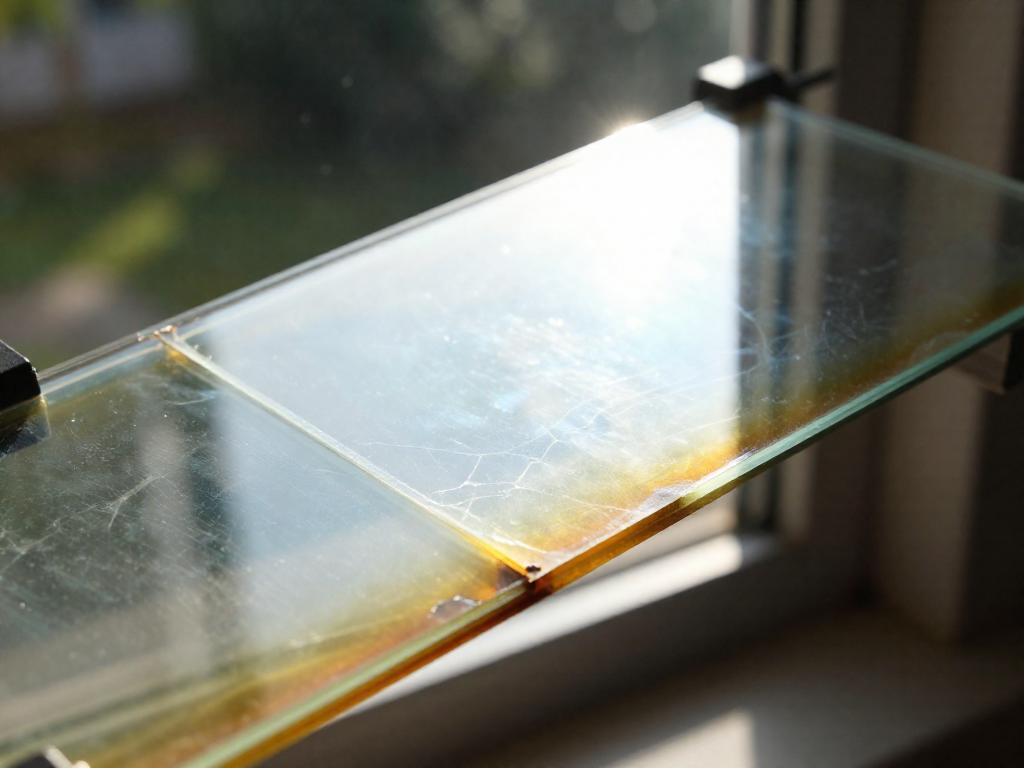
Finally, don’t overlook indoor “heat traps.” A window sill or a glass-topped table in direct sun can still spike in temperature, weakening the bond of an adhesive chosen only for UV resistance. Always factor in the full thermal picture—UV plus heat—before making your pick.
Beyond the Spec Sheet: Practical Tests and Verification
When an adhesive just says “UV‑resistant” on the tube, you’ve got nothing but marketing. Actual durability data comes from standardised test methods. Look for ASTM G154, which bombards samples with fluorescent UV light under controlled conditions, or ASTM D904-99, the go‑to for artificial light exposure. If a datasheet omits any mention of these—or provides no temperature range info—skip it. Real‑world proof matters too: architectural UV adhesives have documented outdoor service lives of 20+ years (INCURE INC.). That’s the kind of track record worth paying for.
For critical outdoor bonds, don’t trust the label alone. Put a sample in a sunny window for a few months. If it yellows, cracks, or goes gummy, you’ve just saved yourself a failed repair. A little patience beats redoing a job that fell apart in the sun.
Quick Reference: Matching Adhesive to Outdoor Application
Match the adhesive to the conditions, and your repair won’t turn into a chalky, brittle mess by August.
- Glass-to-glass or glass-to-metal (window repair, suncatchers): UV‑cure adhesive. In architectural glazing, these have documented outdoor service lives over 20 years; just make sure its glass‑transition temperature (Tg) exceeds peak surface heat to avoid creep (INCURE INC.).
- Plastic to metal (outdoor fixtures, brackets): Aliphatic epoxy or structural silicone. Standard epoxy yellows and chalks; aliphatic formulations resist UV.
- Fabric to leather or flexible materials: Clear silicone adhesive stays flexible and transparent.
- Sealing gutters, roof gaps: Neutral‑cure silicone won’t corrode metal and handles constant UV and wet.
Before you buy, check the temperature range and any available UV‑test data (ASTM G154) to match the actual heat and exposure your project will see.
Sources
- How to improve the UV resistance of water based lamination adhesive? - Blog — megabondchem.com
- Adhesive Standards - Standards Products — store.astm.org
- Pros and Cons of Urethane, Epoxy, or Silicone Adhesives — ellsworth.com
- UV Glue vs Epoxy for Long-Term Outdoor Durability - INCURE INC. — incurelab.com
- Evaluating the Adhesive Strength and Weather Resistance of Self Adhesive Vinyl - JUTU New Materials Technology Limited — jutufilm.com
- The Ultimate Guide to UV Curing Adhesives - Uvitron International — uvitron.com
- Does Non-Yellowing Epoxy Really Exist? - Promise Epoxy — promiseepoxy.com
- Epoxy Resin UV Resistance - CHILL EPOXY — chillepoxy.com
- Epoxy Vs. Silicone Adhesive: Key Differences Explained - Brampton Technology — bramptontechnology.com
See also
- Epoxy vs. Polyurethane: Which is Better for Outdoor Use?
- Silicone Adhesives: When and Where to Use Them
- How to Bond Plastic to Metal Outdoors
- Understanding Glass Transition Temperature (Tg) for Adhesives
Related articles
Humidity-Tolerant Adhesives: Bonding in Moist Climates Without Blushing
Which adhesives cure properly in very humid environments?
Jul 22, 2026 · 5 min read
DIY Car Repair Adhesives: Fixing Trim, Lights, and Panels That Last
Compare double-sided tape, epoxy, and polyurethane for car trim, panel, and headlight repairs. Data-backed guide with real adhesion strengths and weather durability.
Jul 22, 2026 · 8 min read
Outdoor Fastener Alternatives: When Adhesives Beat Screws for Exterior Projects
In outdoor projects, when should I use adhesive instead of mechanical fasteners?
Jul 22, 2026 · 10 min read